Separate the main purchase from optional extras
Write down the product you came to buy and the items genuinely required to use it. A compatible cable missing from the box may be necessary; a decorative case may be optional. Check what is already included before adding accessories suggested by the shop.
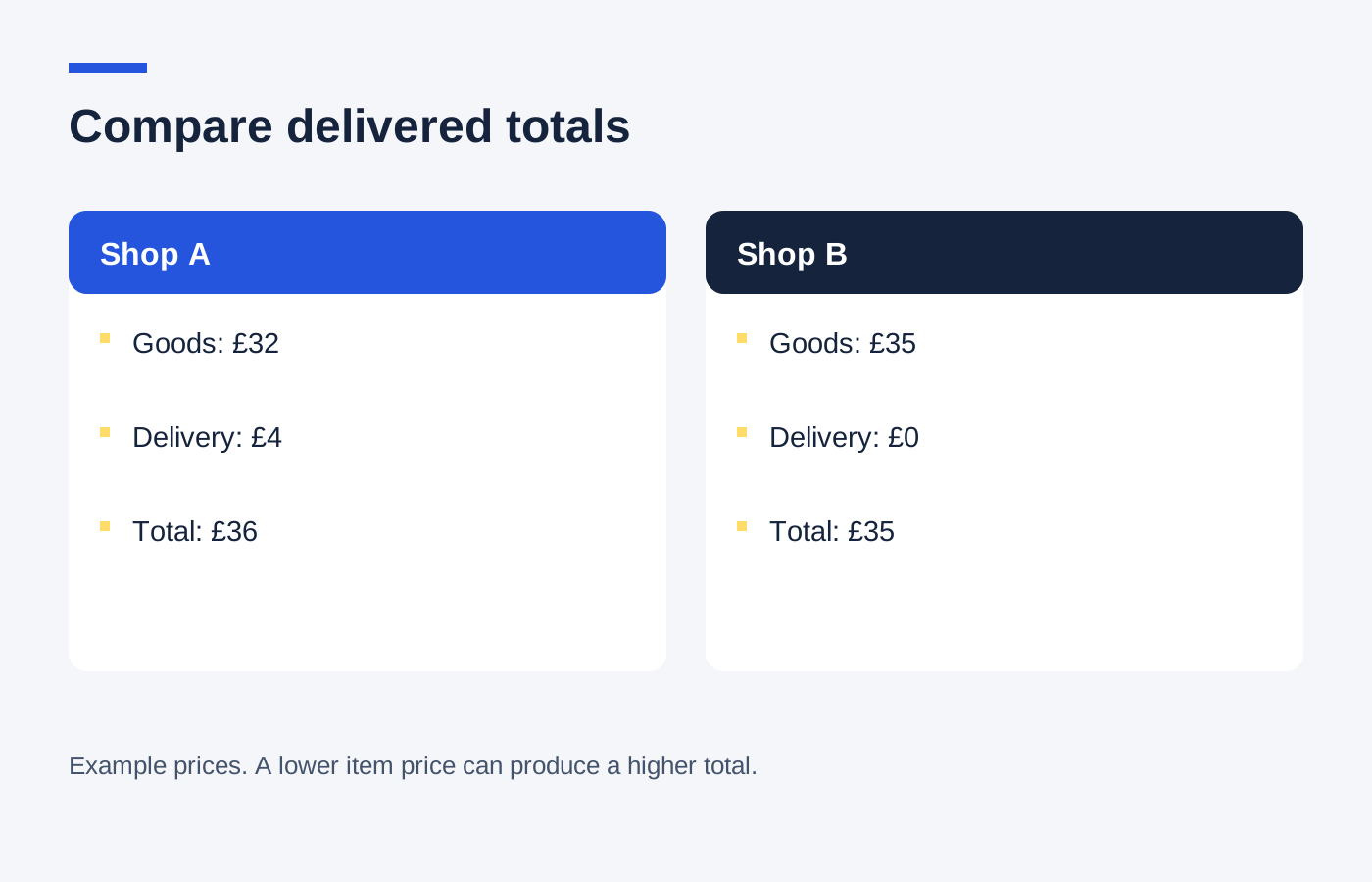
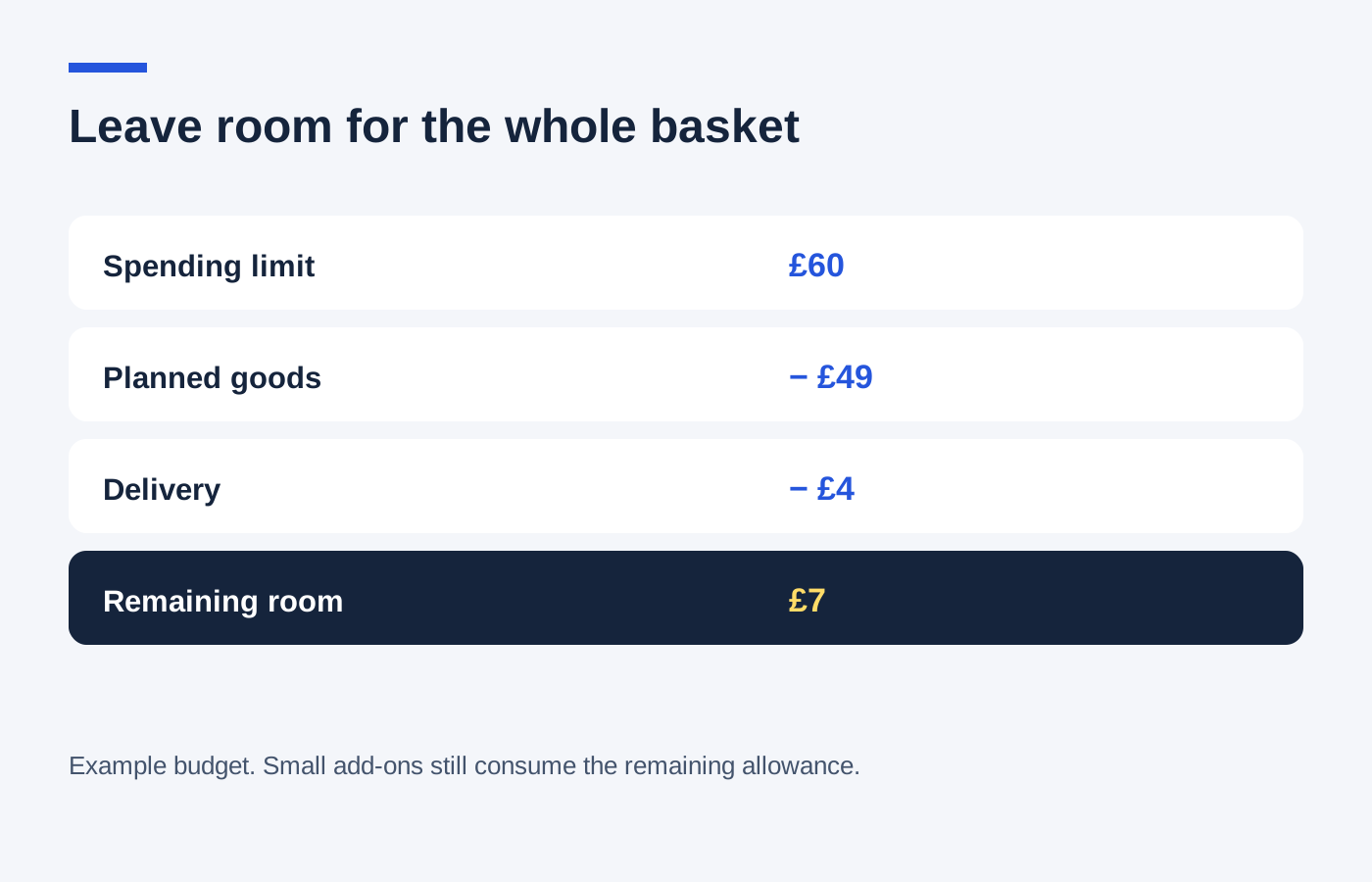
Set a maximum payable amount that includes delivery and any necessary extras. If the main product uses most of the allowance, the remaining amount is the optional budget. Do not treat a percentage discount on an add-on as permission to exceed the total.
Add the extras together before deciding
In a hypothetical order, three add-ons priced at £4, £6 and £7 add £17. They may look minor beside a £60 product, but the goods total rises to £77, an increase of more than a quarter. Compare the combined extras with what else that £17 could buy for the same need.
Ask whether each extra replaces a purchase already planned. If you already own a suitable cable or storage pouch, a discounted duplicate may add no value. If an item is needed later, compare its standalone price elsewhere rather than assuming the checkout recommendation is competitive.
Check the basket after removing items
Deleting an extra can change a bundle reduction or free-delivery threshold. Recalculate the full total rather than looking only at the deleted item's price. Sometimes keeping one useful addition lowers the overall amount; sometimes the threshold merely persuades you to spend more.
Watch for optional services added through checkboxes or product options. Choose wrapping, installation or insurance only when you understand what is included and want the service. A payment summary should reflect deliberate choices, not defaults you overlooked while comparing products.
If the basket still exceeds the limit, change the purchase or postpone it. Moving the cost to a later payment date does not reduce the price. A budget works best when it remains a boundary throughout checkout, rather than becoming a number revised upwards for each attractive extra.