Record the version you want
Write down the model number, size, capacity and included accessories. For clothing, note the colour as well as the size because reductions may vary between them. A price history for a different configuration can make today's offer look better or worse than it really is.
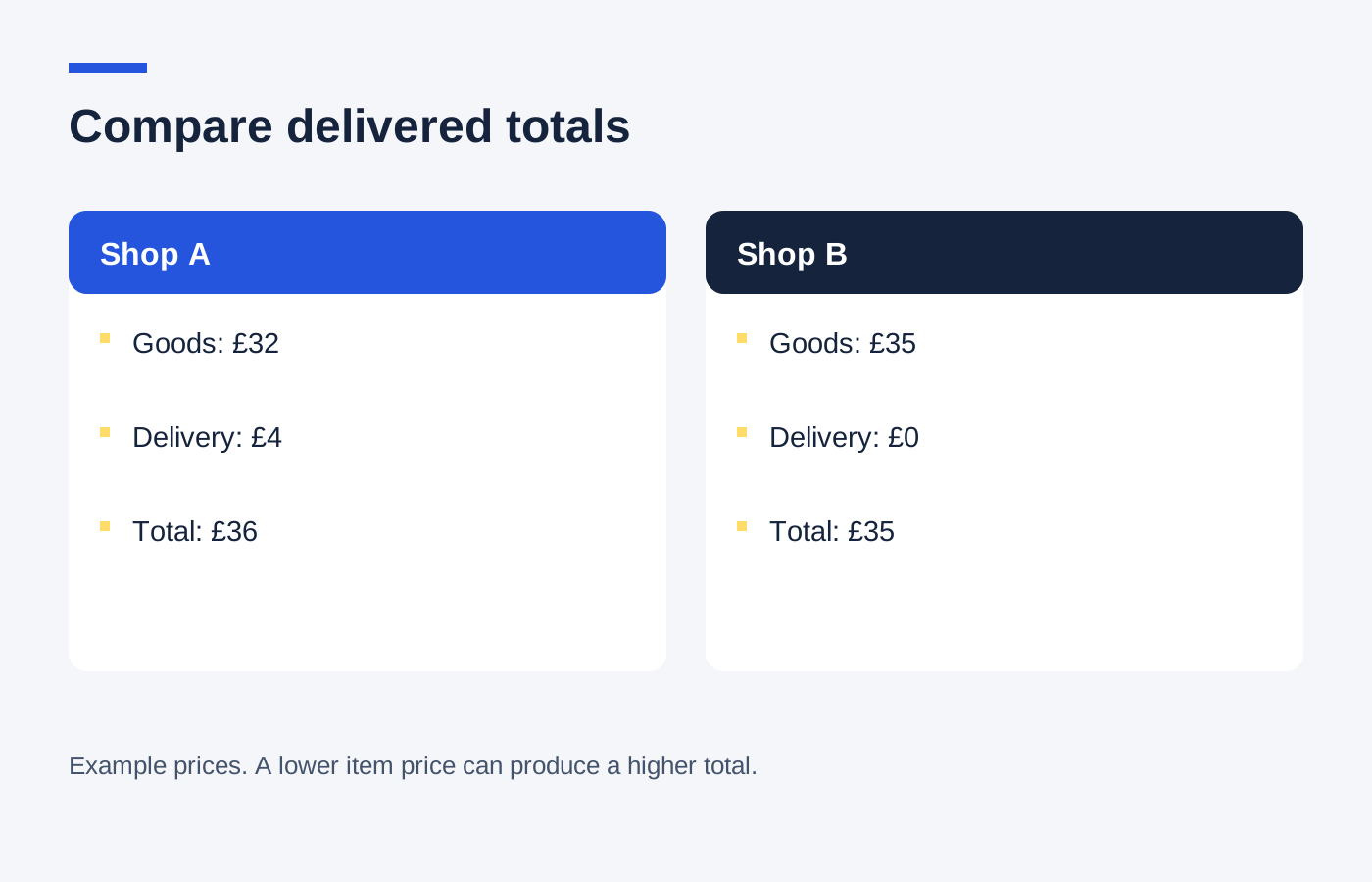
Collect a few current prices from retailers you would genuinely use. Include delivery and note whether a membership or voucher is required. You do not need dozens of shops; a small set of comparable, available options is more useful than a long list of unavailable headline prices.
Track changes without chasing every fluctuation
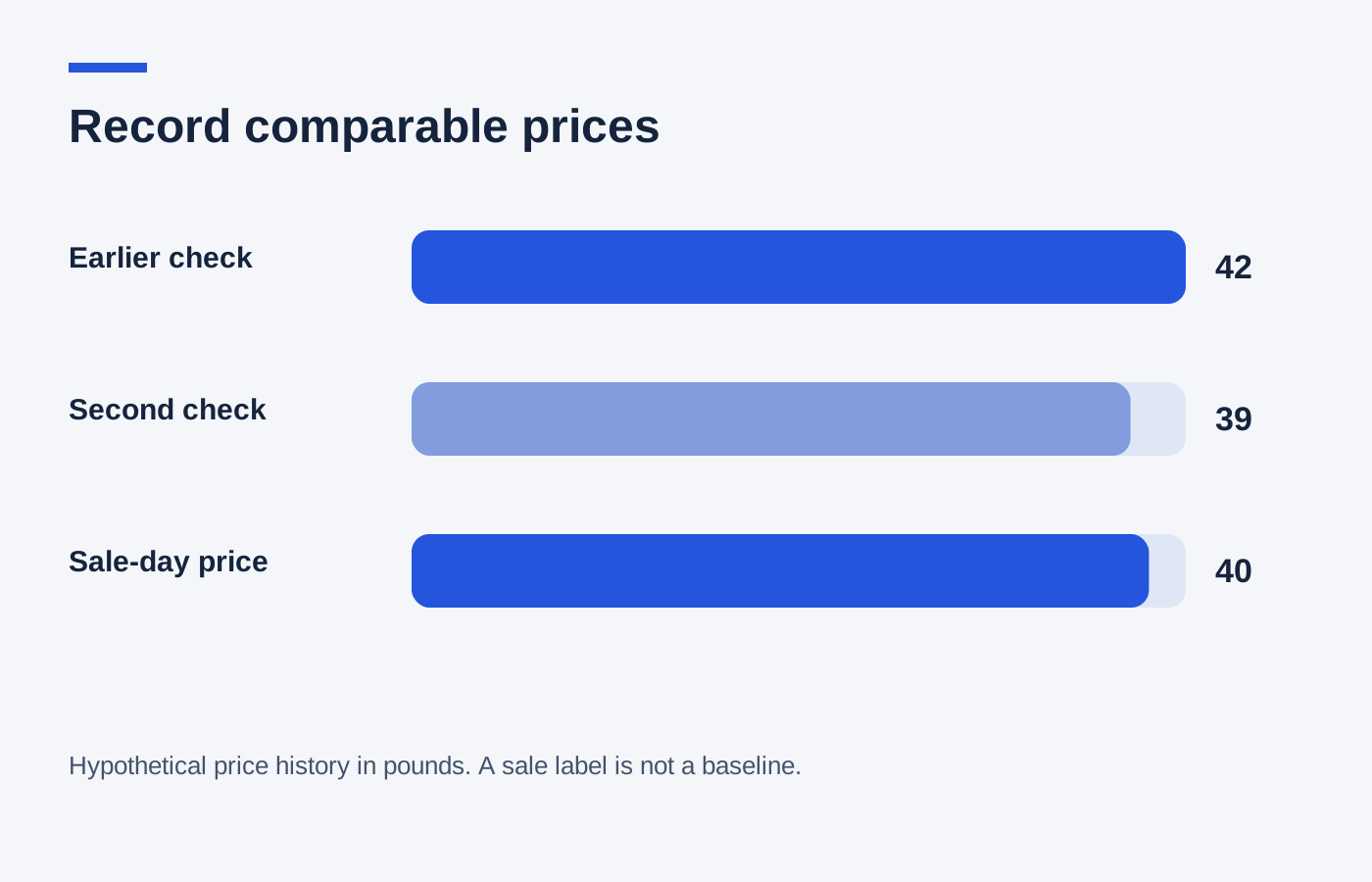
If the purchase can wait, record prices on a few dates before the expected sale. A simple note with the date, retailer and delivered total is enough. Mark temporary codes separately so you do not mistake a one-off eligible price for the ordinary amount everyone could pay.
Suppose a fictional appliance is labelled £160 reduced from £220, but your recent notes show comparable delivered prices of £165, £169 and £164. The sale is still cheaper than those options, but the relevant improvement is around £4 to £9 rather than the full £60 headline reduction.
Use the baseline to make a decision
Set an acceptable price based on the product's usefulness and your budget, not on the highest reference price you find. If a sale reaches that figure and the specification is right, you can decide without waiting for an unknowable future minimum.
Check whether the sale version changes anything important: warranty provider, included charger, condition, delivery time or return route. A lower number attached to a different package needs a fresh comparison. An outlet or refurbished item should not silently replace a new item in your baseline.
Keep the final paid price for future reference, but avoid treating it as a permanent benchmark. Markets and product ranges change. The record is evidence about what was available at that time, useful for judging a promotion, rather than a promise of what the item ought to cost forever.