Make the products genuinely comparable
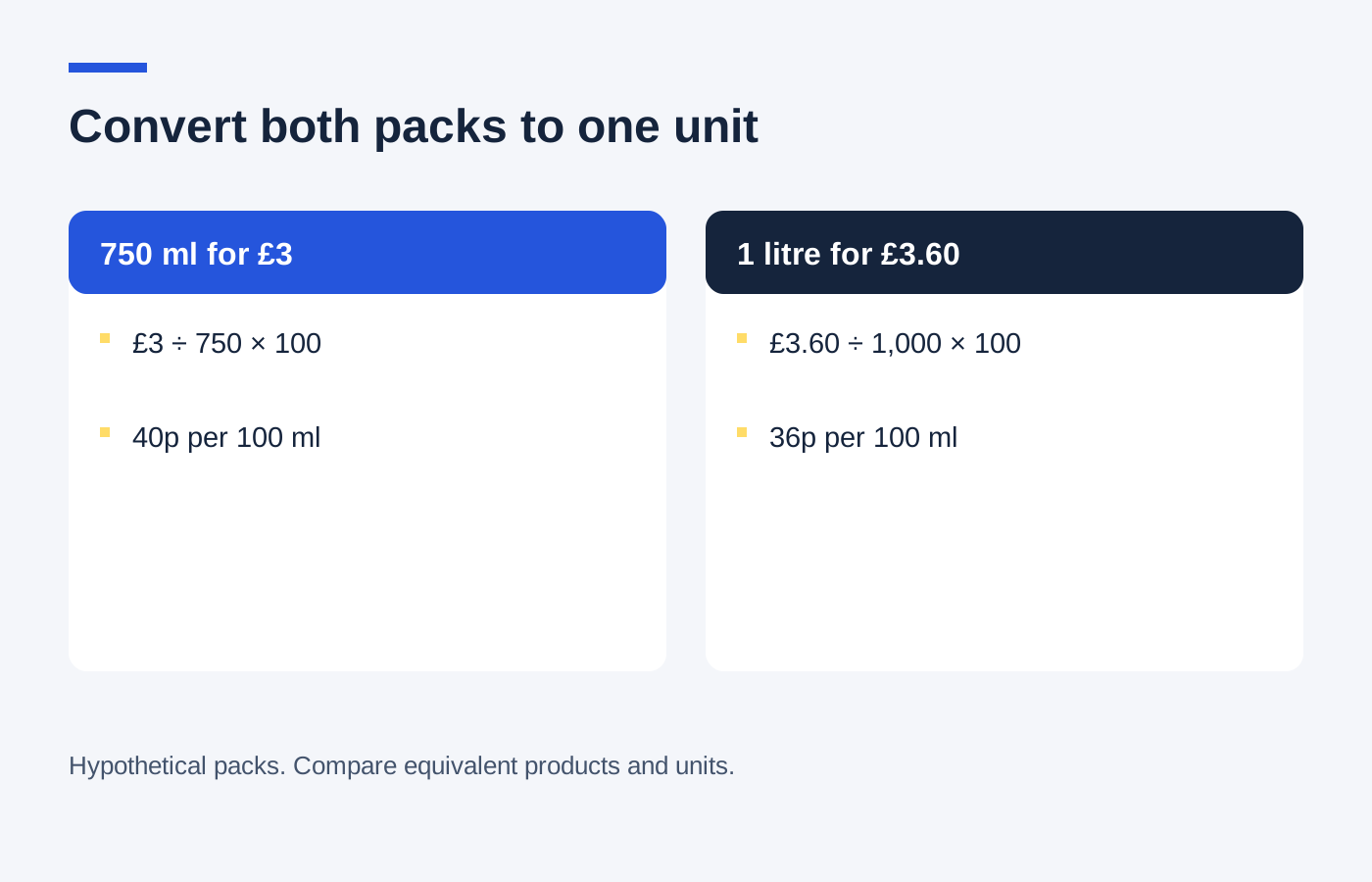
Record the model or product number, size, quantity, colour and condition. For consumables, include the weight, volume or count inside each pack. A cheaper listing for a smaller bottle or an older model is a different purchase, even when its main photograph looks identical.
Decide which substitutions you would accept before looking at prices. You might be happy with either of two plain colours but unwilling to change a required cartridge or shoe size. Keeping those boundaries clear prevents the comparison drifting towards whichever version happens to carry a discount.
Write a complete total for each shop
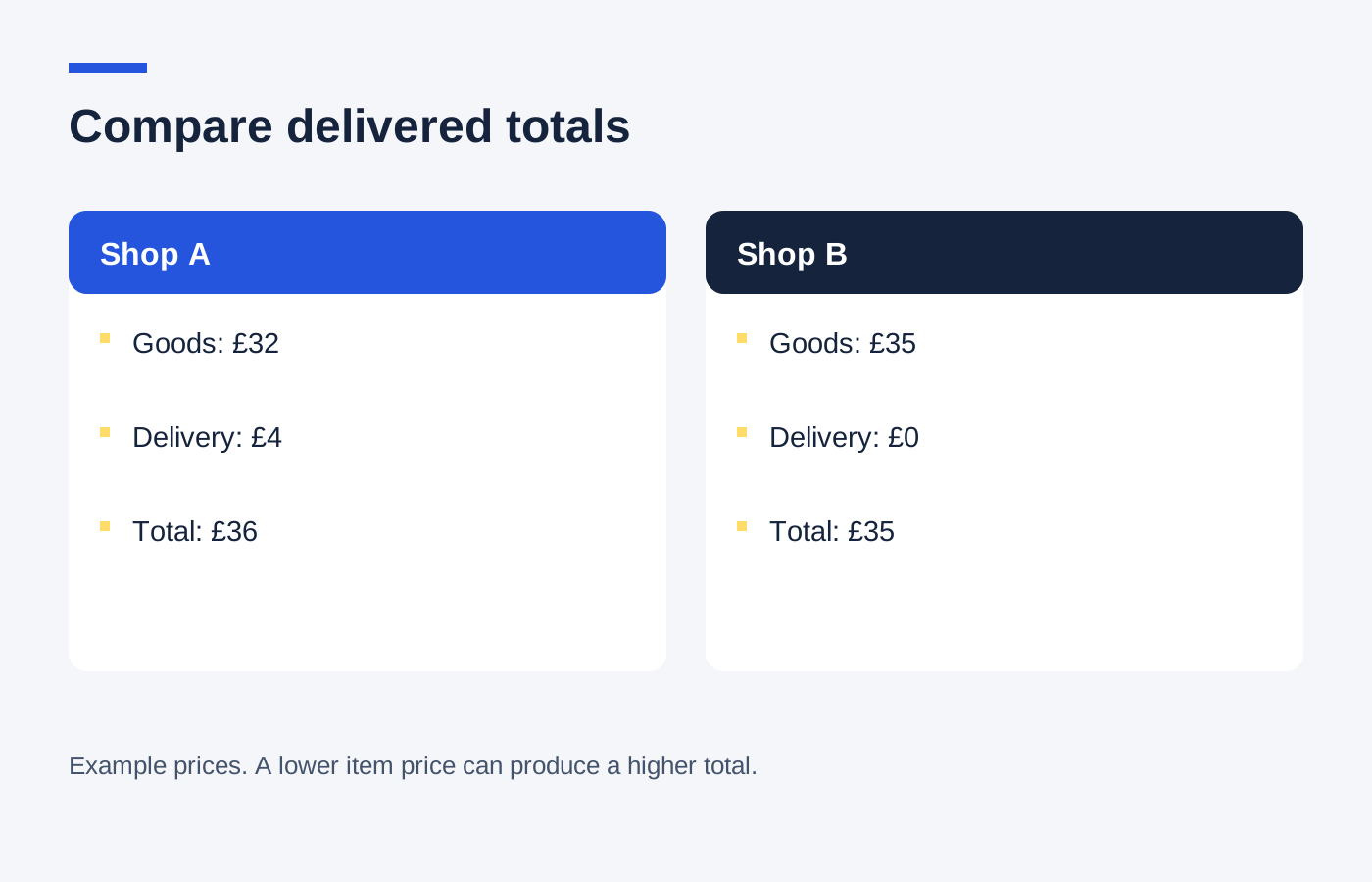
For each basket, add the goods at their current prices, subtract discounts that actually qualify, then add delivery and any unavoidable service charges. Optional wrapping or express delivery belongs in the total only if you choose it in both alternatives or have a reason to value it differently.
Consider this fictional example. Shop A has goods at £64, a qualifying £8 voucher and £4 delivery: the payable amount is £60. Shop B has the same goods at £59 with free standard delivery: the payable amount is £59. Shop A advertises the larger reduction, but Shop B costs £1 less for the same order.
Now suppose Shop B's delivery takes longer than your deadline allows, and its suitable express service costs £6. Its relevant total becomes £65. The correct comparison depends on the service you need, not the cheapest service available in theory.
Handle missing items without hiding them
If one shop lacks an essential item, do not simply leave it out of that basket's total. Price the missing item elsewhere and include the second delivery charge. Alternatively, compare only the common products and make the separate purchase decision explicit.
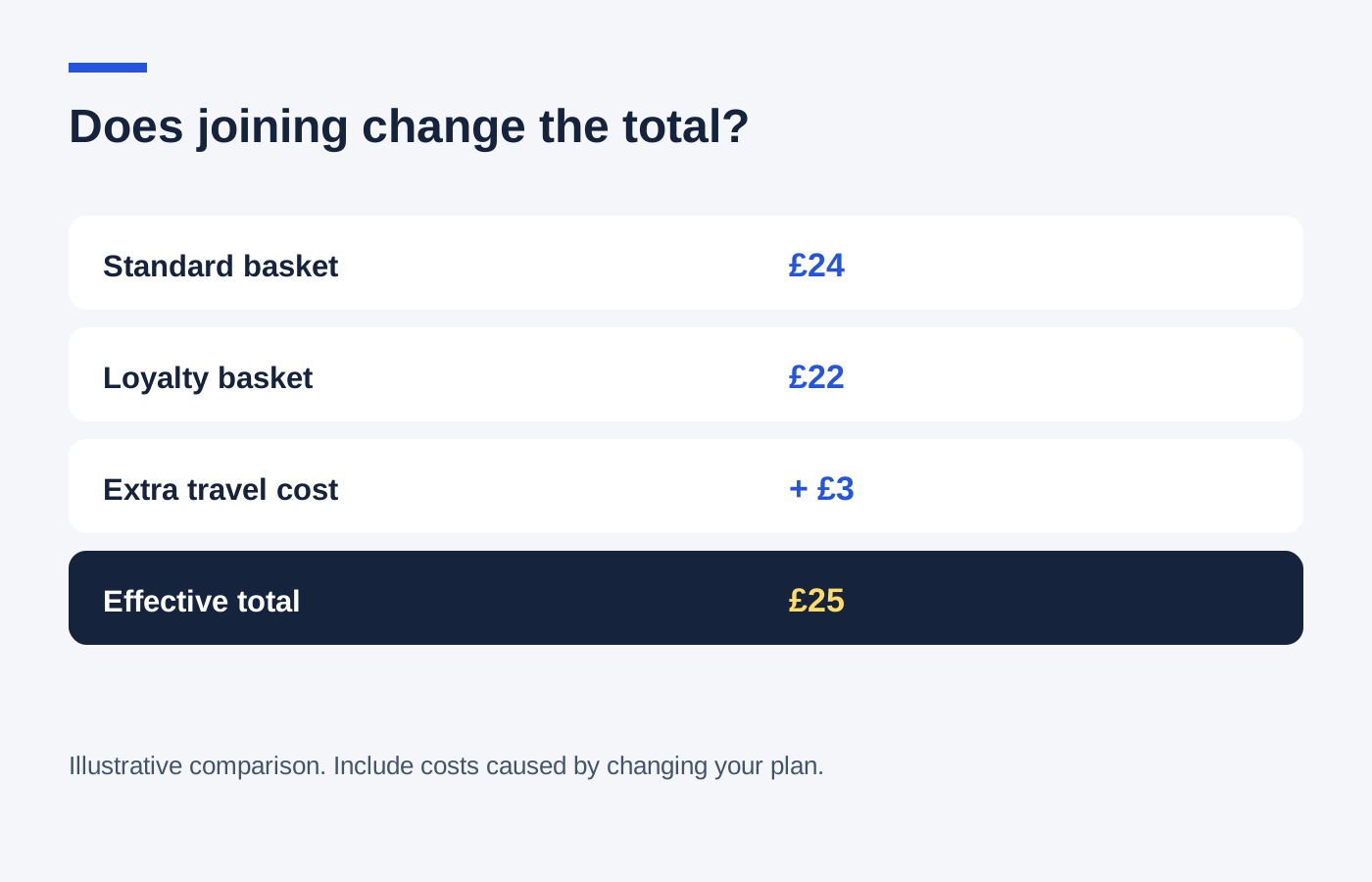
Splitting an order can still work. If one retailer is £12 cheaper on a large item and using it adds £4 postage, there may be an £8 benefit. But a collection trip or another minimum order can reduce that advantage. Record the split as its own option rather than comparing incomplete baskets.
Separate money now from money later
Loyalty points, cashback and a voucher for a future order do not reduce today's payment unless the checkout actually redeems them. Note them in a second column or sentence, including their conditions. A £5 future voucher requiring another £40 purchase is not equivalent to £5 taken off this order.
If a reward is uncertain, assess whether you would still choose that shop without it. Cashback may depend on tracking, eligible payment methods and the retailer confirming the transaction. A purchase that stretches the budget should not rely on a later reward arriving to become affordable.
Consider the likely return, not an imagined perfect order
When fit or compatibility is uncertain, read return methods and charges before choosing between close totals. A £2 lower purchase price may be less attractive if the only convenient change-of-mind return route costs £5 more. Keep that possible cost distinct from the confirmed amount, since you might keep everything.
Check who sells the products on a marketplace and whether different sellers require different return parcels. A single payment screen can conceal several separate arrangements. For a straightforward household restock this may matter little; for multiple clothing sizes it can materially change the work involved.
Finish the comparison while the figures are current
Recheck both totals immediately before ordering because stock, delivery slots and qualifying offers can change. Save the confirmation for the option you choose, with the relevant offer terms. You do not need to prove it was the cheapest price anywhere; you need a documented comparison of the realistic alternatives you considered.
If the difference is small, choose the option whose delivery, product information and return route suit the purchase. Those are real features of the transaction. A larger percentage badge is not a reason to ignore them once the full costs are known.