Check the fit with the coming season
A coat bought at the end of winter may be useful next year if the size and style suit you. Children's clothing, rapidly changing requirements and uncertain storage make advance buying harder to judge. Think about who will use the item and whether that need is likely to remain the same.
For garden or outdoor products, consider the space and conditions needed to store them. A seasonal saving can disappear if the item deteriorates before use or requires additional storage equipment. Check the manufacturer's storage advice for anything sensitive to temperature or moisture.
Name the compromise explicitly
Is the remaining item a colour you genuinely like, a slightly awkward size or a version missing a feature? Write down the difference from what you originally wanted. A harmless preference change is different from a lasting inconvenience or an item that cannot do its job.
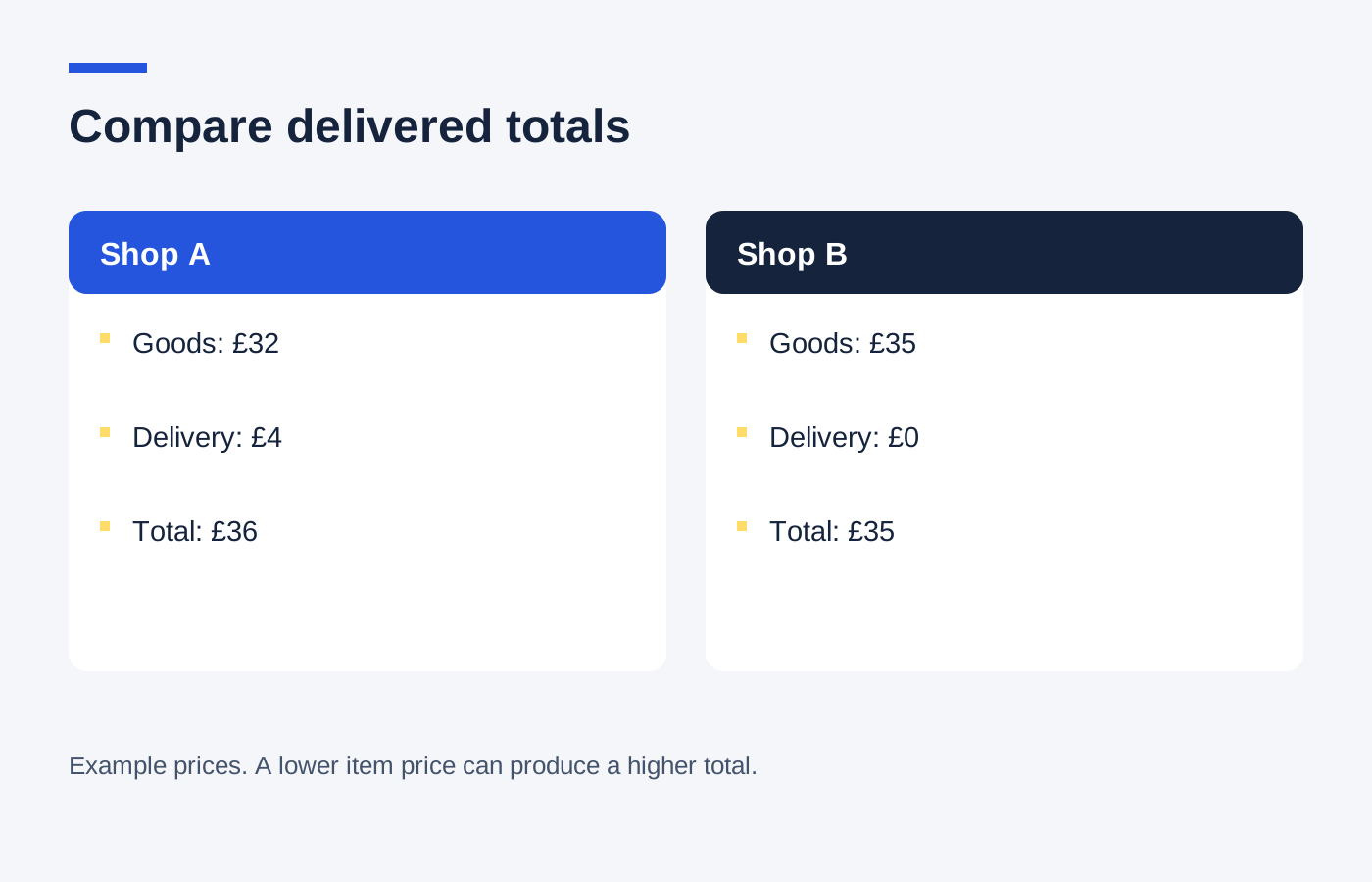
In a hypothetical sale, a £50 product reduced to £25 may seem more attractive than a suitable £30 alternative. If the reduced version needs a £10 accessory to work as required, it costs £35 in use. The stronger-looking discount has become the more expensive choice.
Consider timing and aftercare
If the item will not be used for months, inspect it promptly rather than leaving it boxed until the season returns. Check the order, dimensions and visible condition while the retailer's stated return process is still easy to follow. Read warranty and support details before buying discontinued equipment.
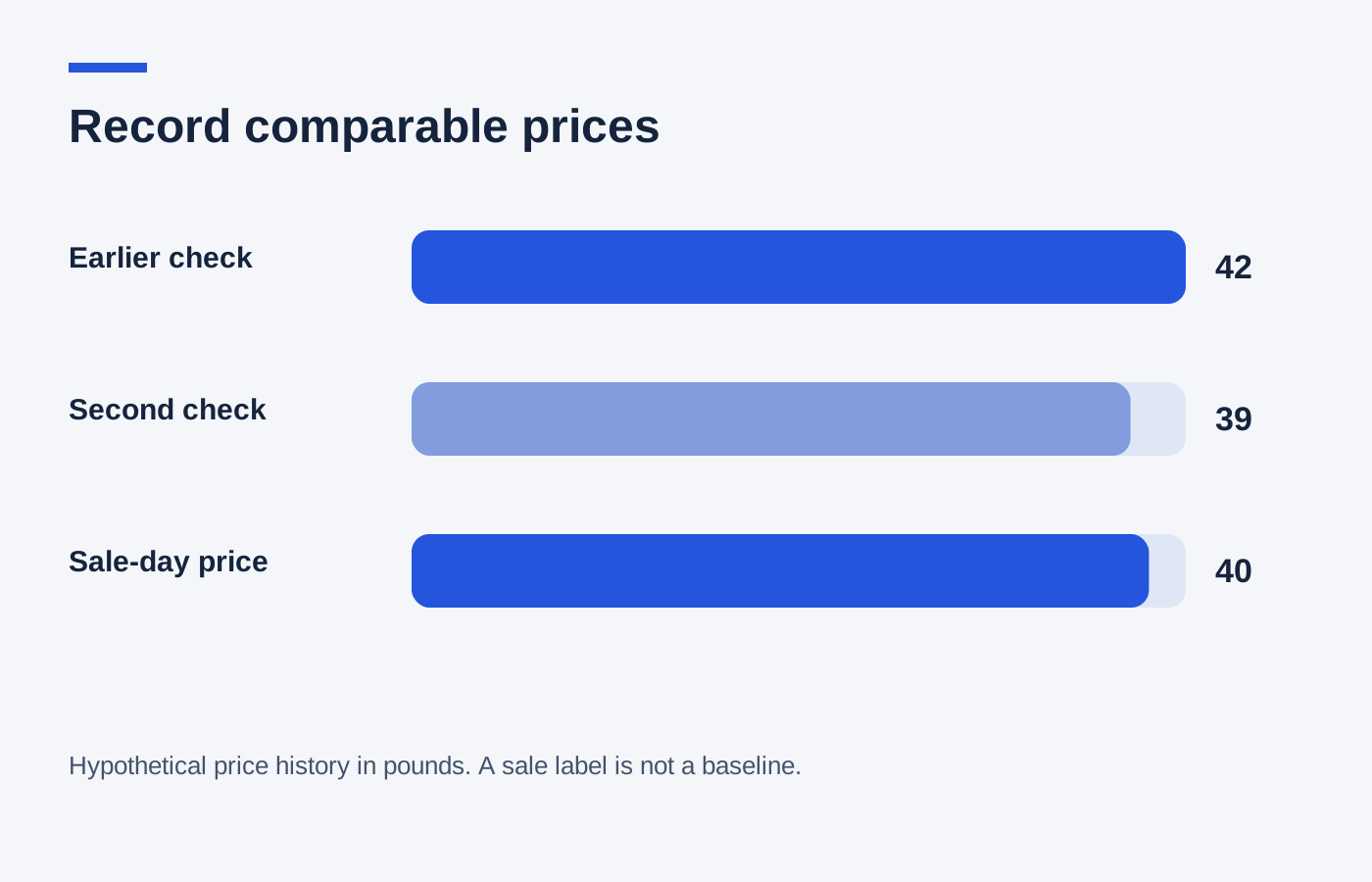
Compare the clearance price with the current market for that exact version, not only its original launch price. Older stock can be a sensible purchase, but its age may already be reflected in ordinary prices elsewhere.
Buy when the reduced product meets the requirements and the timing suits your budget. Leave it when the main argument is that the opportunity will disappear. Clearance describes the retailer's wish to move stock; it does not establish that the stock belongs in your home.