Use requirements that survive a different offer
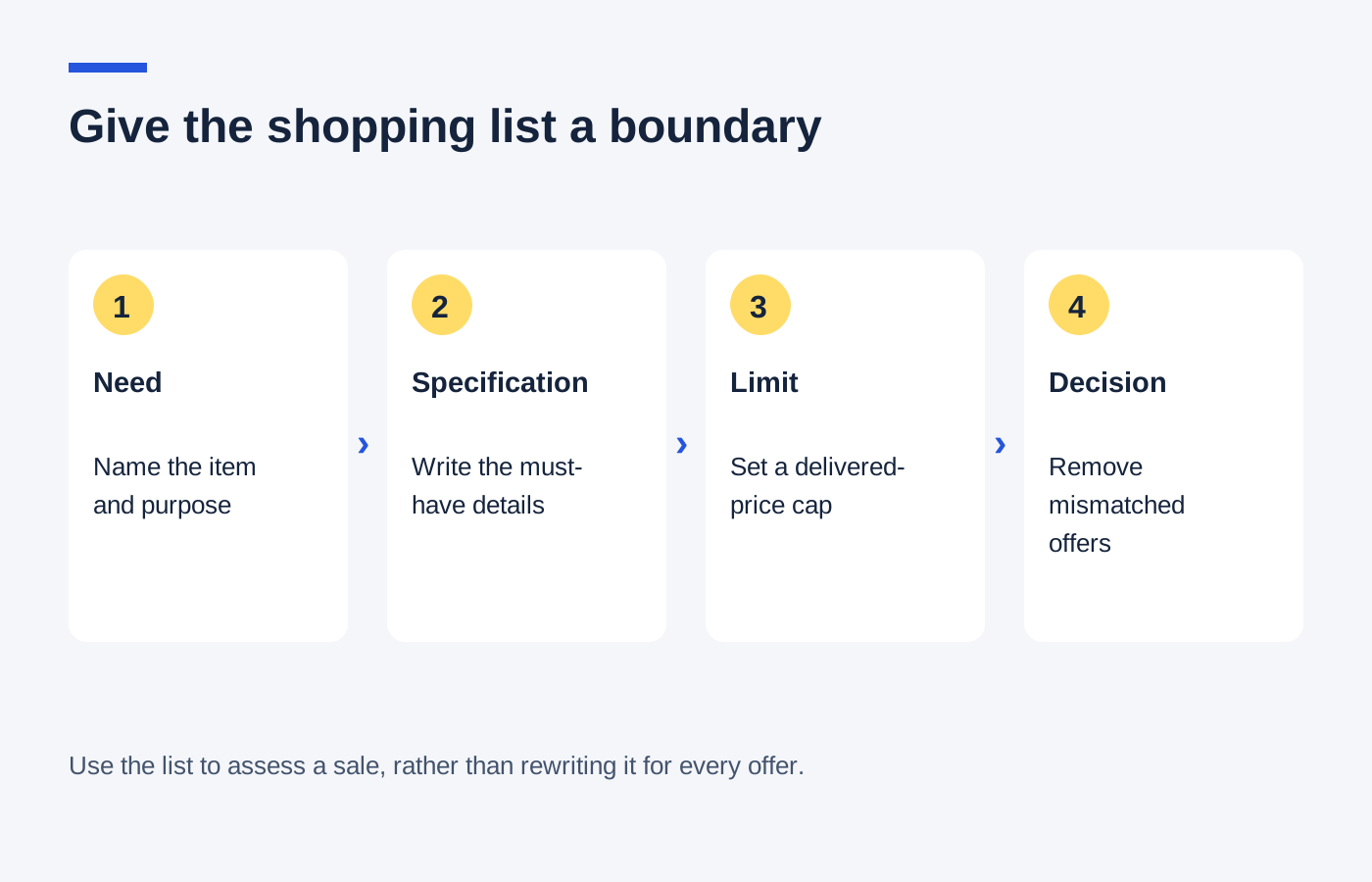
Instead of writing “buy a discounted coat”, note the size, weather use, length and space needed for layers. For a household item, record measurements and compatibility. These details prevent a large reduction from substituting an unsuitable product for the one you need.
Separate essential purchases from optional replacements. A broken kettle needed this week belongs in a different category from a cushion you might change eventually. Giving each item a deadline helps you decide where to spend comparison time.
Set a total rather than a discount target
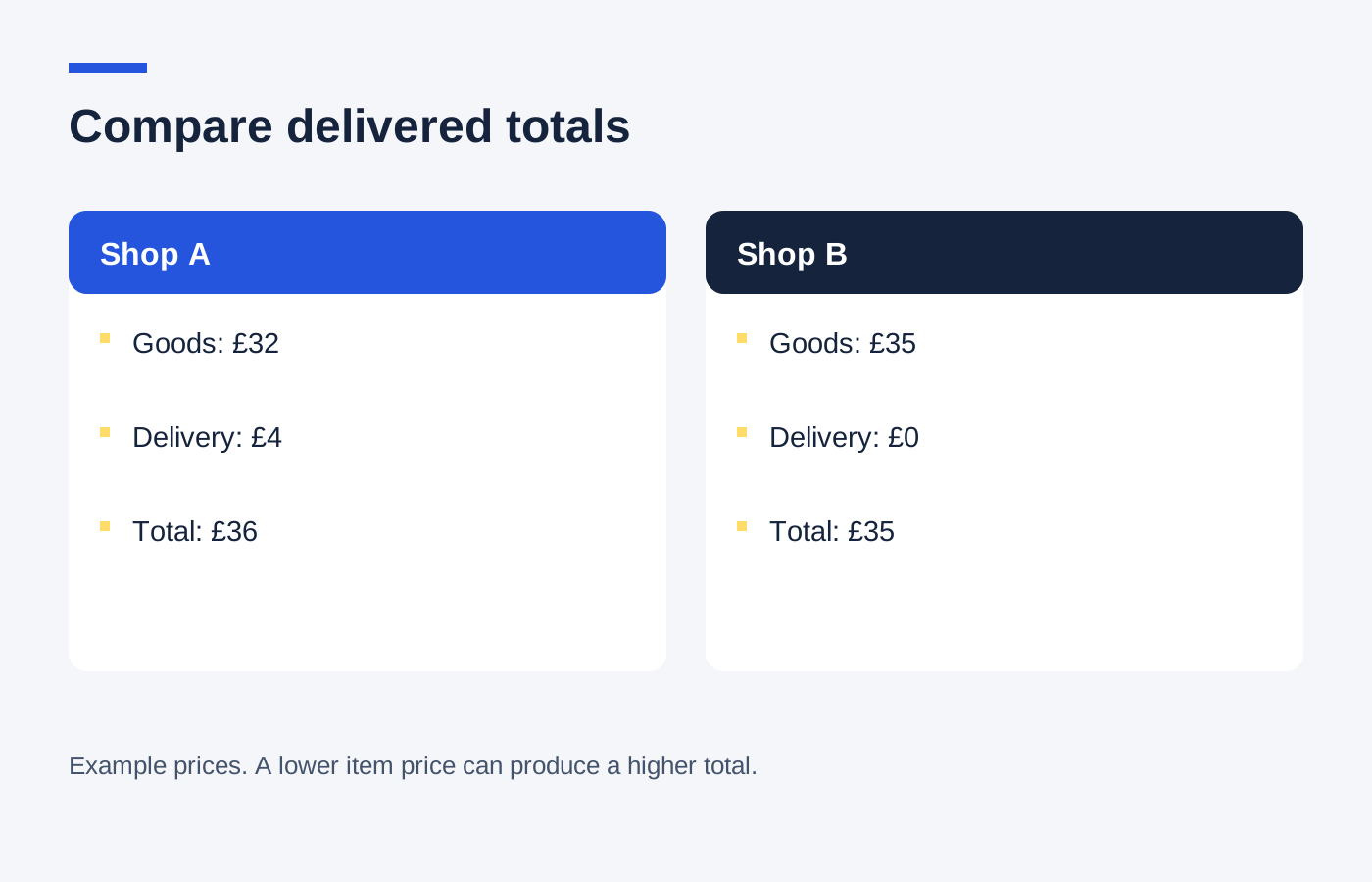
A target of “at least 30% off” can favour an expensive item with a high reference price. A delivered budget of £40 is clearer. Include any accessory, alteration or consumable needed to make the product usable, so the limit describes the whole purchase.
Leave a small uncommitted part of the budget only if you genuinely want flexibility. Do not let every surprise offer borrow from that same allowance. Once an extra is chosen, record it against the total so several small decisions do not become a large unplanned order.
Make substitutions deliberate
If a sale item differs from the list, identify exactly what changes. A different colour may be harmless; a smaller storage capacity or dry-clean-only fabric may introduce a continuing compromise. Decide whether that change is acceptable before checking the discount percentage again.
Remove items from the list when they are purchased, and note their final costs. Keeping the list current avoids buying a second solution because another retailer sends a stronger promotion later. A saved basket is not a reliable shopping record if it still contains discarded alternatives.
At checkout, read the list once more alongside the order. Every paid item should match a need, an acceptable substitution or a conscious optional choice. If you cannot explain why an addition is there without referring to the promotion, it is a good candidate to remove.