Choose a fair comparison
Match the product type, size and intended use. For food, check ingredients and any dietary information important to your household. For cleaning products, compare the stated application and dose rather than assuming equal bottle volumes do equal work. Always follow the product instructions.
Packaging can make products look more similar or more different than they are. Read the details instead of judging by colour, shelf position or a familiar brand name. If a particular feature is essential, keep it as a requirement rather than trading it away for a lower price.
Try a manageable quantity first
A small trial purchase can be more sensible than buying a large multipack of an unfamiliar alternative. It lets you assess flavour, texture, handling or suitability without committing cupboard space and money to something you may not use.
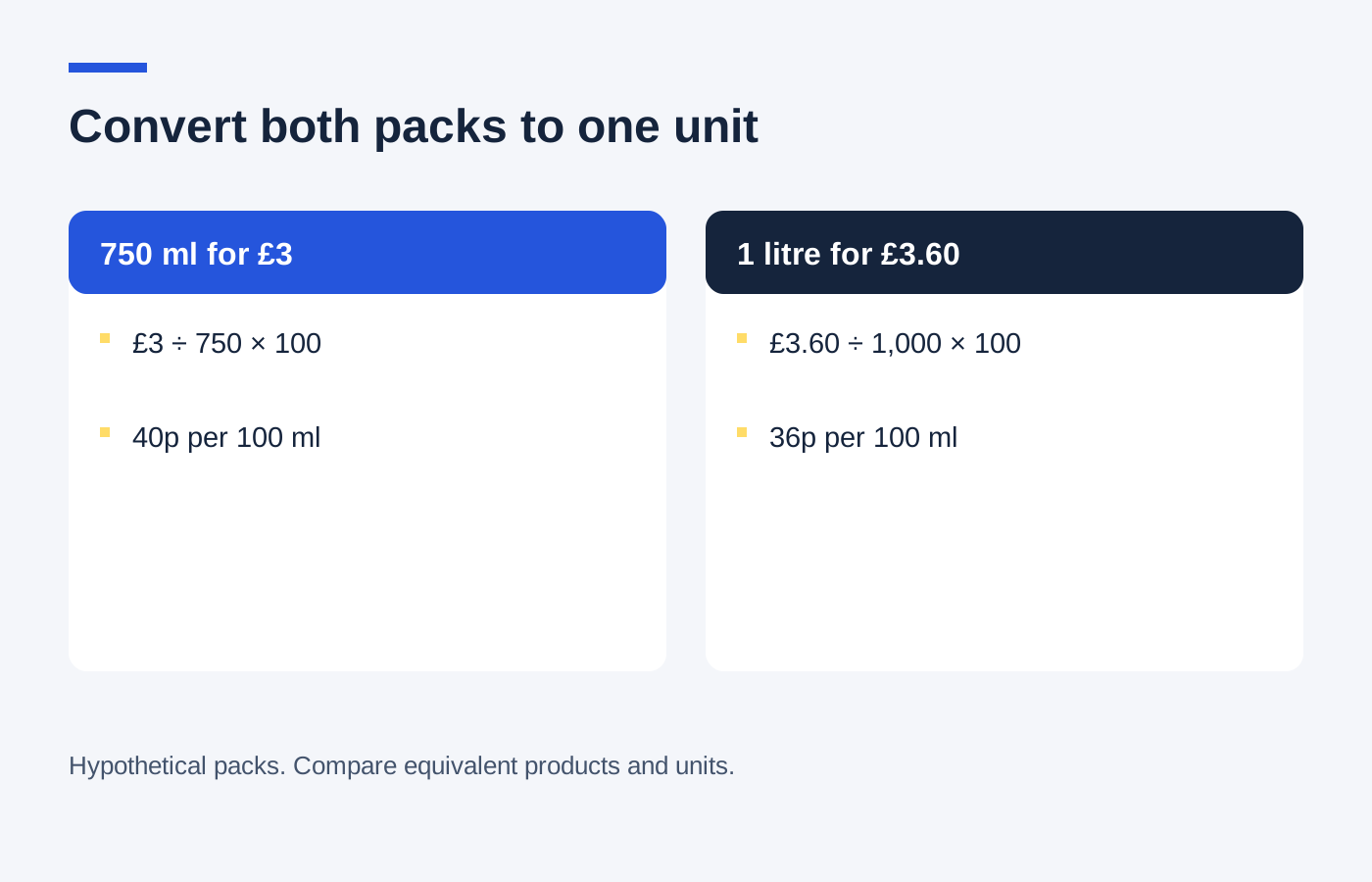
For an illustrative comparison, a branded 500g product at £3.50 costs £7 per kilogram, while a suitable own-label 750g version at £3 costs £4 per kilogram. The lower unit price is meaningful only if the alternative is acceptable and the larger pack will be used. These figures are examples, not current supermarket prices.
Compare promotions with normal prices
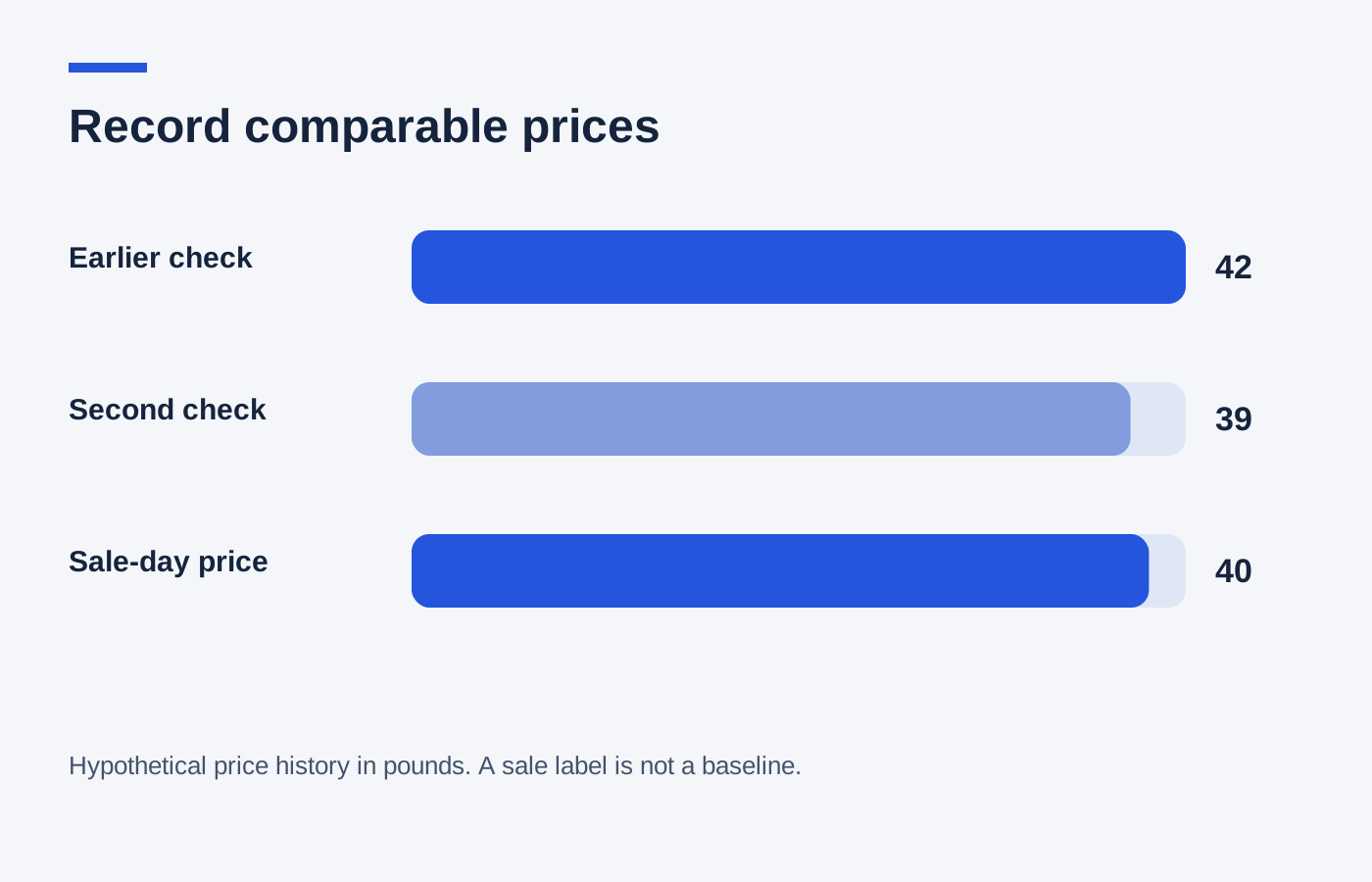
A branded product on offer may become cheaper than an own-label alternative, so recalculate rather than choosing by category. Conversely, a large branded discount can still leave a higher unit price. Use the amount you would pay today, including any membership condition.
For repeat purchases, note whether changing products altered how much you use. A lower price per bottle may not lower the cost per task if you need more of it. Do not exceed labelled doses to compensate for an unsuitable product; choose one that does the required job.
Keep the alternatives that work and leave those that do not. The aim is to find suitable products at a sensible cost, not to replace every brand or defend every familiar purchase. A mixed shopping list can be the most useful result of careful comparison.