Try a real parts search
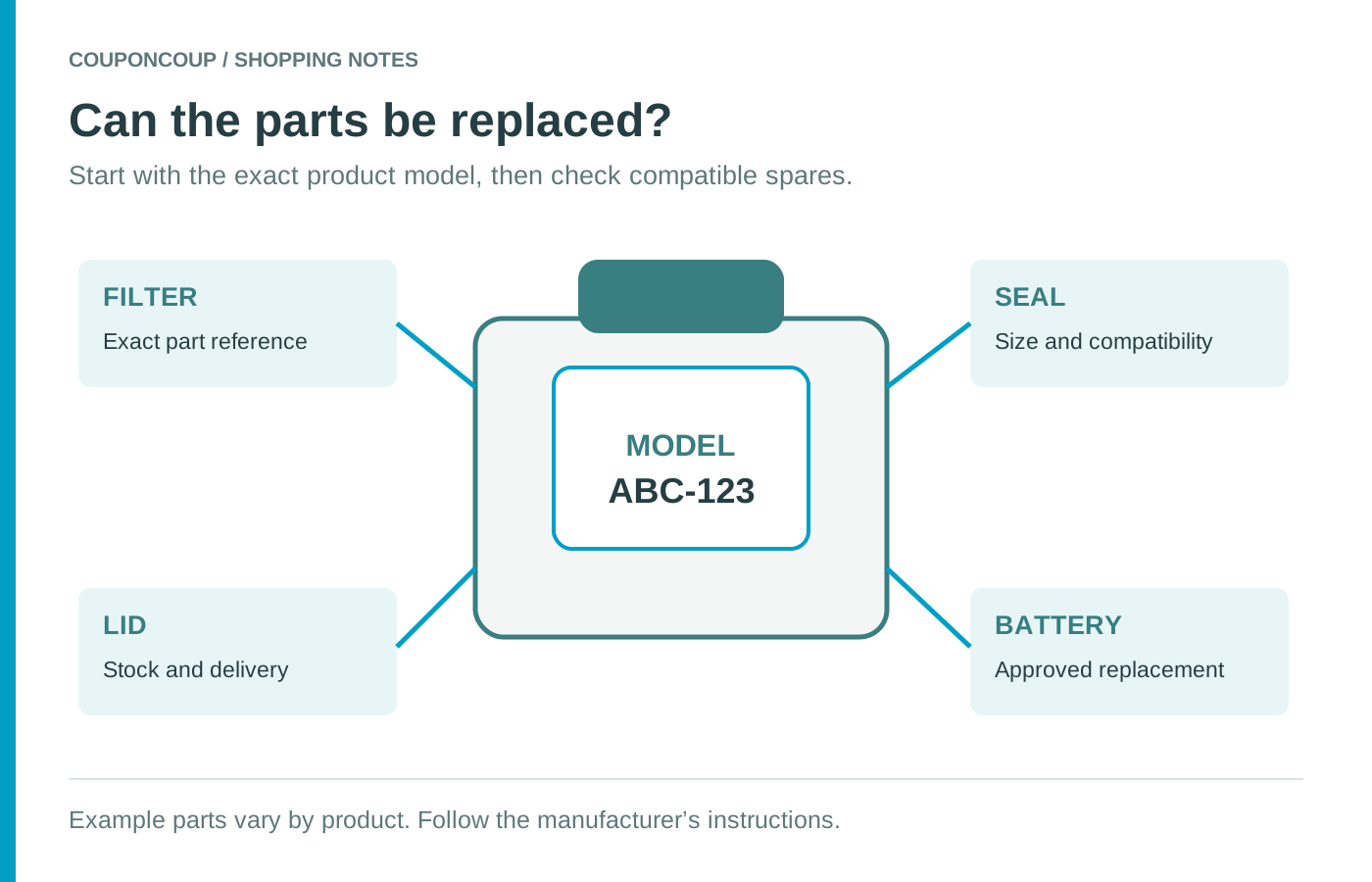
Copy the complete model identifier from the product specification and search the manufacturer's parts service. A range name may cover several versions with different fittings. If the page requires a number that is not shown on the retailer listing, ask the seller or manufacturer which identifier applies to the product offered.
Find one or two components relevant to normal use: a fridge drawer, vacuum attachment, food-storage lid or furniture shelf support. Note whether the listing names compatible models and whether you can see an ordering route. A photograph that resembles the part is less useful than an explicit compatibility reference.
Bosch's UK spare-parts service, for example, searches by appliance model number. This illustrates why keeping a model identifier matters; it does not mean another manufacturer's parts use the same identification system.
Distinguish availability from a catalogue entry
A diagram or old product page may show that a part existed without confirming that it can currently be supplied. Check the stock message, dispatch estimate, delivery destination and whether the item is sold individually or in a larger assembly. Ask about an unclear listing rather than assuming that a visible price means immediate supply.
Availability today cannot guarantee stock years ahead. If the manufacturer makes a longer support commitment, read its scope: the relevant models, types of part and start date may be limited. Record the published wording instead of converting a broad claim into a promise for every component.
Put a delivered replacement beside the purchase price
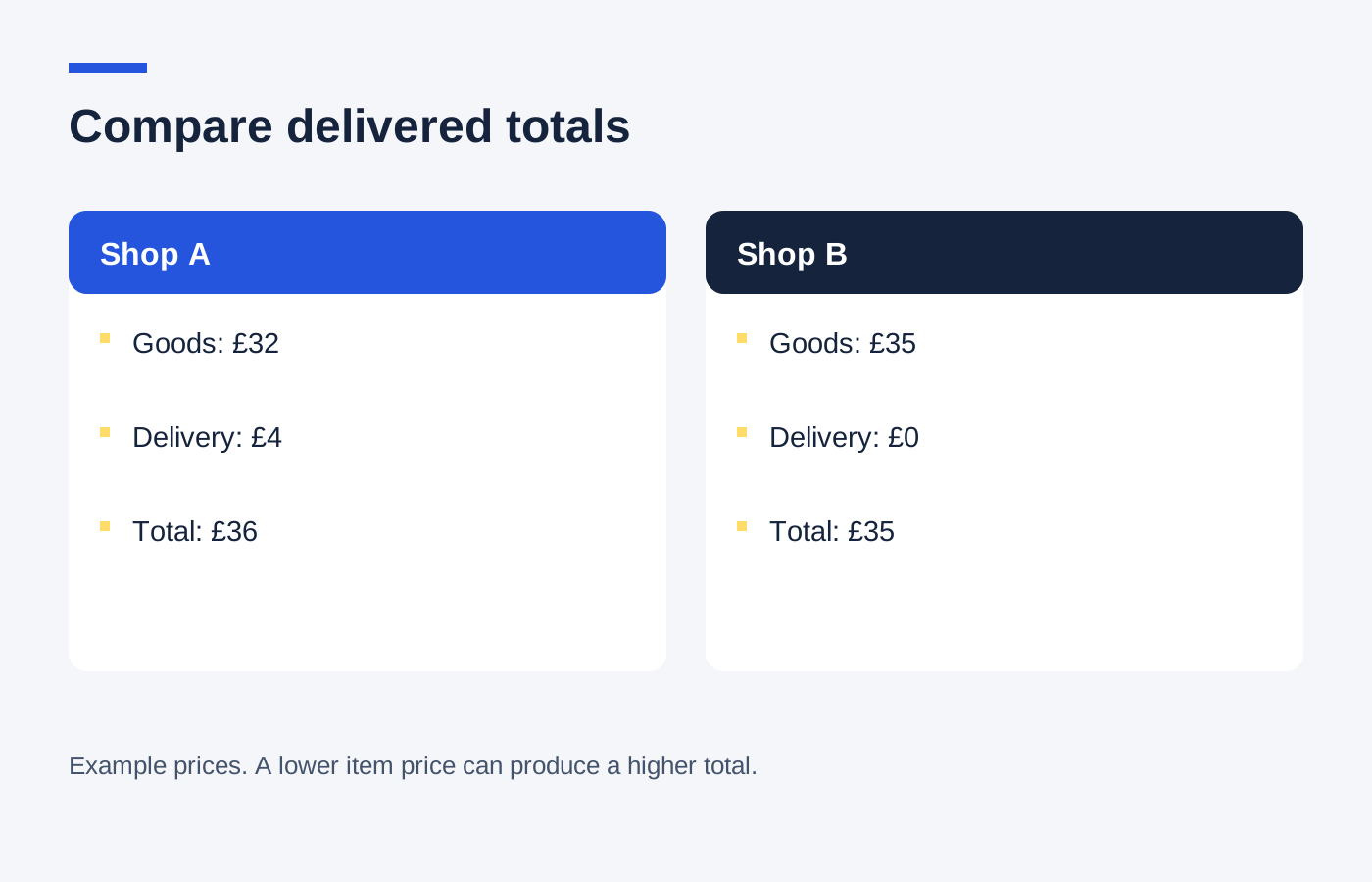
Look at a plausible repair cost without pretending to predict a failure. In a hypothetical comparison, a £38 storage product with a £7 replacement lid and £4 parts delivery offers a different route from a £32 version whose lid is unavailable separately. That information may affect your choice, but it does not establish which product will last longer.
Add fitting costs when the work requires a repair service. A low component price does not make an involved appliance repair cheap. Check whether the instructions describe the part as suitable for owner replacement, and use the manufacturer's service route for work beyond those instructions.
Consumables deserve a separate line in your notes. Filters, bags or cartridges may be expected repeat purchases rather than occasional repairs. Identify their codes, usual pack quantities and availability so that an appealing initial price does not hide an awkward supply requirement.
Keep the information that future ordering needs
After purchase, retain the receipt, manual and a clear record of the model label. Avoid relying solely on a retailer account or a product link that may disappear. For a multi-part set, keep the component list too; it can help identify which small fitting is missing.
You do not need to buy a cupboard of speculative spares. The useful outcome is knowing where the product is supported, which identifiers matter and what a realistic replacement route looks like. If no clear route exists for a part central to everyday use, include that uncertainty when comparing the original purchase.