Identify the original transaction
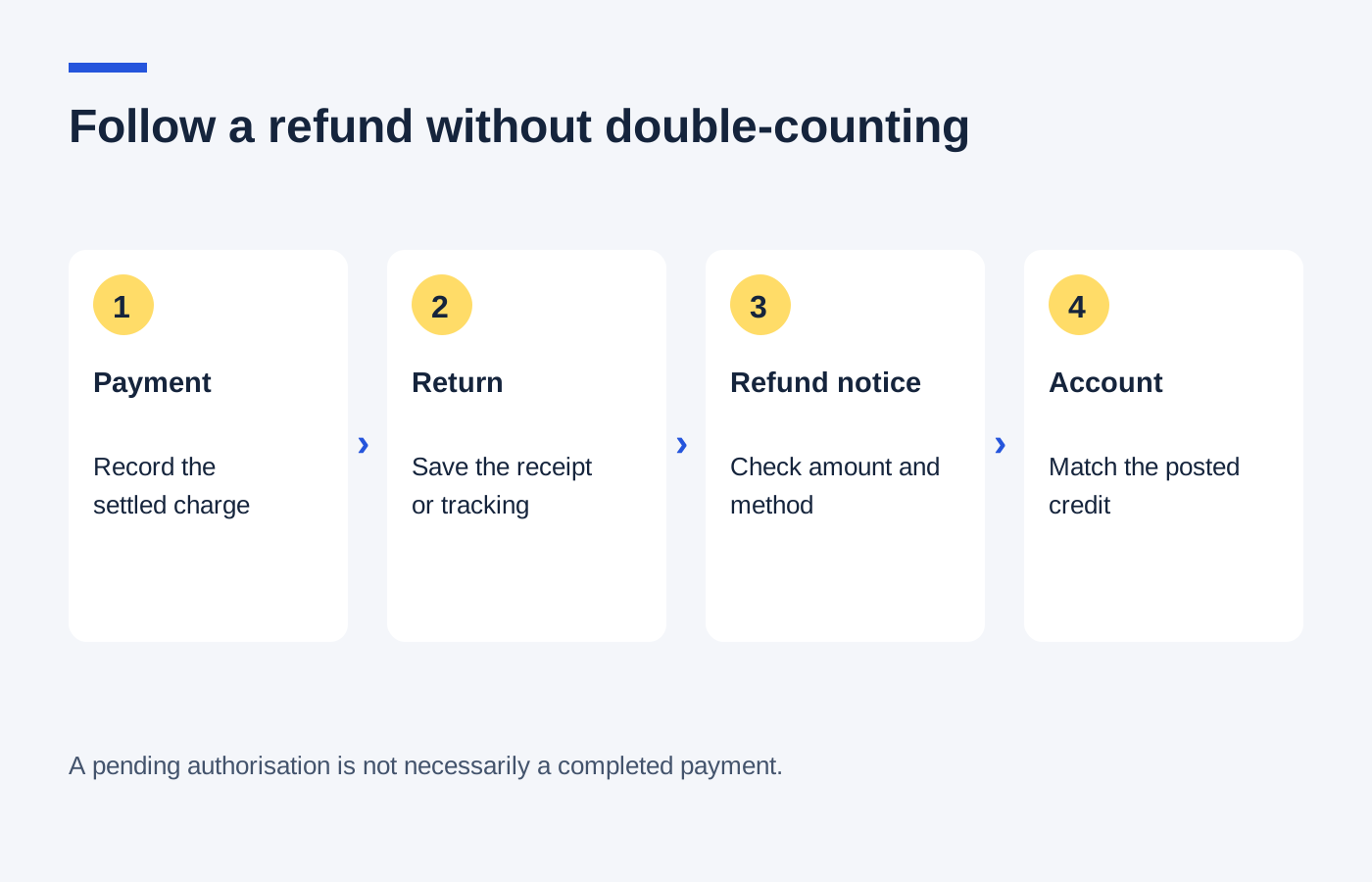
Find the original order amount, payment date and payment method. Check whether the payment is shown as completed or pending in your bank or payment-service account. A temporary authorisation that is released may not look like a separate refund credit, so ask the provider what its status labels mean if you are unsure.
If you paid with more than one method, note the split. A hypothetical £50 order paid with £20 gift-card credit and £30 by bank card may produce separate refund records. Looking only for a £50 card credit could make a correctly split refund appear incomplete.
Read what the retailer has actually confirmed
An email saying the return has arrived is not necessarily a message saying a refund has been issued. Find the amount, issue date and payment destination in the refund confirmation. If it covers only part of the order, compare it with the returned items and their discounted prices.
Keep any refund reference the retailer provides. If it states an expected processing period, record when that period ends and whether it refers to working days. Do not substitute a timetable from a different shop or payment method; processing and legal obligations are separate questions.
Check the appropriate account
Look in the original payment account, including any gift-card balance or wallet used. If a card has been replaced or an account closed, contact the payment provider through its official support route to ask how an incoming refund would be handled. Do not send full card details in an ordinary email to prove ownership.
Compare the net effect as well as individual lines. A cancelled pending transaction may disappear, while a completed charge and later credit can remain as two entries. Use the provider's explanation rather than assuming that the absence of a line labelled refund proves no money returned.
Follow up with a clear timeline
If the expected time has passed, contact the retailer with the order reference, returned items and refund confirmation. Ask whether the refund was issued and request the reference needed by the payment provider. Then share the relevant details with that provider if tracing is necessary.
If the retailer disputes the refund itself, use the appropriate consumer advice or payment-dispute route promptly rather than treating it as an endless processing delay. Keep deadlines in mind, explain the facts accurately and avoid opening duplicate requests without telling each party what has already happened.