Write the amount that leaves your account
Take the selected item price after any qualifying reduction and add the delivery charge shown for your address. Include an unavoidable handling fee if one applies. Repeat this for the other shop using an equivalent product and service.
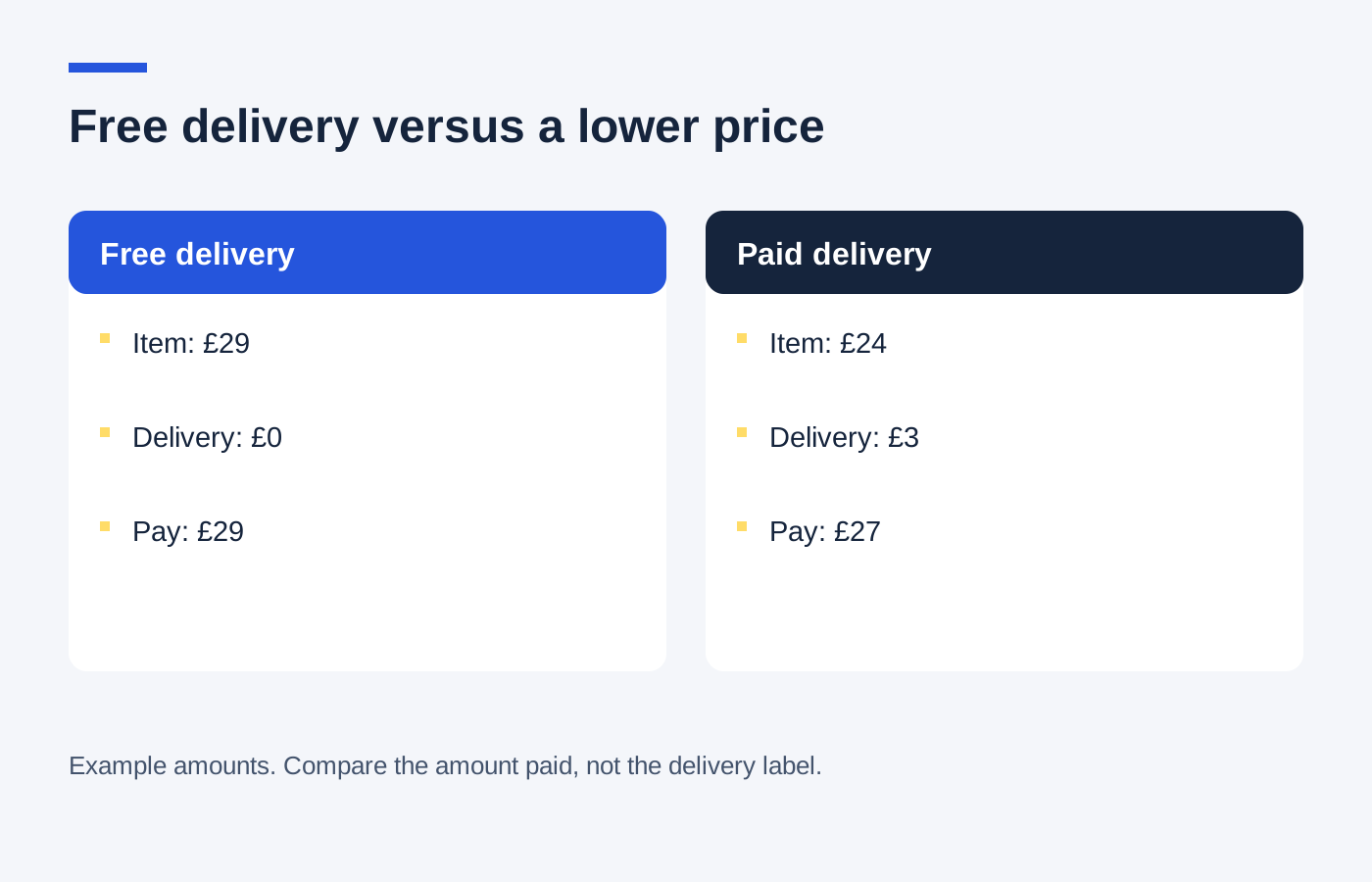
In a hypothetical comparison, one shop charges £29 with free delivery. Another charges £24 for the same item and £3 delivery, making £27. The second option costs £2 less despite having a visible postage charge. A large ‘free’ label does not change the arithmetic.
Check that the lower item price applies to the exact size, model and condition you want. A displayed starting price for a different variant is not a comparable offer.
Test a delivery threshold separately
If free delivery requires more spending, calculate the new basket rather than subtracting the old postage charge in isolation. An illustrative £36 order with £4 delivery costs £40. Adding a £9 item to reach a £45 free-delivery threshold produces a £45 payment: £5 more than the original order.
That extra item may be worth buying if you already need it. Compare its additional £5 cost with the value it has to you, and check whether a discount changes the qualifying subtotal. Do not assume every item or charge counts towards the threshold.
Avoid adding something with the plan of returning it purely to reach a threshold. Returns create another transaction, and the applicable offer and return terms may affect the eventual amount.
Keep the service comparable
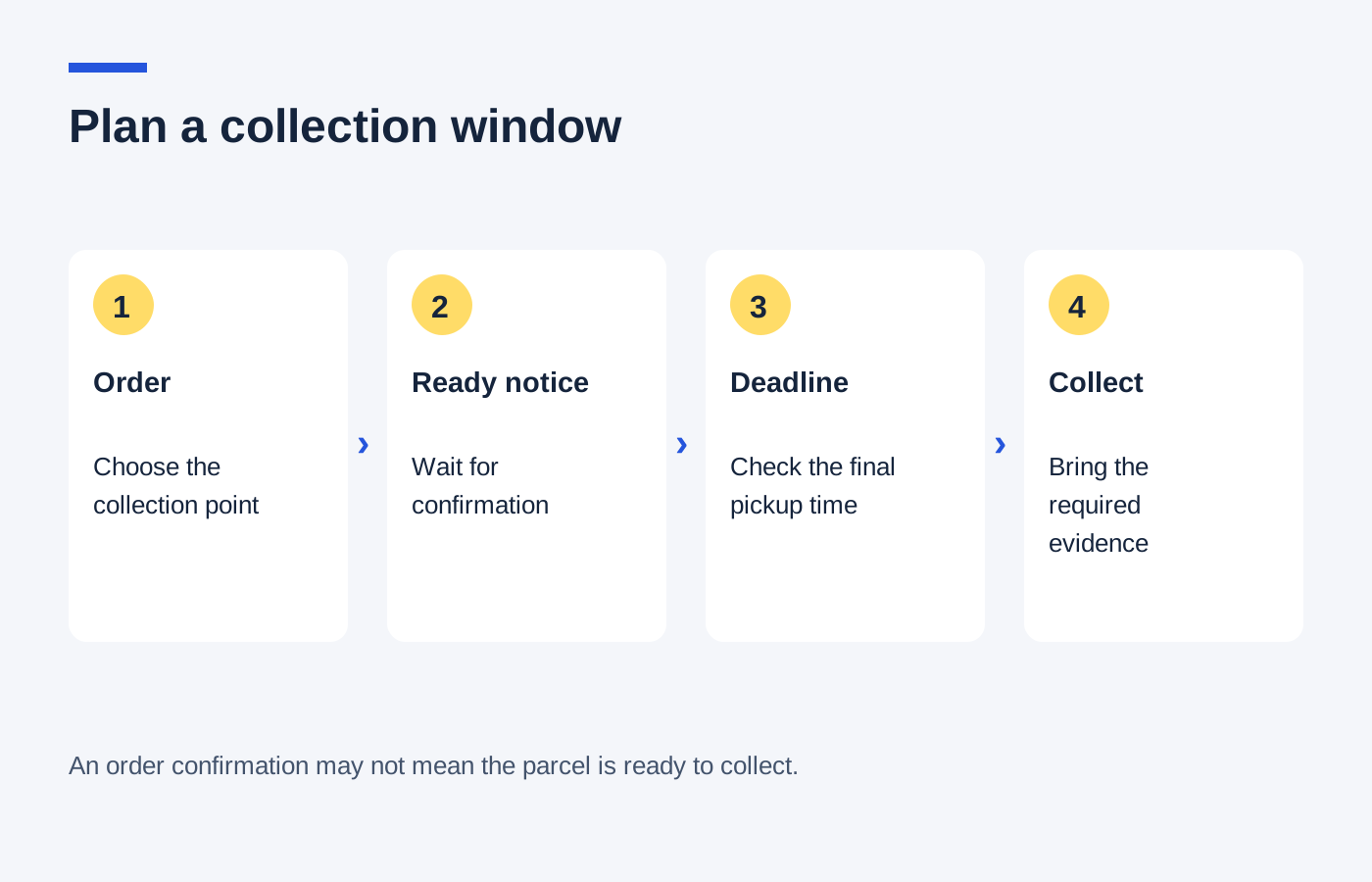
Look at the delivery date, collection requirements and location coverage. A free service that cannot meet your deadline is not equivalent to a paid service that can. Use the cheapest option that satisfies your actual needs in each comparison.
If both arrangements work, choose using the complete price and any relevant seller or return information. Paying for delivery can be entirely reasonable when it produces the lower overall cost or a more suitable order.