Find the boundary of the service
Read the description beside the delivery method, not just its price. Delivery to a doorway, delivery to a chosen room, unpacking and assembly describe different tasks. Check whether the selected service includes stairs, packaging removal or taking away an old item, and whether any of these must be booked separately.
IKEA's UK delivery information, for example, distinguishes delivery options and makes access relevant to placement inside the home. The point is to examine the actual service attached to your basket. Do not assume a previous furniture delivery from another retailer establishes what this crew has agreed to do.
Ask how the service works if the product comes from a third-party supplier or arrives in several shipments. The name on the shopfront may not be the party arranging every delivery, and one basket can contain items with different arrangements. Keep the written confirmation of any extra service you purchase.
Measure the route for the packaged item
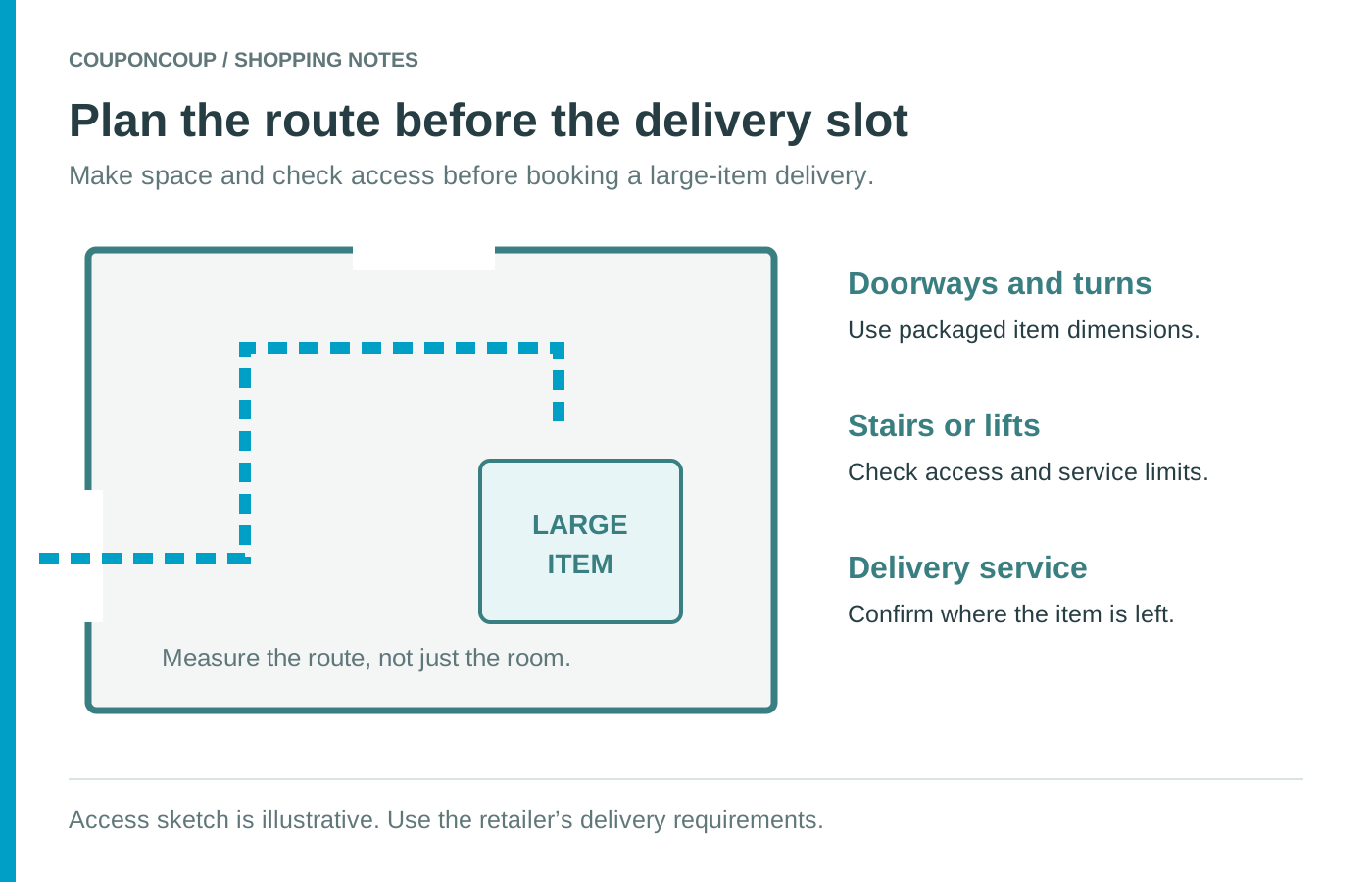
Find the measurements and weight of each package, separately from the dimensions of the assembled product. An item that fits in its final position may arrive in a larger rigid box or several separate cartons. Count the packages and identify anything the retailer says about access requirements.
Trace the route from the unloading point to the intended room. Note gates, narrow doorways, corridors, sharp turns, stairs and lifts. Record the relevant clear openings and send uncertain measurements to the retailer before committing to delivery. A single straight-line width cannot establish whether a long object can turn through a confined route.
For a flat, check building arrangements such as lift bookings, permitted delivery hours and access through shared entrances. If access would require removing a door or other preparation, arrange suitable help in advance and confirm the retailer's requirements. Do not assume the delivery team will undertake unbooked alterations to the property.
Use the retailer's delivery assessment service if one is available and the route is difficult. Clear photographs and measurements can help a discussion, but they do not amount to a guarantee that an item will pass through every obstacle. Resolve the uncertainty before disposing of furniture you are replacing.
Choose a date you can support
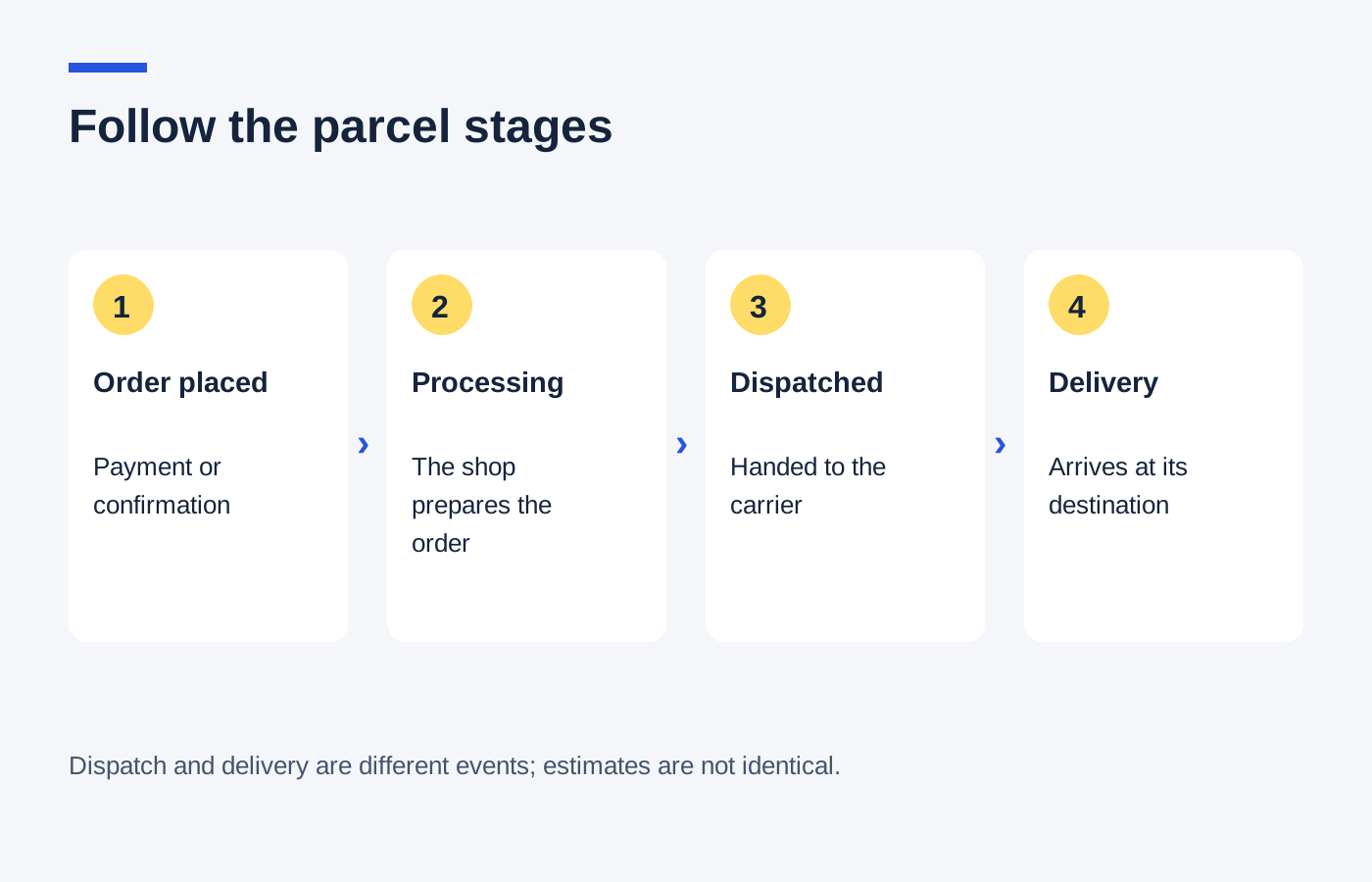
Read whether the slot is a booked arrival window or an estimate that will be narrowed later. Find out how you will receive updates and whether someone must be present throughout the stated period. If you cannot meet that requirement, a different day may be more useful than a cheaper but inconvenient slot.
Check the deadline and process for changing a booking. Note any stated costs for a missed delivery, restricted access or rearrangement, while asking for clarification if the terms are unclear. Keep your contact number current so the crew can use the agreed contact process.
Mention known parking or loading restrictions through the retailer's requested channel. Do not promise access to a space you cannot reserve. Where a building requires an entry code or concierge arrangement, organise that before delivery and share it only through an appropriate channel.
Prepare the room and the paperwork
Clear the agreed route and the space where the item will be placed. Follow the retailer's preparation instructions, including any requirements associated with an installation or removal service. Keep children and pets away from the working route, and avoid planning to assist with heavy lifting unless the service specifically requires a suitable arrangement that has been agreed.
Have the order number and package list accessible. At arrival, follow the supplier's inspection and reporting process; note visible packaging damage or missing cartons promptly and keep relevant photographs. If opening the product later reveals a problem, contact the seller with the details rather than assuming an unmarked box proves the contents are correct.
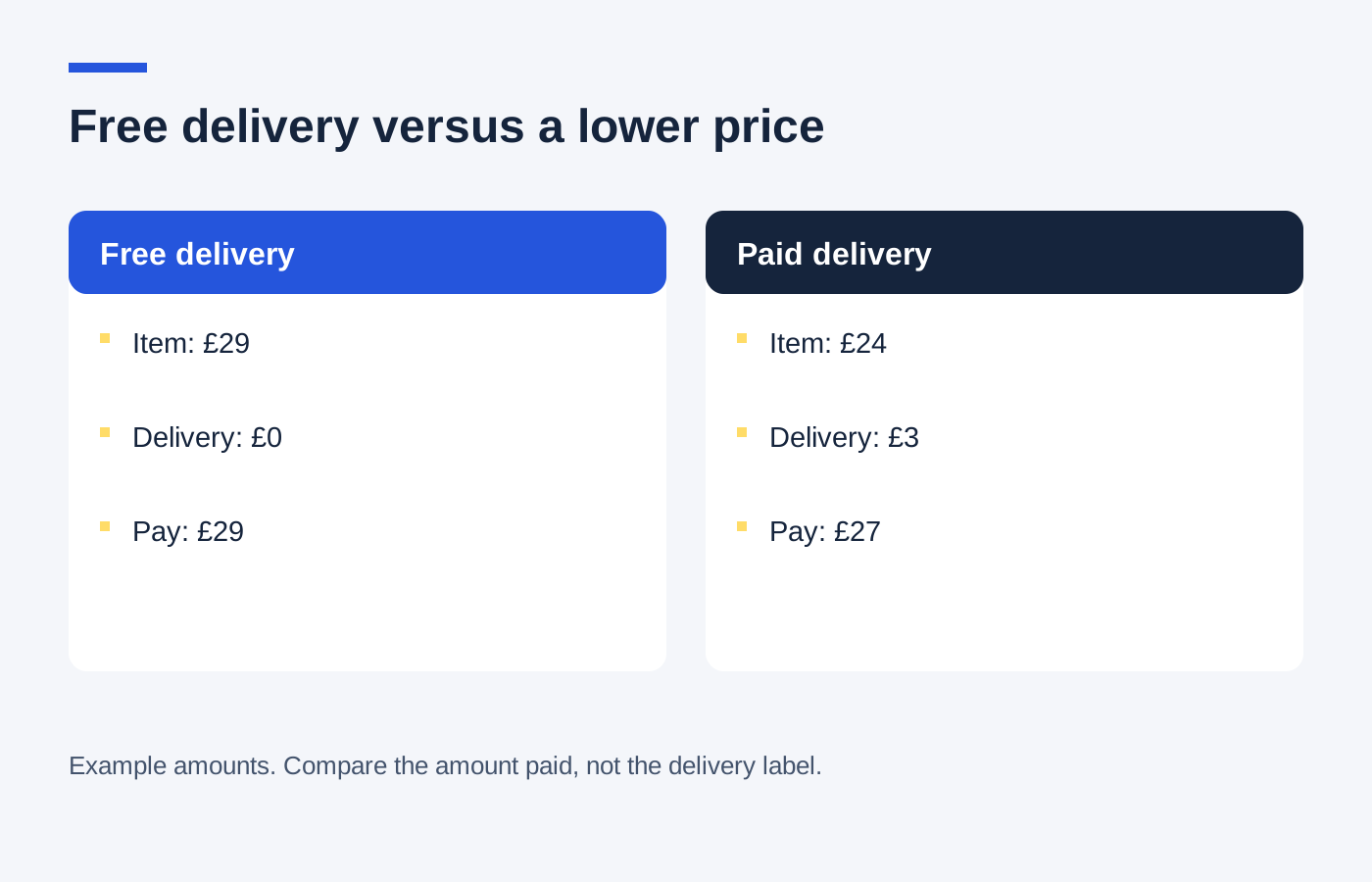
Finally, allow time after delivery for whatever remains outside the service, such as assembly by a separately booked installer or arranging the room. A delivery date and a ready-to-use date can differ. Comparing those complete arrangements makes the delivery charge easier to judge than treating it as an isolated extra at checkout.