Match the order to the parcel
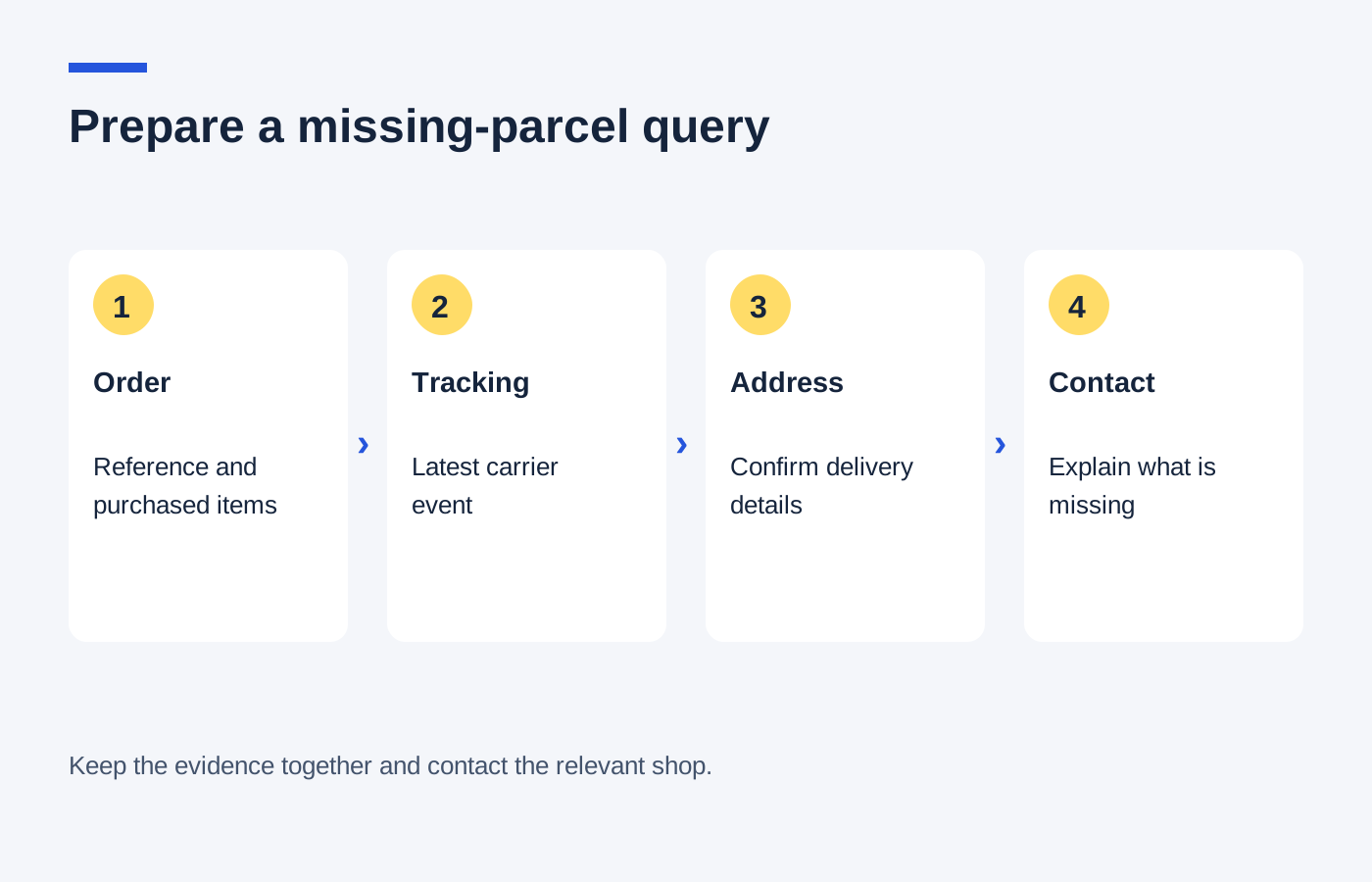
Find the order confirmation, the seller’s name and the order reference. Check whether the order was split into several parcels and which products are still missing. The number on an order email may be different from the carrier’s tracking number, so retain both.
Review the address shown on the order and the delivery estimate provided at purchase. Note any later change that you agreed with the seller. If the original page has changed, use your saved confirmation rather than trying to reconstruct the estimate from today’s listing.
Open tracking through the seller’s account page or the carrier’s known website. Record the latest status and its date. If it shows delivered, look at any available delivery photograph or location detail and check the arrangements you authorised. Do not put yourself at risk investigating an unfamiliar location.
Write a short timeline
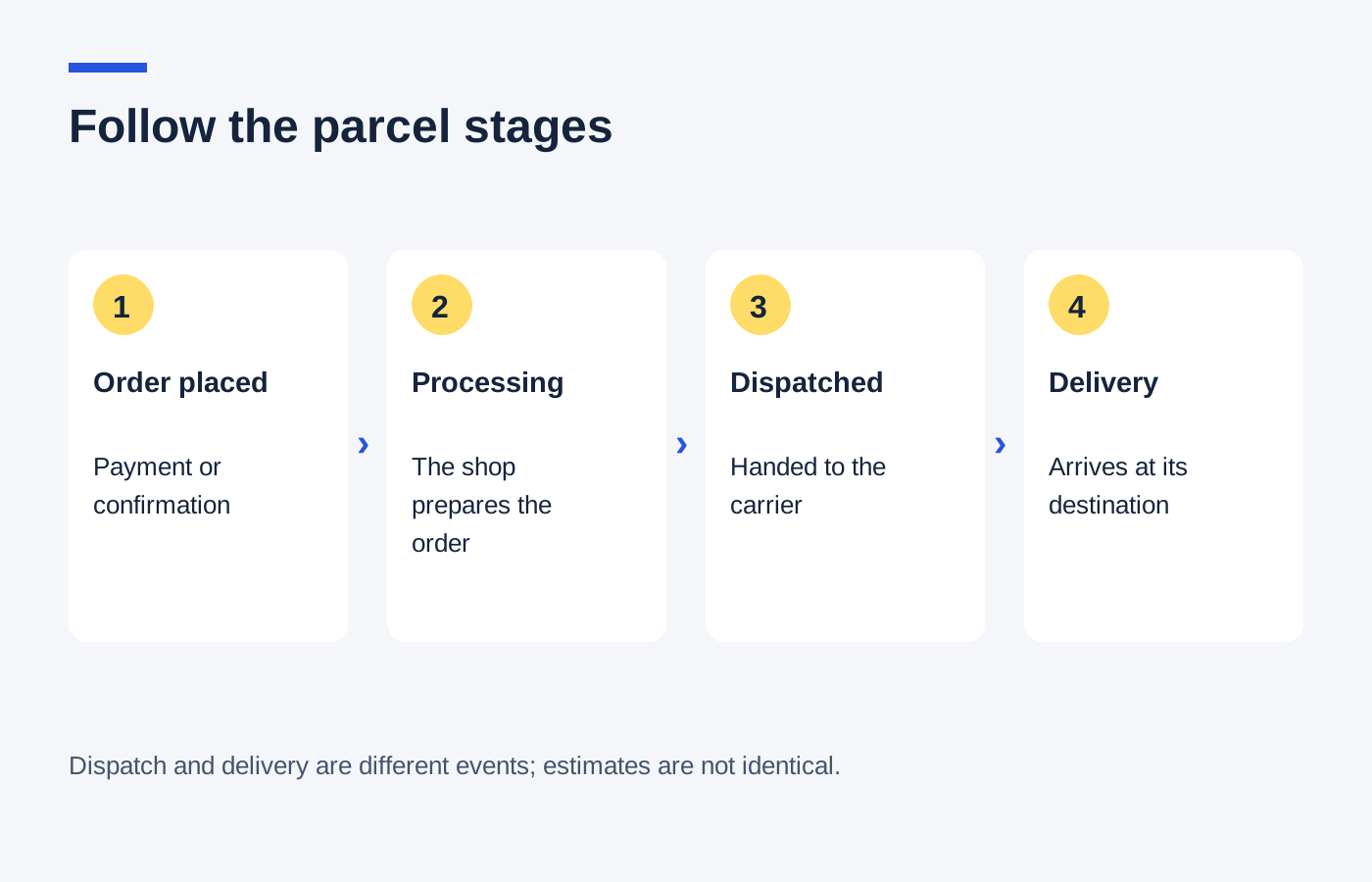
A useful timeline might say: order placed on Monday, dispatched on Wednesday, expected on Friday, and no delivery by the time of your message. Add the actual dates rather than relying on weekday names if the discussion may continue.
State whether nothing arrived, one parcel is missing or the parcel arrived with an item absent. These are different questions. If part of the order arrived, list the received and missing items using the names on the confirmation.
Include any relevant authorised safe-place or neighbour instruction. The circumstances of delivery matter, so do not assume that every tracking disagreement has the same remedy. Keep screenshots of the relevant status if it may change.
Contact the seller without oversharing
Royal Mail’s buyer guidance directs customers to the retailer when an online purchase has not arrived, is incomplete or is damaged. For an ordinary retailer-arranged delivery, start with that seller’s order-support route rather than assuming the carrier alone must resolve the purchase.
Provide the order number, missing items, expected date and latest tracking information. Ask the seller to investigate and explain the next step. Avoid sending full card numbers, passwords or unrelated identity documents. If further verification is requested, check that you are using the genuine support channel.
Keep a copy of your message and the reply, including any case number. When following up, refer to that case and add what has changed. Opening several unrelated messages can make the chronology harder to follow.
Keep the next step tied to the response
If the retailer gives an investigation or response date, note it and follow up when it passes. Do not invent an automatic refund deadline from a general shipping estimate. Your options depend on the order, agreed dates and delivery circumstances.
If the explanation remains unclear, use the linked consumer guidance to identify the relevant route for your situation. A well-organised record helps whether the eventual outcome is locating the parcel, arranging another delivery or addressing the payment for undelivered goods.