Start with the seller and the return destination
Open both order confirmations and identify who sold and dispatched the items. Purchases made through the same website can belong to different marketplace sellers or brand partners. A shared shop name does not establish that the returns go to the same warehouse or use the same booking process.
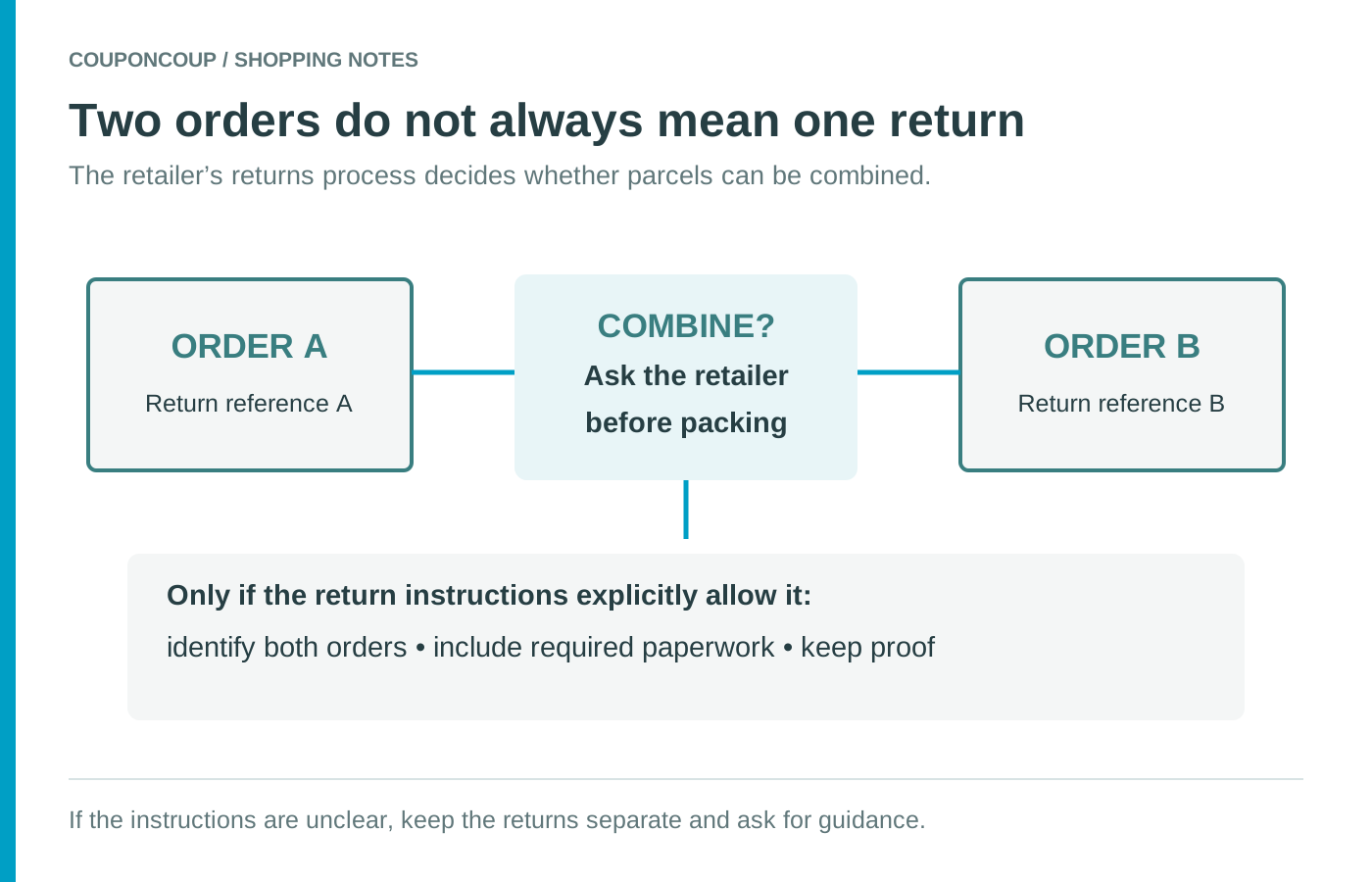
Find the return instructions for each order and check that the items are eligible through the route you intend to use. Do not combine them simply because the printed return addresses look similar. The parcel identifier may be linked to a particular request, account or set of products, and the warehouse needs that information to match the contents.
If the instructions do not address mixed orders, ask the retailer in writing. Provide the relevant order numbers and the items you intend to return, without sending payment details. Keep the reply with your return records. A carrier accepting the box at a drop-off point does not confirm that the retailer has authorised its contents.
Let the return process define the parcel
Use the retailer's portal to select the items being returned. Where it allows products from several orders in one request, confirm that all intended items appear in the final return summary. If the portal produces separate requests and gives no combining instruction, do not decide that one label will cover both.
Rules can differ even within a retailer. ASOS's UK guidance describes a process for combining eligible items through an account, while directing customers returning several guest orders to register and send them separately. Its instructions also distinguish partner-shipped products. That is an example of why the route for your own purchase matters more than a general answer found for another shopper.
Check each item's timing requirements separately. Combining orders should not mean waiting for a later purchase until the earlier one's return deadline has passed. A generated return request is not, by itself, evidence that every deadline has been satisfied; follow the retailer's instructions about sending the parcel.
Match the packing to the approved contents
Once combining is authorised, choose packaging that protects all the items and meets the selected carrier's size and weight limits. A larger combined parcel may not qualify for the same drop-off option as two smaller ones. Include any forms or item identifiers the retailer requires, particularly where the products belong to different orders.
Use the label or code assigned to that parcel, and remove or cover obsolete delivery labels as instructed. Do not put several competing shipping labels on the outside to represent several orders. If the approved contents will not fit in one parcel, return to the booking process or ask the retailer how to register an additional package.
Before sealing, compare the contents with the return summary, including sizes, colours and quantities. Photographs and a short contents note can help you describe a later problem, although they do not replace the carrier's acceptance receipt or the retailer's required documentation.
Reconcile refunds by item
Keep the proof of posting or collection and the tracking reference. Then check the retailer's acknowledgements against each returned item and order. One parcel can lead to more than one refund entry or notification, so a first refund does not necessarily settle the whole contents.
If something is missing after the stated processing period, contact the retailer with the return reference, tracking and the outstanding item details. Explain that the orders were combined through its approved process and attach the relevant confirmation if needed. That record is more useful than having to reconstruct which box contained which purchase weeks later.