Establish the route and destination
Look for the dispatch country and the business selling the goods. A retailer can show prices in pounds while sending the order from elsewhere. Conversely, an international brand may hold stock in the UK. Ask when the shipping information is unclear rather than inferring location from the domain name.
Use the rules for your actual destination. GOV.UK's guidance distinguishes goods entering Great Britain from goods entering Northern Ireland, and the origin and type of goods can affect the charges. Do not apply a single simple threshold to every overseas order.
Separate included charges from later charges
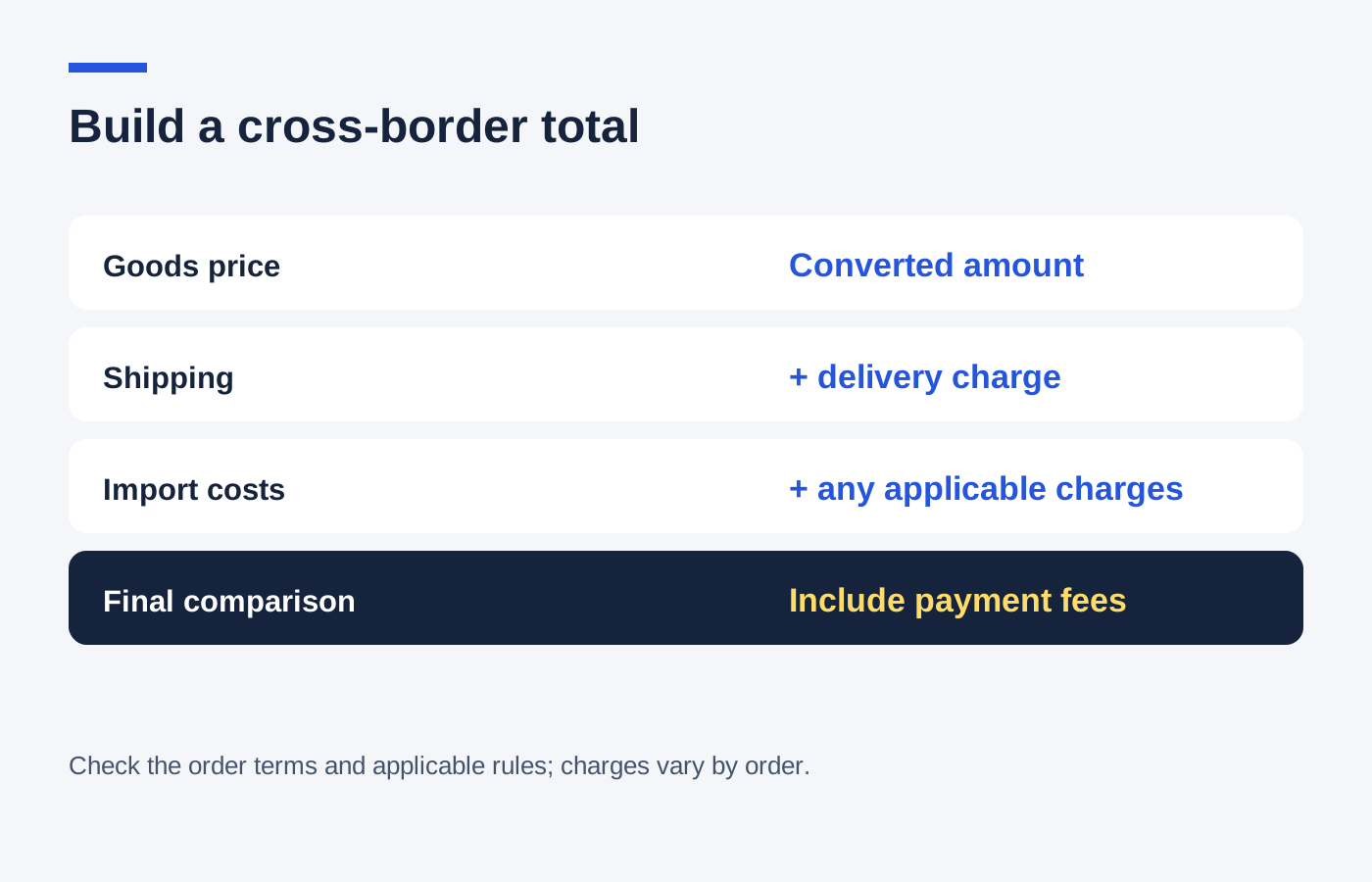
Read whether VAT, duty and handling charges are included in the checkout total or remain payable on arrival. Ask who is responsible for those amounts if the wording is ambiguous. Keep the seller's answer with the order rather than relying on a general claim that international delivery is available.
GOV.UK explains that a delivery company can bill the recipient for relevant VAT, duty or delivery charges before releasing goods. The precise tax treatment depends on the transaction. Use the current official guidance for the product and route, particularly where the order contains goods with special tax rules.
Convert the total, not just the product price
If payment is in another currency, check the exchange rate and any fee applied by your chosen payment provider. A displayed conversion can be an estimate rather than the final amount charged. Compare payment options on the complete terms instead of assuming that paying in pounds is always cheaper.
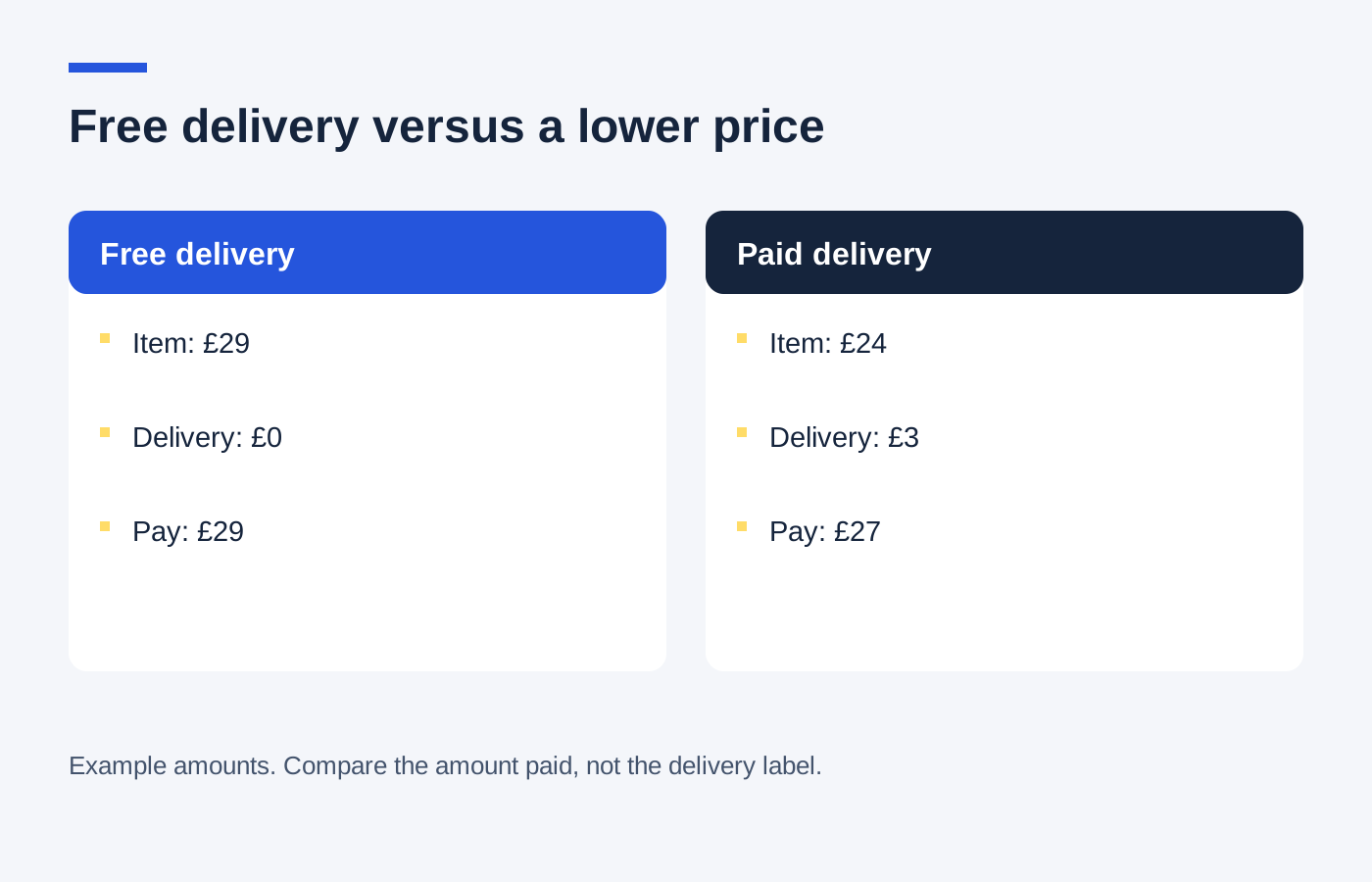
For a hypothetical comparison, goods converted to £70 plus £12 shipping already cost £82 before any additional charge. A comparable UK-delivered option at £85 is only £3 more at that stage. An uncertain import or handling charge could reverse the apparent advantage, so resolve it before treating the overseas order as a saving.
Cost the possible journey back
Find the return destination, the service required and who pays for a change-of-mind return. A low-cost small item can be uneconomical to post overseas. Check whether the retailer offers a local return route and whether that promise applies to your particular seller or marketplace listing.
If goods are returned, tax or duty recovery may require a separate process from the retailer's product refund. GOV.UK provides routes for requesting repayment in relevant cases. Keep the original import charge notice and proof of return if you need to investigate that process; do not assume the seller refunds every charge automatically.
Allow time and verify payment requests
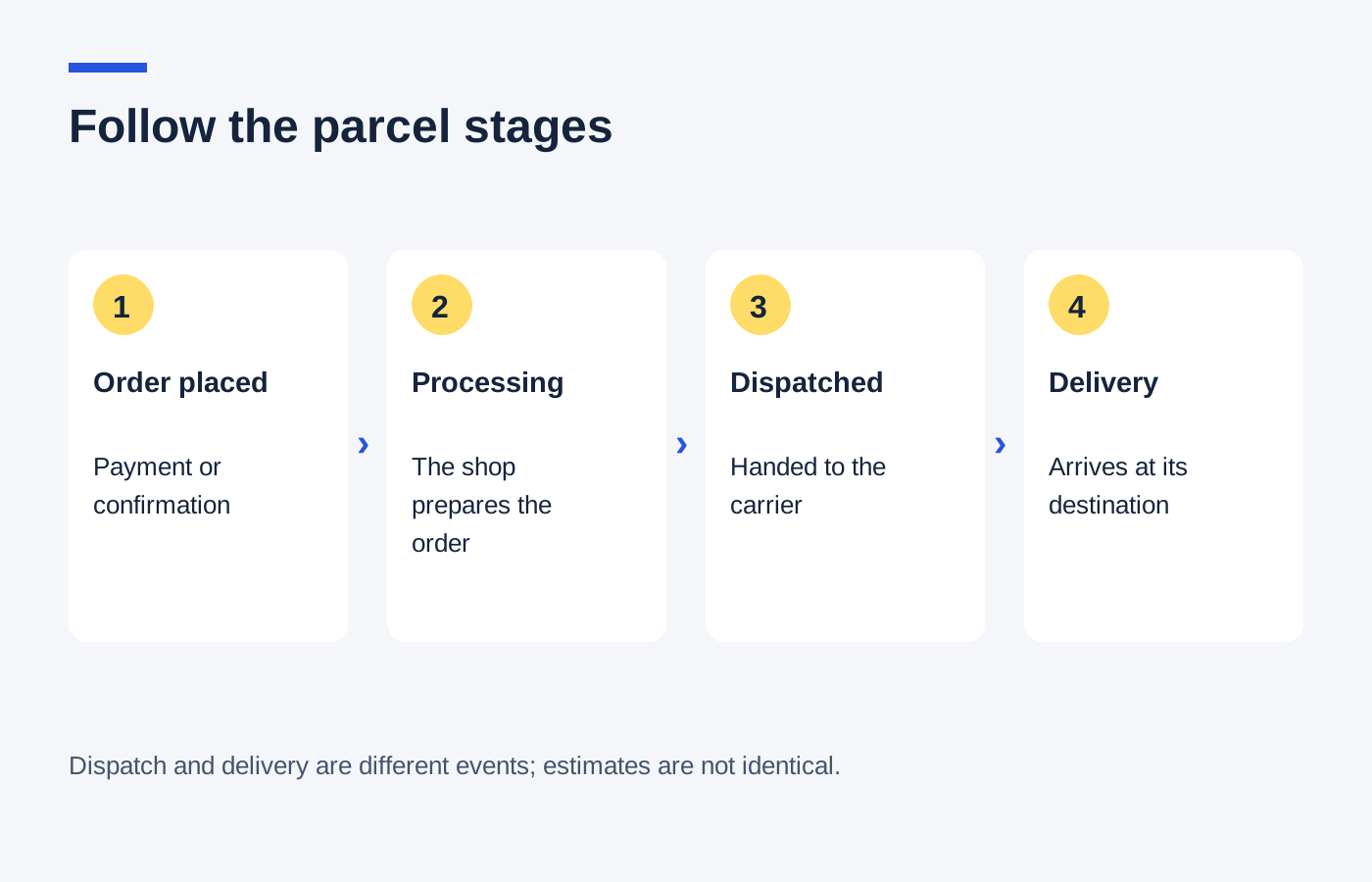
Include dispatch, international transit and any customs processing in the timing decision. Express postage does not necessarily remove every delay. A purchase needed for a fixed event should have enough margin for the whole route, not just the carrier's advertised transit stage.
If a message asks for a delivery payment, verify it through the carrier's official website or contact route using the known tracking reference. Do not enter card details through an unexpected link merely because you are awaiting a parcel. Complete the purchase only when the total and the delivery arrangement are clear enough to compare with a domestic alternative.