Check what counts as a first order
A promotion might be tied to a new account, a first completed purchase, a particular sales channel or a customer who has not ordered within a stated period. Read the actual wording. Having a new email address does not necessarily make an existing customer eligible, and creating duplicate accounts can conflict with the offer's conditions.
Previous cancelled orders can create uncertainty. If your account history contains one, ask the retailer whether it affects eligibility before relying on the reduction. The same applies when you have used the brand in a shop but never on its website. Avoid guessing how the retailer connects those records.
Inspect the products before registering
Some offers exclude sale stock, selected brands, subscriptions or gift cards. Check your exact product and size, not just the category pictured in the welcome banner. If only one item in a mixed basket is eligible, calculate the reduction on that item alone.
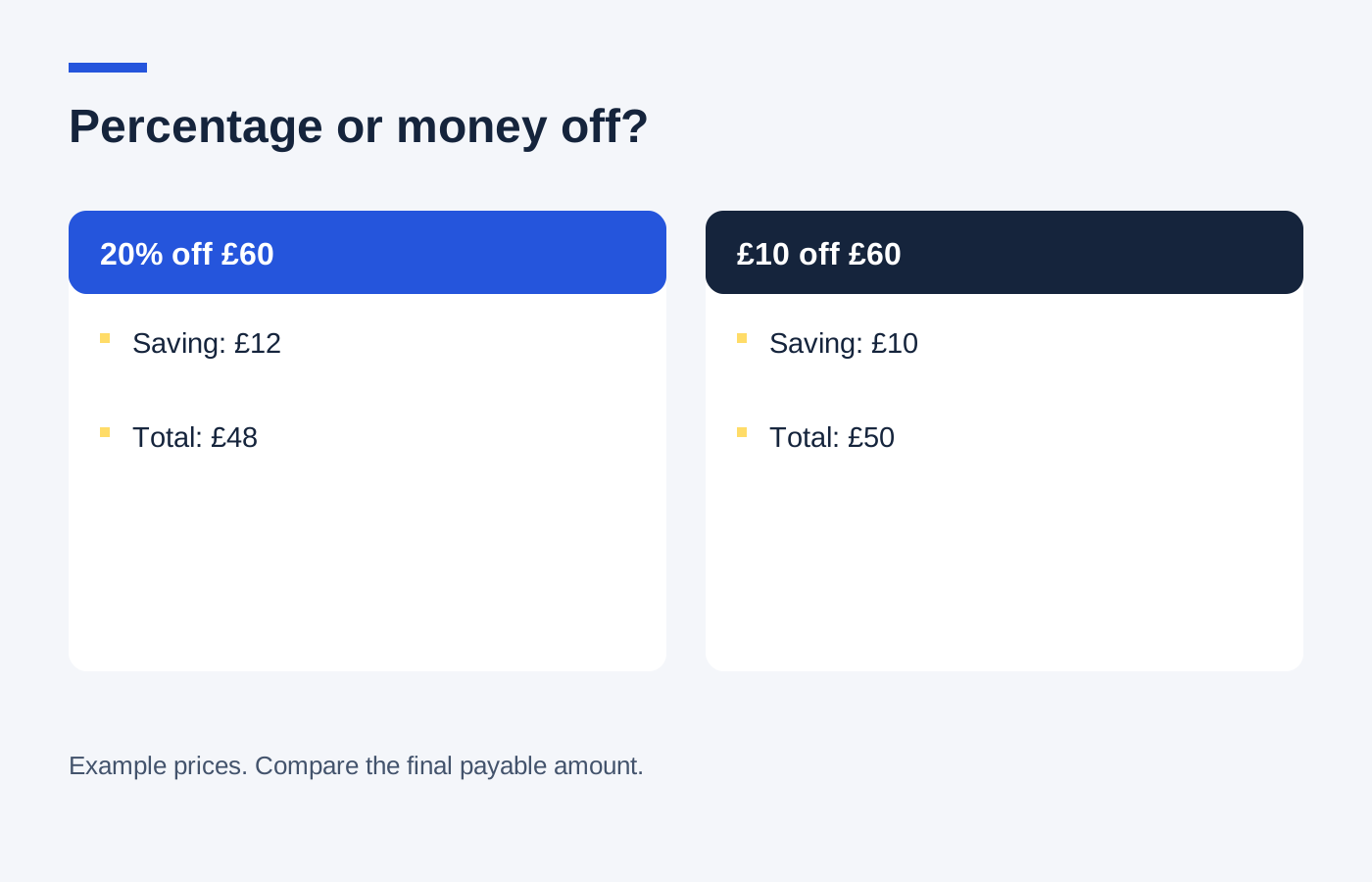
For example, suppose a fictional first-order offer gives 10% off eligible goods. A £70 basket containing £30 of excluded products has £40 eligible, producing a £4 discount. It would not remove £7 from the whole basket. Delivery and any minimum-spend rule still need to be checked afterwards.
Keep the first purchase manageable
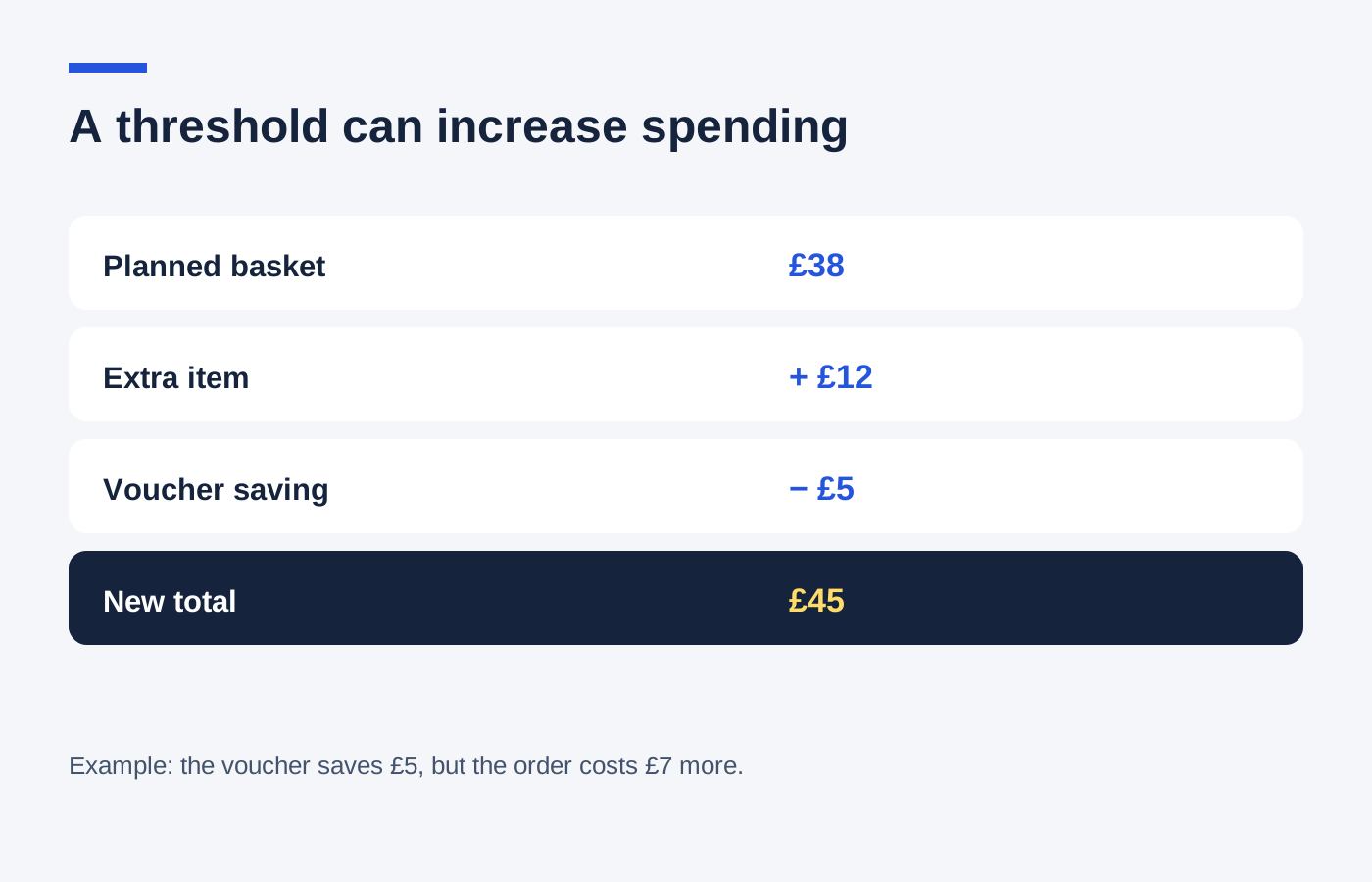
A welcome code can tempt you to order enough for several months. That is harder to judge when you have never tried the retailer's fit, packaging or service. Buy an amount that you would be comfortable ordering without the welcome banner, and compare the delivered price with a familiar alternative.
Check whether obtaining the code involves an email subscription, an app or membership. Read the choices offered and retain the message containing the code and expiry details. If you decide not to order, there is no need to make a purchase just because the introductory offer will lapse.
Before paying, confirm that the reduction appears in the order summary. A code sitting in a text field is not proof that it was applied. Save the confirmation showing what you bought and the amount charged, so any later query starts from the actual transaction.