Identify what the limit attaches to
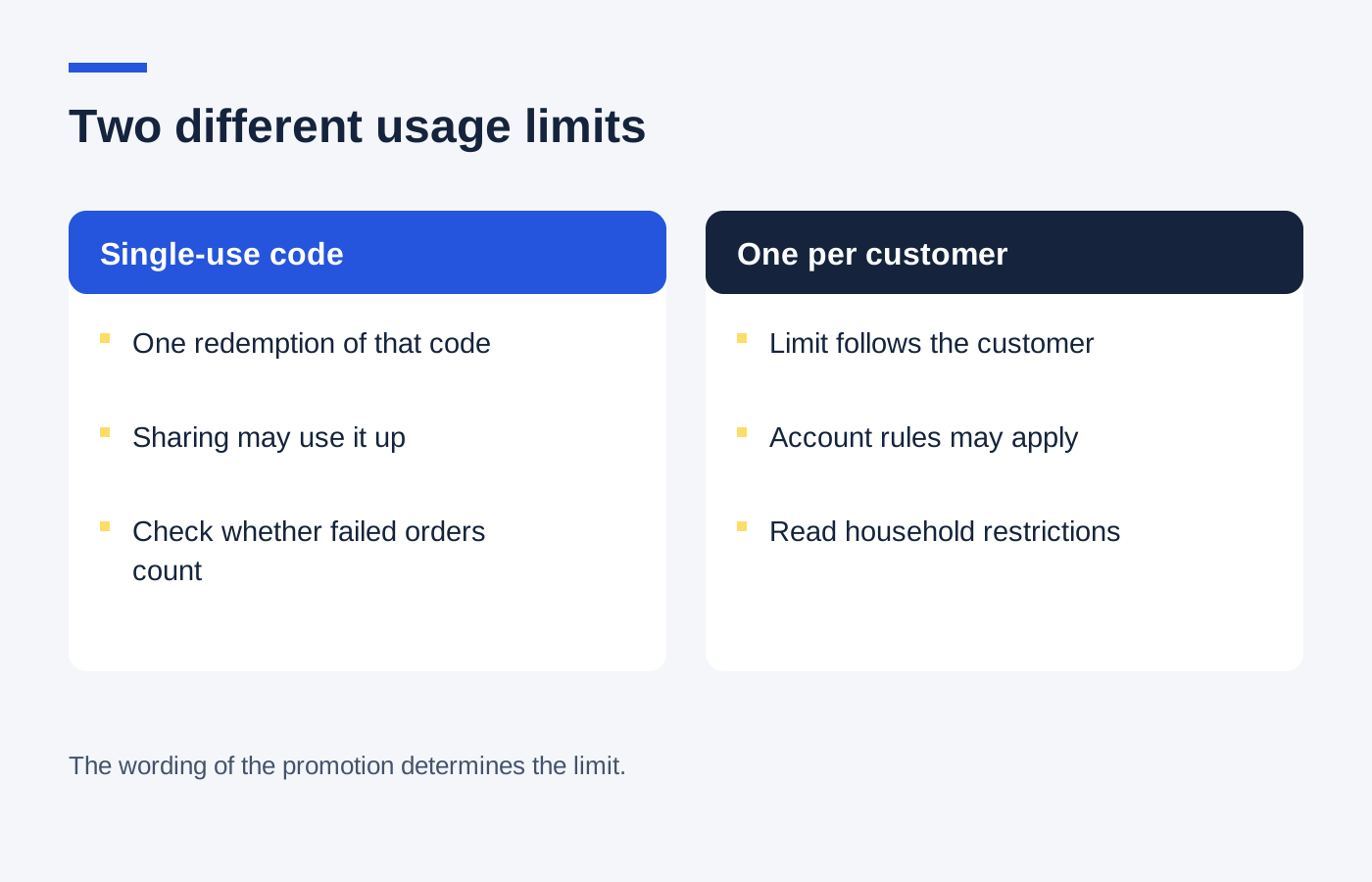
One per order generally describes how many times the promotion can affect a single transaction. One per customer concerns the person making purchases, while one use may refer to a unique code that is consumed when redeemed. A household limit is broader again. The retailer's wording controls the particular offer; these phrases are not interchangeable.
A generic code displayed publicly can still have a customer-level restriction. Conversely, a code sent only to your email address may be transferable only if its terms allow that. Do not assume a code is shareable because another person can copy its letters into a box.
Cancelled orders need a separate check
If an order failed or was cancelled, the system may not immediately restore the code. Look at the order status and payment record before trying again. Multiple attempts can create confusion if one of the earlier payments or orders actually succeeded.
Contact the shop with the original order number, the code and the cancellation message. Ask whether the allowance can be restored, rather than assuming it will reset automatically. If the code was a goodwill replacement or a personal service gesture, keep the original email because its conditions may differ from public promotions.
Plan the purchase within the rules
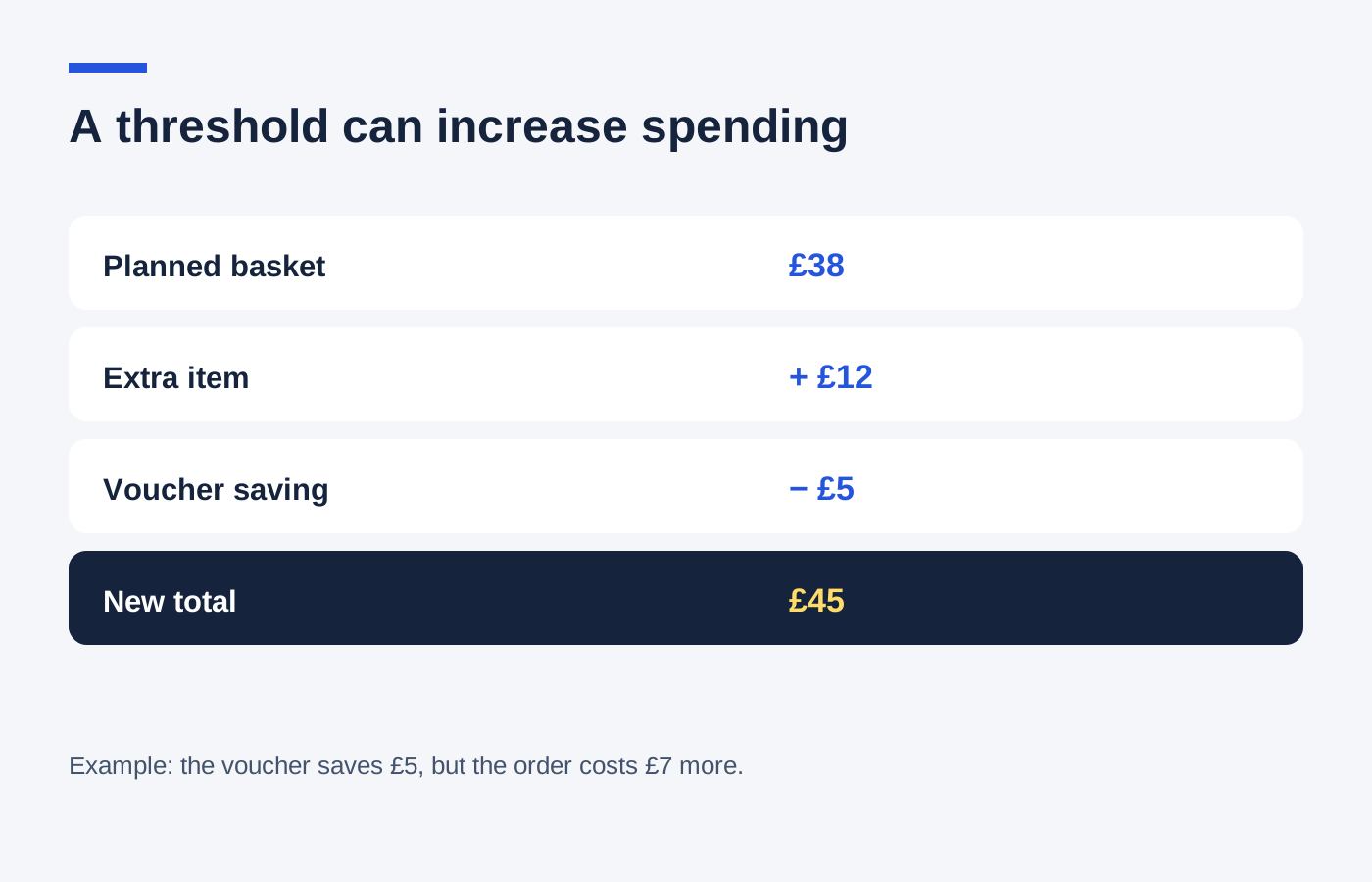
Suppose a hypothetical £8 voucher is available once per customer. Two separate £40 orders do not imply two £8 reductions. If both sets of items are needed, compare one combined order with two orders using only the discount you are entitled to claim. Include any difference in postage.
Splitting purchases can also remove a minimum-spend benefit or create two return parcels. Consider those costs before rearranging the basket. Do not create extra accounts or use another person's details to evade a limit; choose an eligible offer or buy without it.
After checkout, keep the confirmation that shows the discount. It provides a clear reference if the website later says the allowance has been used and you need to identify the transaction responsible. A small record is more useful than repeatedly testing the same code.