Calculate where the cap starts
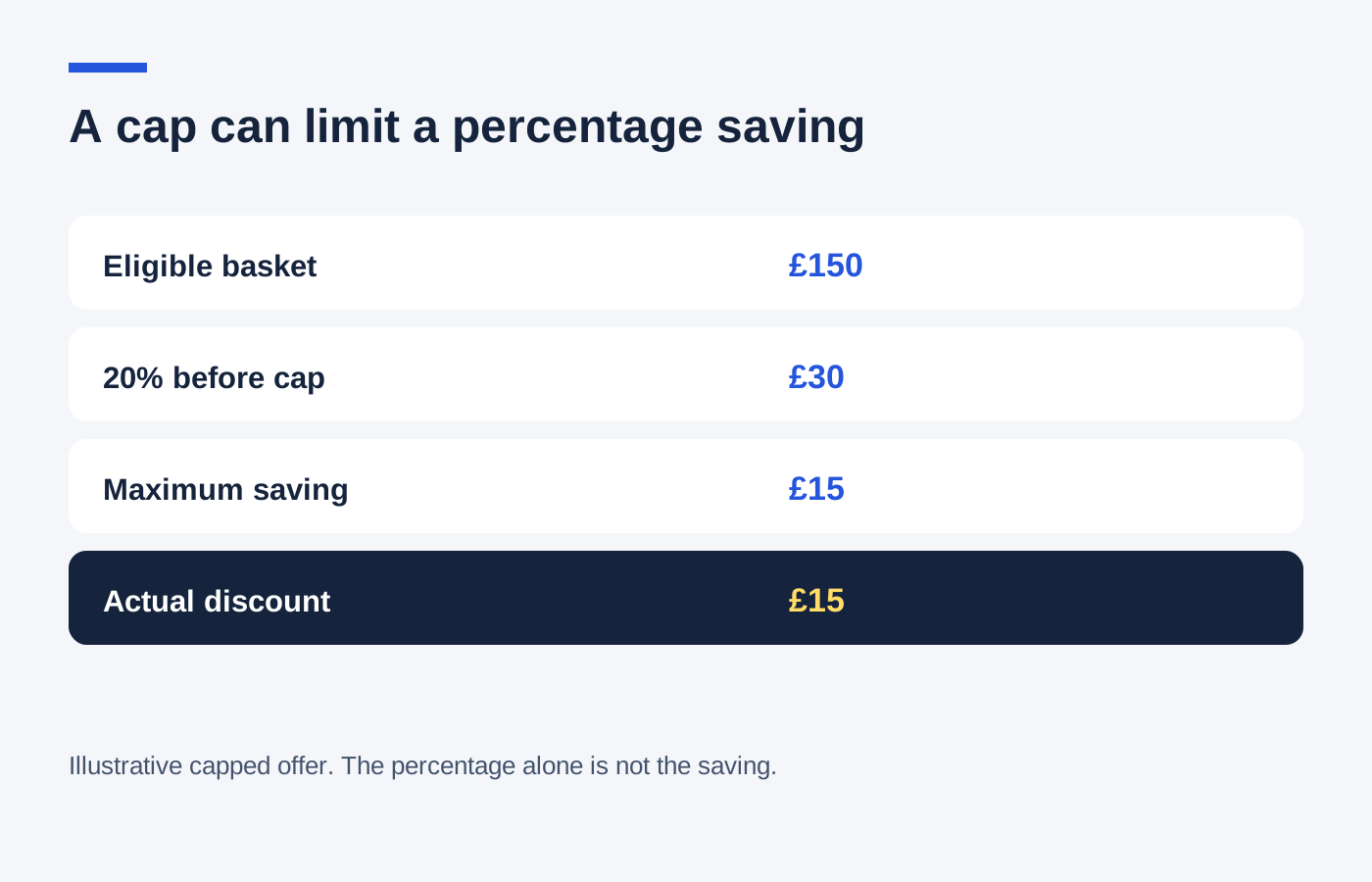
Divide the maximum saving by the discount rate expressed as a decimal. For a hypothetical 20% code capped at £15, the calculation is £15 divided by 0.20, which equals £75. Eligible spending up to £75 receives the full 20% reduction. Spending above £75 still saves no more than £15.
At £40 of eligible goods, the saving is £8 and the goods cost £32. At £75, the saving reaches £15 and the goods cost £60. At £150, it remains £15 and the goods cost £135. The effective discount on that £150 purchase is therefore 10%, even though the offer headline says 20%.
Check what is capped
The cap might apply per transaction, per customer, per item or across a promotional period. Read that wording closely. A £15 maximum per customer cannot safely be treated as £15 on each of several orders. A limit per item is also different from a cap applied to the whole basket.
Some promotions combine a minimum spend and a maximum saving. You must meet the minimum before the calculation matters. Excluded goods may neither earn a reduction nor count towards that threshold. Work from the eligible subtotal rather than the overall amount including postage.
If you have a £100 basket containing £40 of excluded products, a 20% code applies to £60 in this example. It saves £12, below the £15 cap. The fact that the overall order exceeds £75 does not automatically mean you receive the maximum saving.
Compare with a smaller uncapped offer
A lower headline percentage can beat a capped offer on a larger order. Suppose the alternative is an uncapped 12% discount on the same eligible goods. At £100, it saves £12, so the capped 20% offer saves £3 more. At £150, 12% saves £18, beating the £15 cap by £3.
The crossover between a £15 capped saving and an uncapped 12% offer is £125, because £15 divided by 0.12 equals £125. This comparison assumes both offers qualify, apply to the same products and leave delivery unchanged. If their exclusions differ, calculate each basket separately instead.
Do not split an order without costing it
Two smaller orders could produce two reductions only if the terms allow repeat use. Even then, extra delivery charges may remove the benefit. In a fictional case where splitting creates one additional £5 postage charge and only £4 more discount, splitting costs £1 more overall.
Separate parcels also mean separate order records and potentially separate returns. If the items are gifts with different destinations, splitting may already make sense; if they are one household purchase, it can add work for little gain. Include the practical reason for the split alongside the arithmetic.
At checkout, verify the reduction shown against the eligible spend and cap. A capped amount that looks smaller than the headline percentage may be correct. Save the terms if you need to question a different result, but do not assume the code has failed simply because a large order receives the maximum rather than the full headline rate.