A discount changes the price
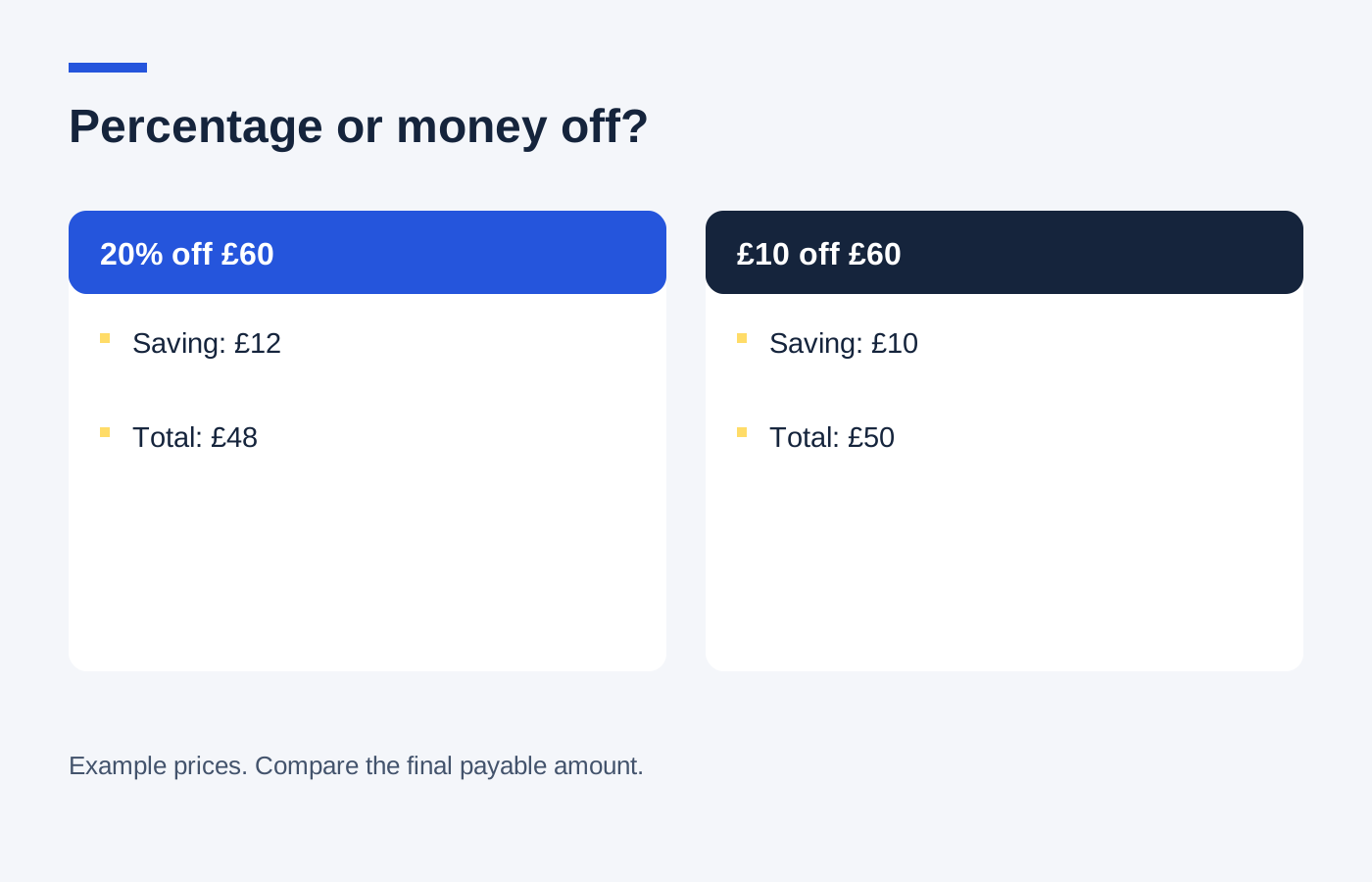
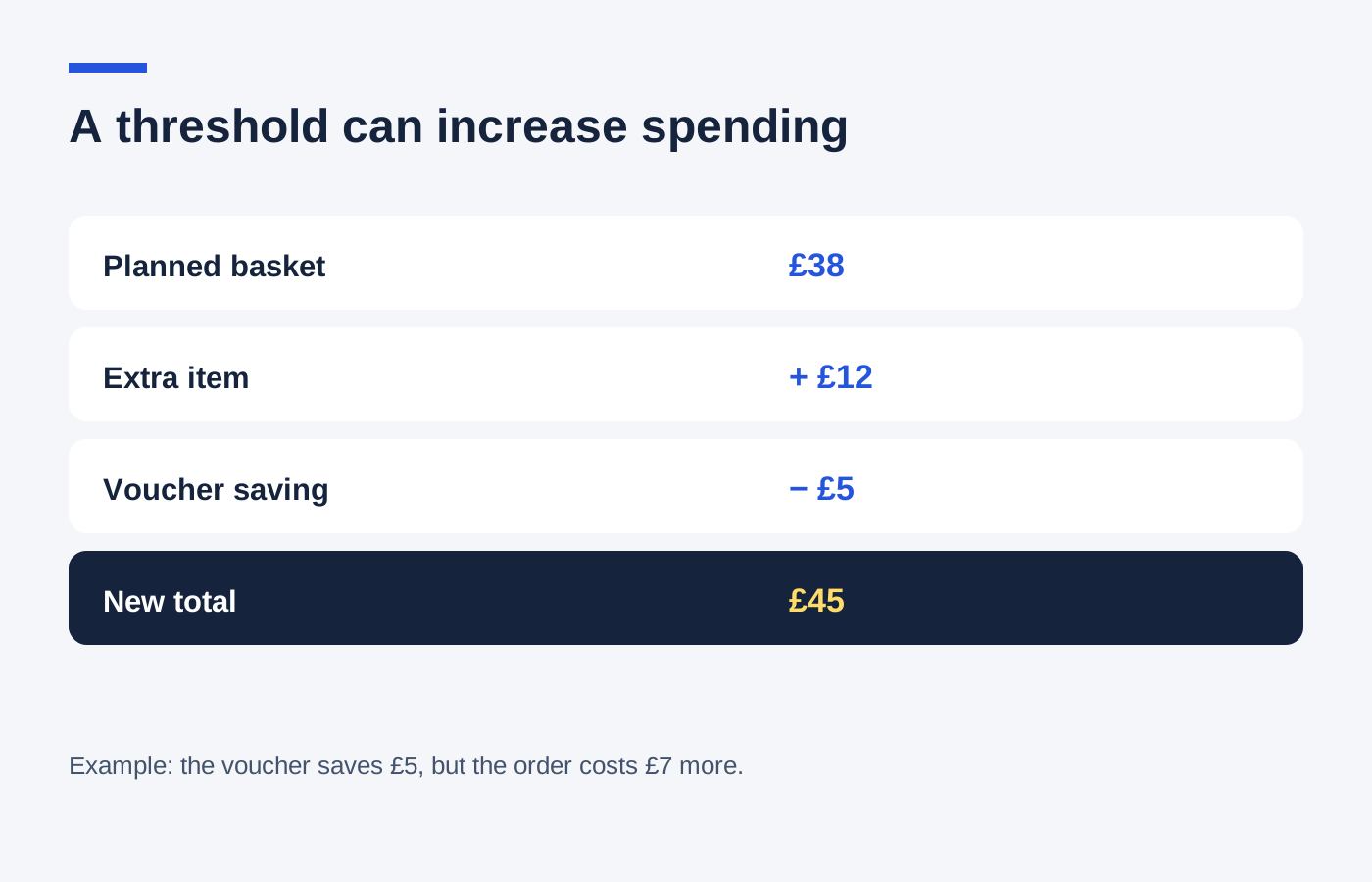
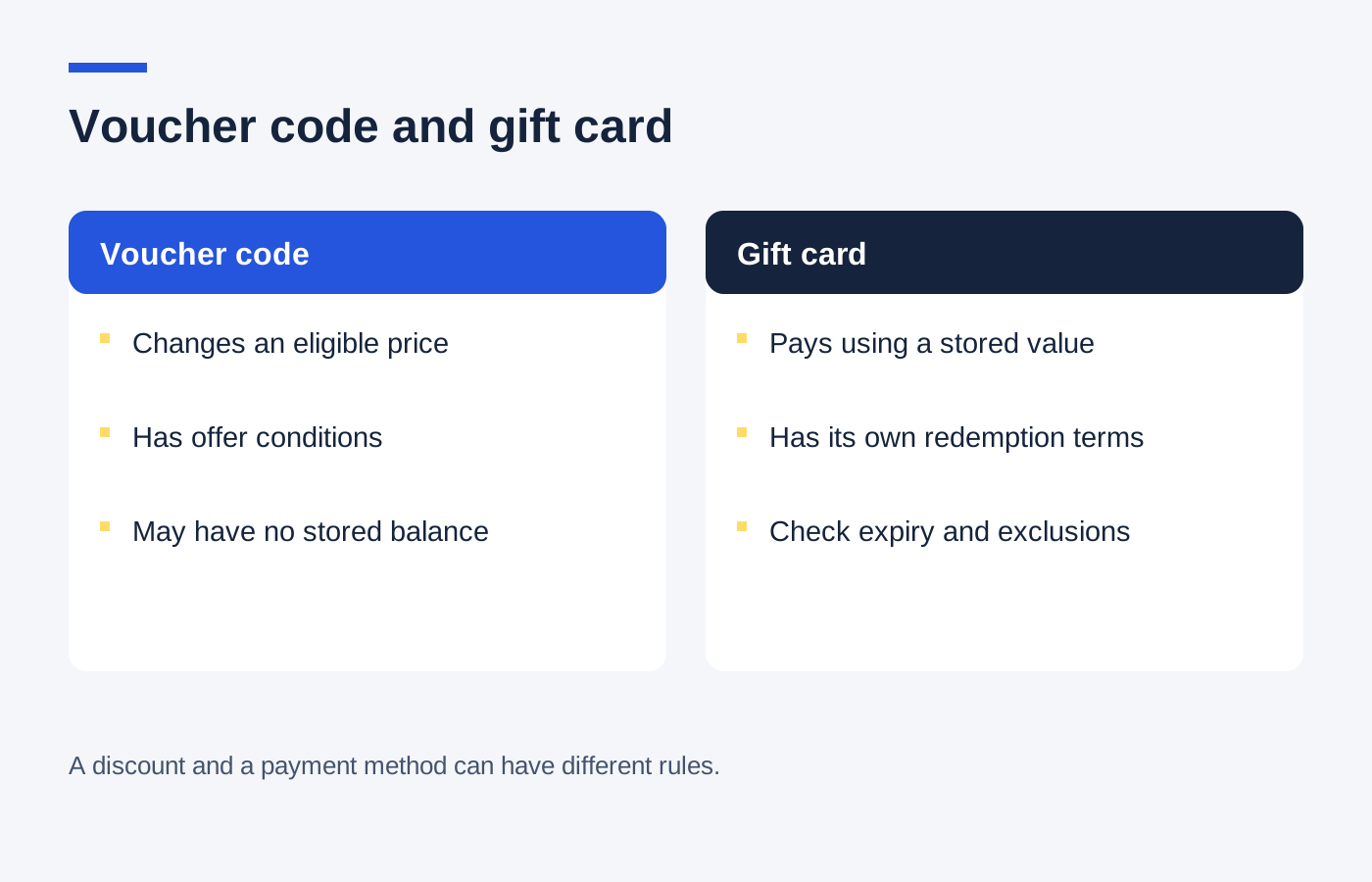
A promotional voucher might remove a percentage, deduct a fixed sum or offer a particular delivery benefit. It normally comes with eligibility conditions and does not represent cash you have deposited. If you use a hypothetical £10-off code on a £60 qualifying order, the goods cost £50 before any other charges.
Promotional value is not usually a balance you can spend gradually unless the terms expressly say so. A £10 discount applied to a smaller qualifying purchase does not necessarily leave a remainder for later. Check the minimum spend and treatment of unused promotional value before buying.
A gift card is a payment method with its own rules
A gift card generally contains value that someone purchased or received as credit. In a simple example, paying for a £60 order with a £25 gift card and £35 from your bank account still means the order costs £60. The card changes how you pay, not the selling price.
Look for the balance, expiry conditions, accepted shops or websites and any restriction on combining payment methods. A card bearing a familiar retail name may have different online and in-store uses. Keep its number and security code private because possession of those details may enable spending.
What happens when the two meet
Some checkouts have separate fields for promotion codes and gift cards; others reveal the payment field later. Entering a gift card into the discount box may produce an error without indicating that the card is invalid. Follow the label attached to each field.
Whether a discount can be combined with a gift card depends on the offer. Cashback schemes can also exclude gift-card payments. Calculate the purchase price first, then record how much is paid using each method. Do not count the gift-card balance as another saving alongside the voucher.
For a return, check where each part of the payment would be refunded. A transaction paid partly by card and partly by store credit may not all come back as cash. Retain the gift card until the order and any return are resolved, even if its visible balance has reached zero.