Mark out where the mat will lie
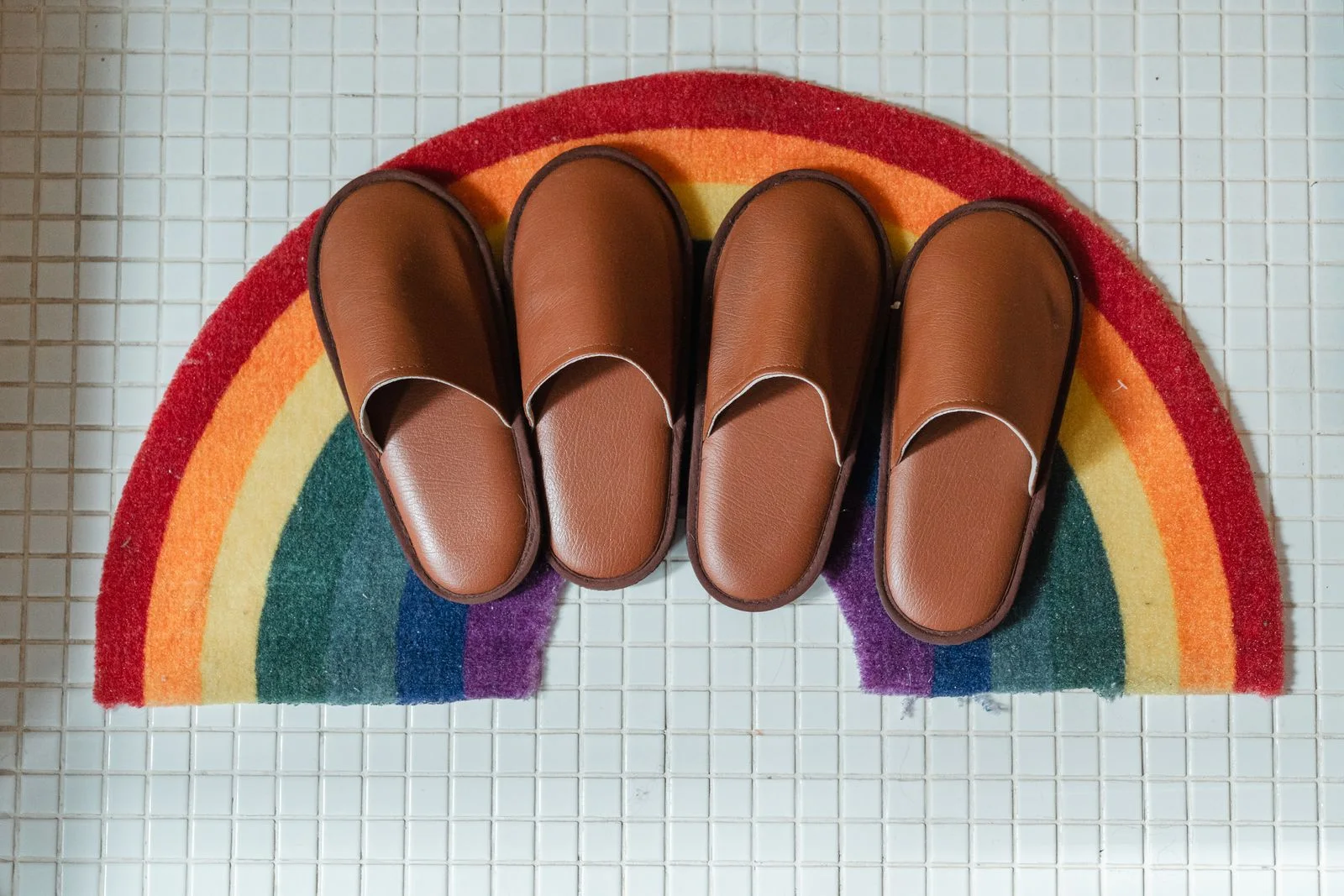
Measure the clear floor area, including the space needed for the bathroom door to open. Use a piece of paper or tape to represent the listed dimensions and check nearby cupboards, the shower screen and the toilet base. A mat should not need to be folded around an obstacle to fit.
Check pile height or overall thickness where the listing provides it. A door may clear an empty floor but catch a thick mat. If the measurement is absent, ask the retailer rather than relying on a photograph taken without a door nearby.
Read the instructions for the exact construction
A textile mat, a rigid platform and a mat intended for use inside a bath serve different purposes. Confirm that the product is intended for the location you have measured. Read any instructions about the floor surface and backing, and do not treat a general grip claim as permission to ignore those conditions.
For a textile mat, check the washing temperature, permitted drying method and any instructions about washing separately. Make sure its size and wet weight can be handled according to your appliance guidance. The largest mat may be less convenient to launder in a small household.
Allow for the time between washes
Decide where the mat can dry after use and after washing. A colour that suits the tiles does not solve a lack of drying space. If you want a second mat for rotation, compare two suitable singles with a pack rather than assuming the pack is cheaper.
Bundles may include a smaller mat or a shaped pedestal piece that you will not use. List the pieces individually, with their dimensions, and compare the cost of the useful ones. Do the same for any delivery charge needed to obtain a replacement later.
Keep the care label and check the delivered dimensions before putting the mat into use. A modestly priced mat that fits the floor and the washing routine is a more complete purchase than a heavily reduced one you have to work around.