Start with the quantity you will use
Decide how many units you need during a realistic period. Consider shelf life, storage and whether everyone in the household likes the product. A low price per item is useful only for items that will actually be used; an unwanted third product is still part of the bill.
For mixed multi-buys, check whether the cheapest item is free, whether all items must come from one range and whether sizes can be mixed. Three similarly named products may not belong to the same promotion. Confirm the reduction in the basket rather than assuming a shelf banner applies to every nearby item.
Compare two example routes
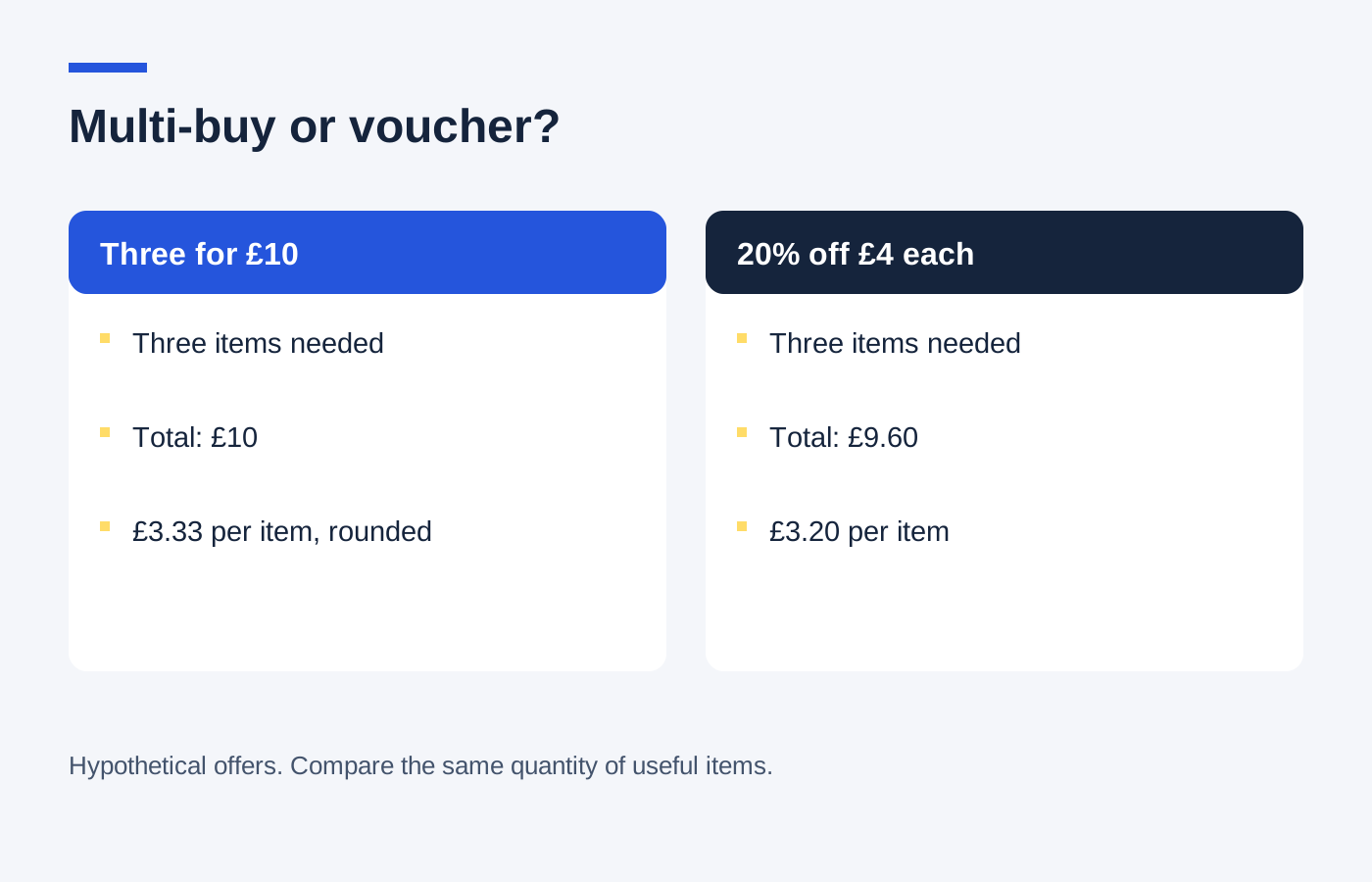
Suppose a product normally costs £6. A fictional three-for-two offer gives three for £12, or £4 each. A separate 20% voucher gives three for £14.40, or £4.80 each, if it applies to all three. When you genuinely need three and delivery is equal, the multi-buy is £2.40 cheaper.
If you need only two, the voucher gives two for £9.60. Buying three through the multi-buy costs £12. The third item costs you an additional £2.40 compared with the quantity you intended to buy. It may be worthwhile if it replaces a later purchase, but it is not an immediate £2.40 saving.
For products with different prices, calculate the actual discount. In a hypothetical cheapest-free offer with items at £8, £6 and £4, you pay £14 for goods originally totalling £18. The saving is £4, around 22.2%, rather than one third of the basket price. Choosing three equal £6 items would instead give a £6 reduction.
Check whether the offers combine
A code may exclude multi-buy promotions or replace them. Apply the code carefully and see whether the multi-buy line remains. If a further percentage reduction is permitted, determine whether it acts on the reduced total or on selected full-price items. Do not add headline percentages together.
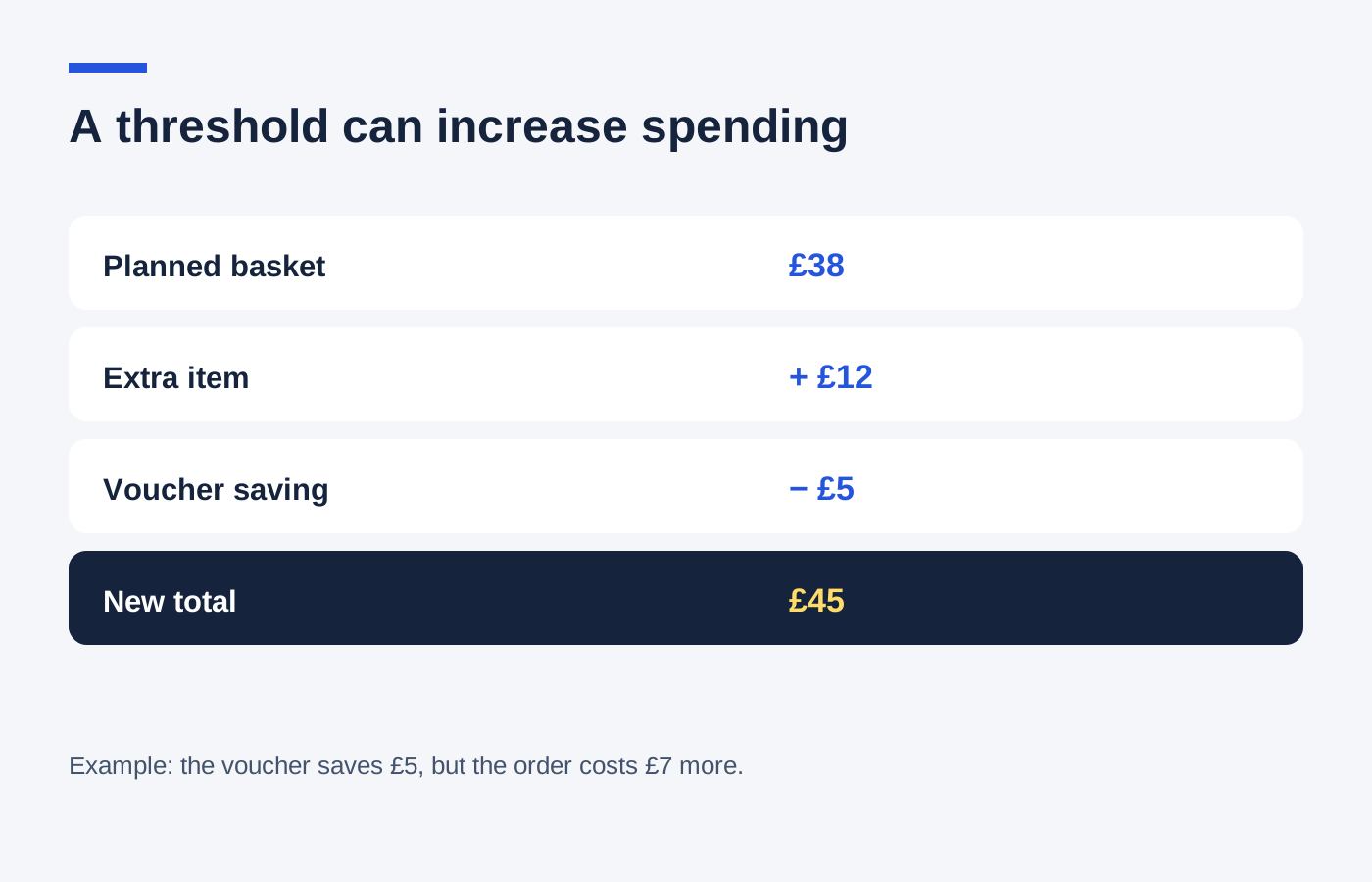
A minimum-spend condition can introduce another complication. If the voucher measures spend after the multi-buy reduction, a basket that qualified at its original price may fall below the threshold. Changing quantity to fix that can alter the entire comparison, so recalculate rather than carrying over the earlier saving.
Account for uneven use and returns
Bundles containing different flavours, sizes or colours should be judged on the combination you would willingly buy. Do not value an unwanted variation at its shelf price just because it completes a promotion. A smaller purchase at a higher unit price may leave less unused stock.
If there is a realistic chance of returning one item, read how the retailer allocates the multi-buy discount. The refund may not equal the item's undiscounted label price. Keep the receipt showing the promotional calculation so you can reconcile any partial refund later.
Choose the option that buys the useful quantity at the best complete cost. That could be a multi-buy, a voucher or neither. The promotion is a way of pricing the shopping list, not a reason to replace the list with whatever quantity earns a badge.