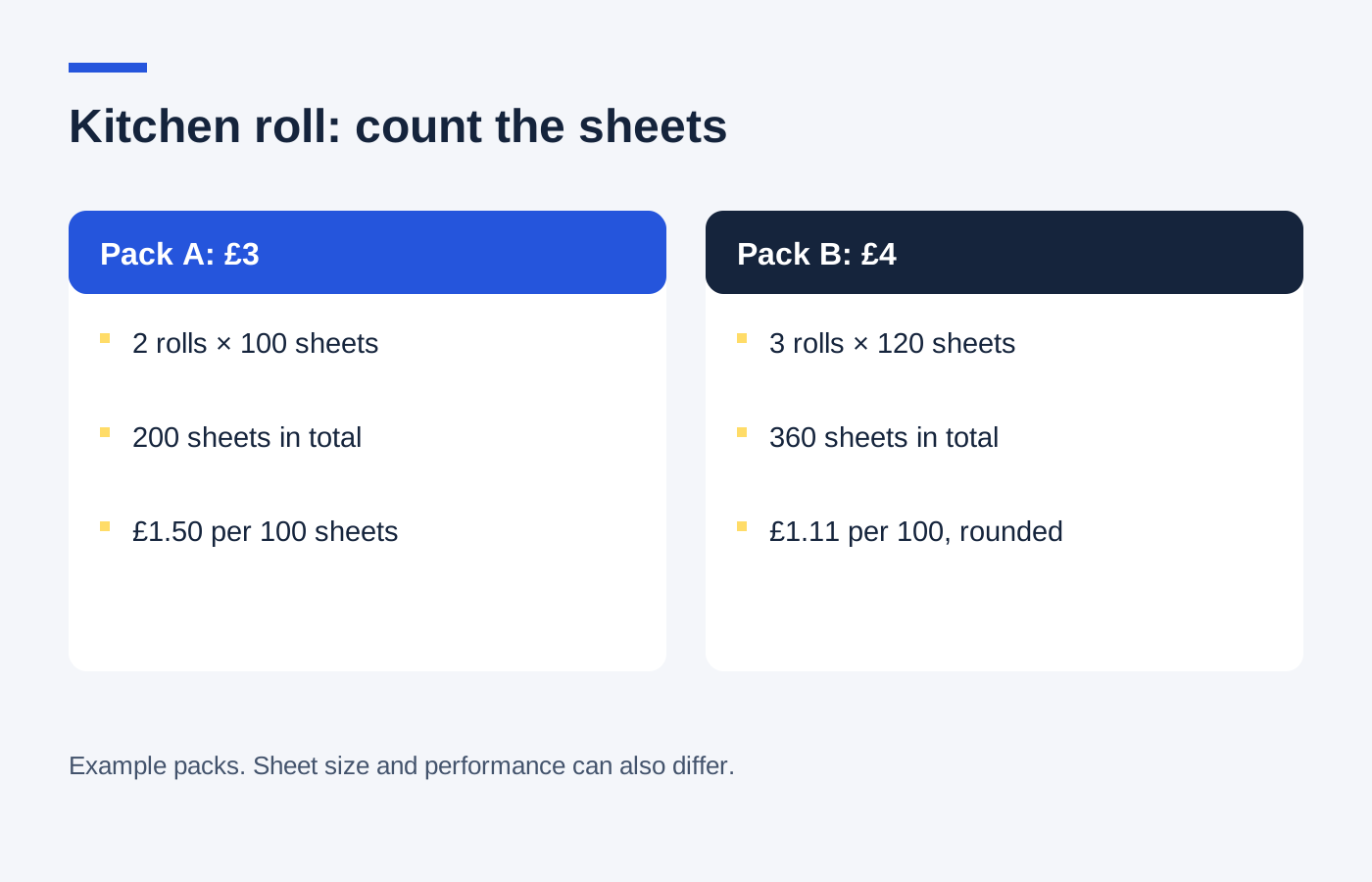
Calculate a visible starting price
For a straightforward comparison, divide the price by the number of millilitres and multiply by 100. A hypothetical 500ml bottle at £1.50 costs 30p per 100ml; a 900ml bottle at £2.25 costs 25p per 100ml. That shows the larger bottle has the lower volume price. It does not prove that every millilitre will wash the same amount of crockery.
Read the directions before comparing a concentrated product with a standard one. If the instructions specify different quantities, note those differences rather than treating all bottles as interchangeable. A front label claiming extra washes may rely on a particular test or dose that differs from your use.
Look at the sink routine
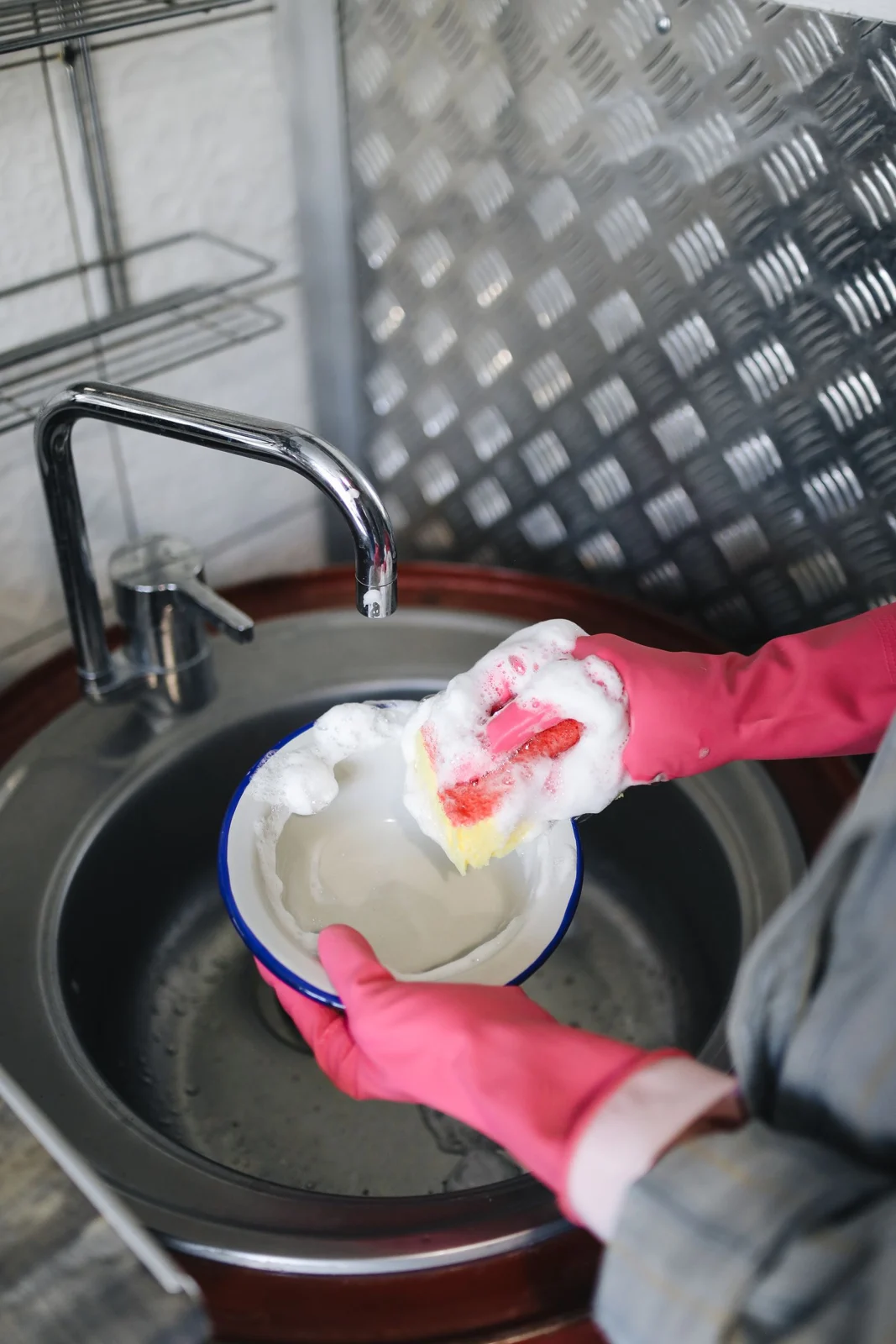
Think about whether you usually fill a bowl, wash a few items individually or clean greasy cookware. The amount you use may vary between these jobs. A bottle with a controlled opening can be easier to dispense consistently than one that releases a large squeeze, particularly when children or several adults share the washing up.
If you already use a product that suits your household, record when you open and finish a bottle. That gives you a rough replacement interval without trying to measure every wash. Do not change the recommended use merely to make a price calculation look better, and do not assume stronger fragrance or more foam proves better value.
Buy a manageable amount
A bulk bottle needs space and must remain easy to handle. A refill may be convenient, but check that it is the same formula and that the receiving container is suitable under the manufacturer's directions. Avoid buying a new scent or unfamiliar format in a large quantity before you know you want to keep using it.
When the price difference is small, the bottle that fits the cupboard and can be dosed without spilling may be the more useful purchase. Compare the total you will spend today with the amount you reasonably expect to use, rather than allowing a multi-buy to set the size of your stockpile.