Measure the desk relationship
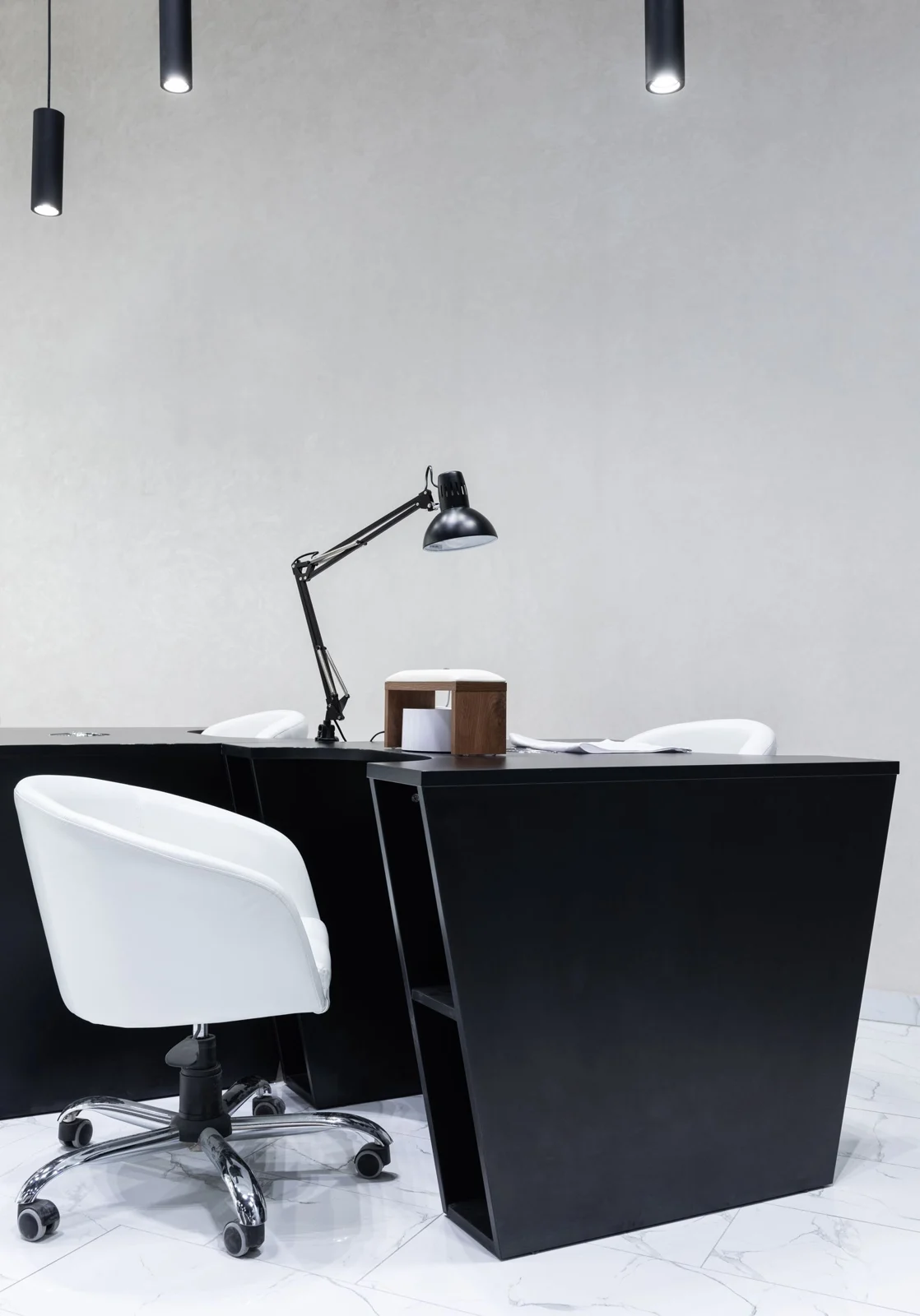
Record the height beneath the desk, including drawers or rails, and the clear width between its legs. Compare those measurements with the chair's overall width and armrest height. A chair that cannot tuck under the desk may occupy much more room than expected, while fixed arms can prevent you from moving close enough to work comfortably.
Look at the seat-height range, not just its maximum. Consider whether the chair can be positioned to suit your work surface while your feet are supported. The HSE workstation checklist considers chair adjustment, back support and pressure behind the legs as part of the whole workstation. Buying a chair alone does not resolve an unsuitable desk or monitor position.
Distinguish seat dimensions from overall dimensions
Overall depth includes the backrest and base; seat depth describes the surface you sit on. If a listing only provides one depth measurement, ask which it is. Likewise, a broad chair with wide arms may have a relatively narrow usable seat. Compare a chair you already find comfortable to help interpret the numbers.
Check what actually adjusts. Seat height, seat depth, backrest tilt, tilt tension and arm position are separate features. A product described as adjustable may only have a height lever. Look for a diagram or manual that explains the controls and whether you can reach and operate them comfortably.
Consider the room and daily movement
Measure the space needed to roll back, stand up and open nearby drawers. The base footprint can be larger than the seat, particularly in a tight corner. Check whether the supplied castors are appropriate for your floor and whether the manufacturer offers suitable alternatives. A floor mat, if needed, belongs in the total purchase cost.
Think about the chair's weight, delivery format and assembly. Some components may be difficult to dismantle after fitting, which makes the returns instructions relevant before you assemble it. If the chair is sold used or refurbished, ask what adjustments and parts have been checked and how its condition is described.
Allow for more than one user
If two people share the desk, check that the adjustment range suits both and that changing settings is straightforward. A chair that only works at one fixed setting may be inconvenient even if the dimensions suit the main user. Try the controls while seated, where possible, and check whether the manual explains how to reset them without tools.
For a chair that arrives in a large carton, find out whether you must retain the packaging during a trial and how collection would work if it is unsuitable. Measure the route into the room, including stairs and narrow doorways. Some fully assembled chairs need more access space than flat-packed alternatives. These delivery and return details affect the real risk of ordering online, particularly when you cannot try the model locally.
Use a trial to answer what measurements cannot
Specifications can rule out poor fits but cannot establish how padding and support will feel over a working session. Where possible, try the chair or understand the seller's trial and return arrangements. Do not treat an appealing review from someone of different proportions as a substitute for your own fit.
Compare the delivered price with any assembly, floor protection and return costs you may face. Keep the order information and model details. If comfort or workstation problems persist, seek an appropriate workstation assessment rather than repeatedly buying accessories on the strength of promotional claims.