Separate goods from the delivery service
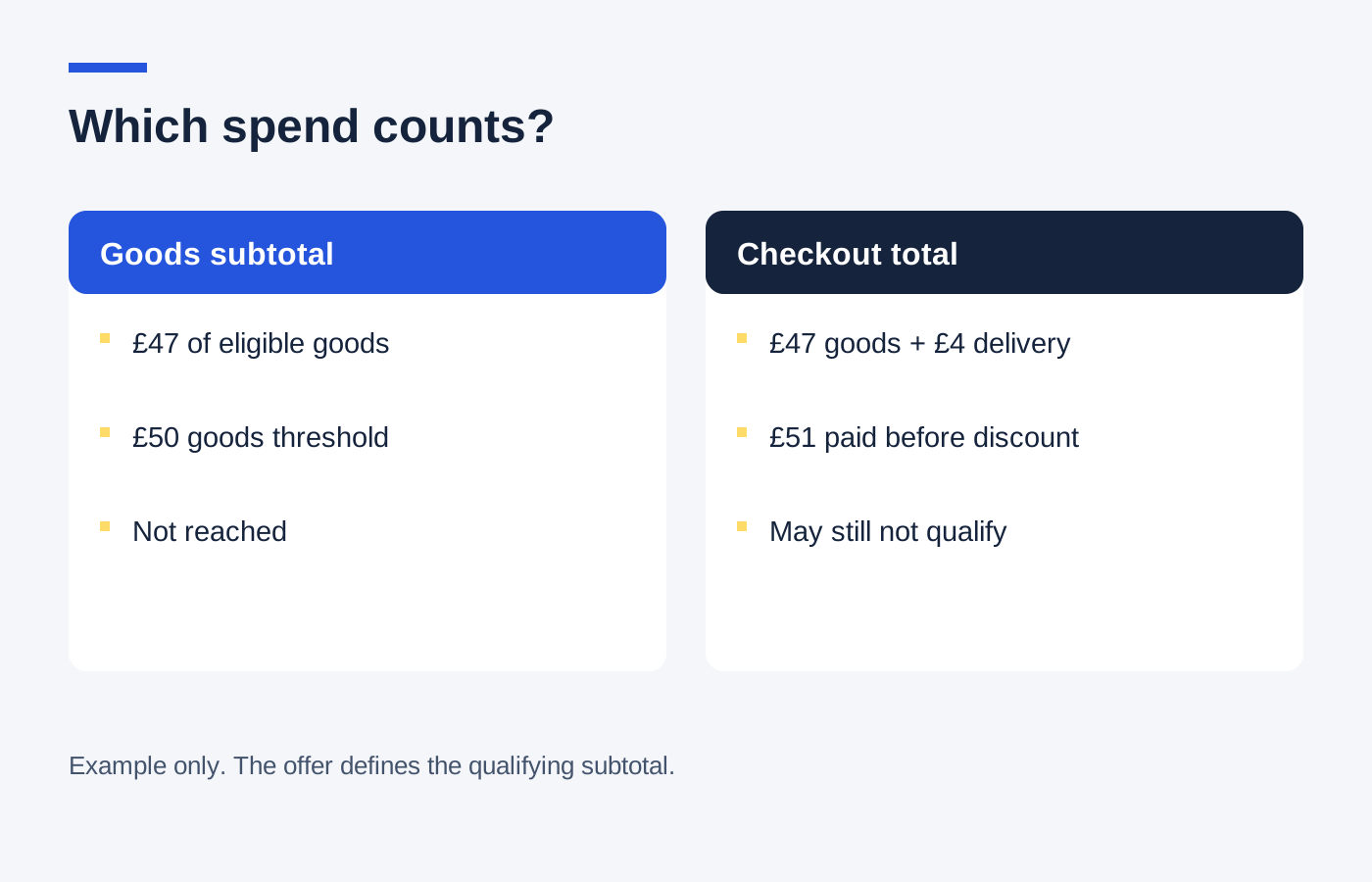
Take a hypothetical order with £46 of products and £4.50 standard delivery. The payable amount before discounts is £50.50, but an offer requiring £50 of eligible goods would still be £4 short. If the terms expressly include delivery, the calculation could be different. There is no single threshold rule shared by every shop.
Look for phrases describing eligible products, merchandise subtotal or spend excluding delivery. Also check whether the minimum is measured before or after existing promotions. A product reduction that appears automatically may reduce the amount being tested even before you enter a voucher.
Follow the calculation through checkout
Start with the qualifying item prices, add them together and compare that subtotal with the stated minimum. Keep delivery, gift wrapping and optional services on separate lines. This makes it easier to see whether the problem is a shipping charge or an excluded product.
Choose your actual delivery destination and service before making the final comparison. A postcode surcharge, collection option or free-delivery rule may change the amount paid without changing the goods that qualify. Switching to express delivery is not a sensible way to reach a goods-only minimum.
Ask a narrow question when the wording is unclear
A useful message to the retailer would identify the offer and ask whether its £50 minimum includes the £4.50 delivery fee. Include the qualifying product subtotal, but leave out payment details. A specific calculation is easier to answer than a general complaint that the code does not work.
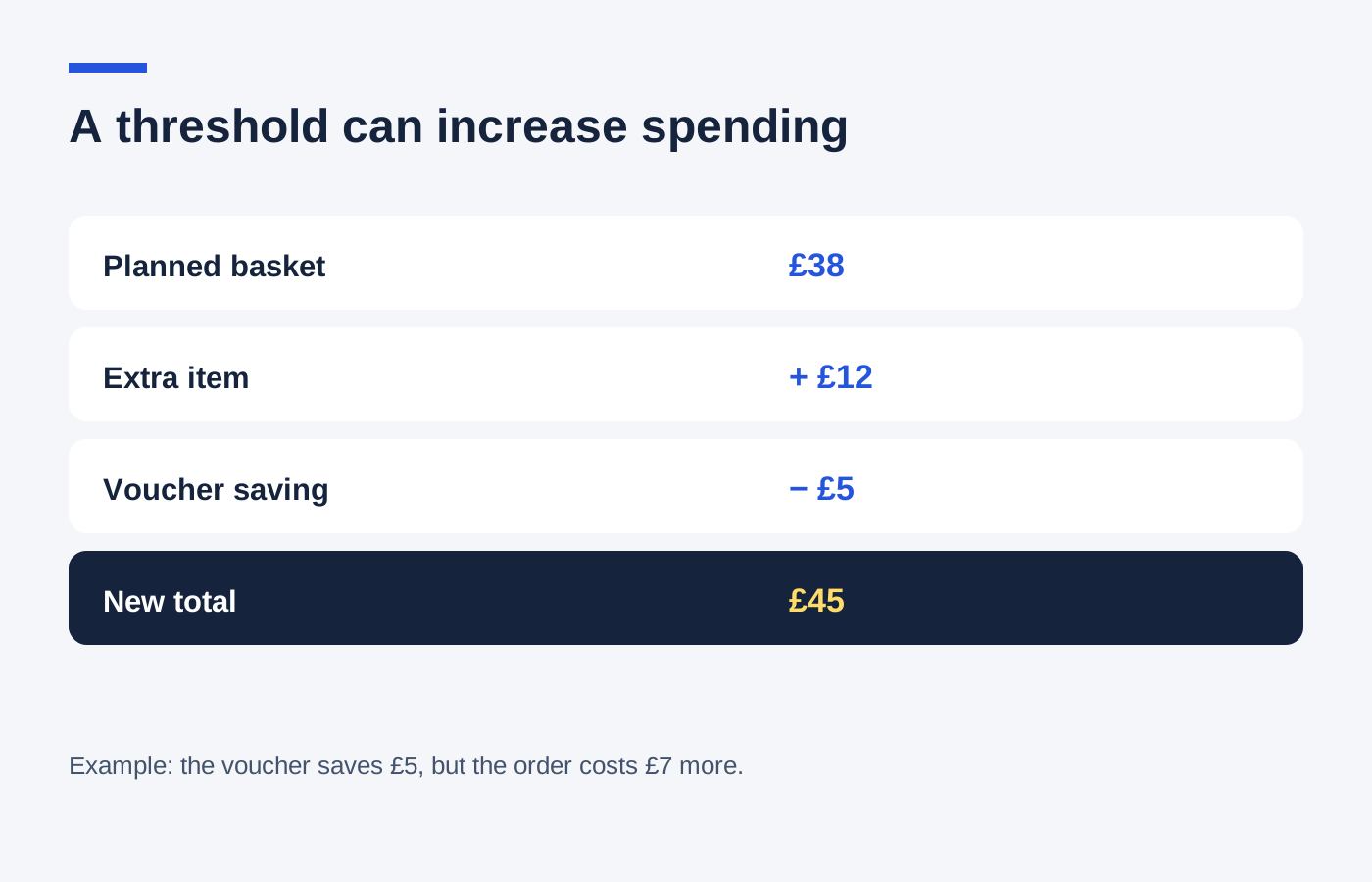
Do not add something merely because the total seems close. First confirm the real gap, then compare the revised payable amount with the original order. If a £6 addition unlocks a £5 discount while all other charges stay the same, you have spent £1 extra. That may be acceptable for an item you need, but it is not a reduction in the original bill.