Check how water will leave
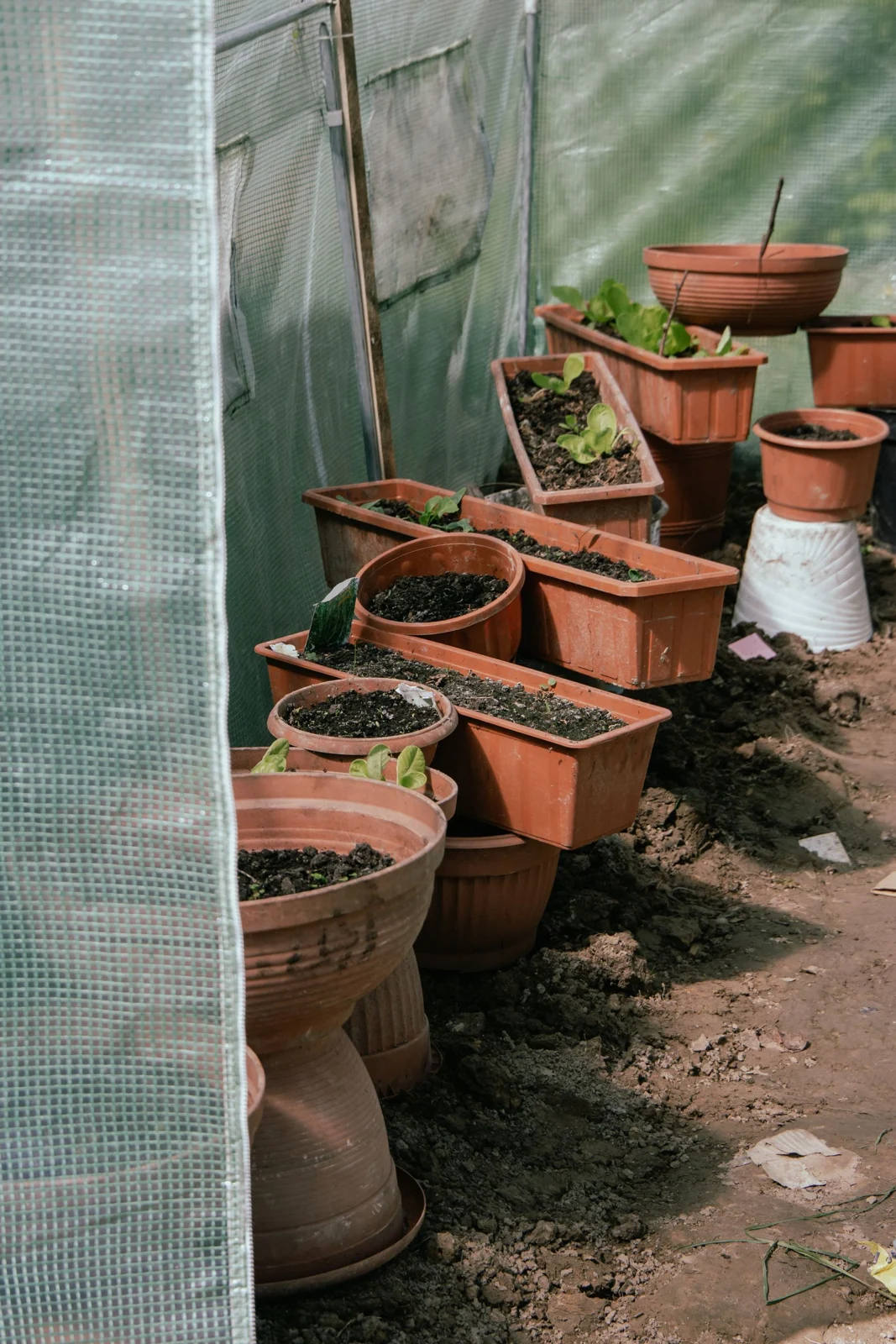
For ordinary container planting, drainage holes help excess water leave the growing medium. The RHS identifies drainage as an important part of choosing and using containers. A decorative cover pot without holes can hold a separate nursery pot, but it should not be mistaken for a ready-to-plant container without considering how the plant will be watered.
Read the product details to establish whether holes are present, merely marked for opening or absent. Do not assume a photograph of a saucer means drainage exists. If a container has a self-watering system, follow its specific instructions; that is a different arrangement from a simple pot and saucer.
Use the internal dimensions
Compare the nursery pot's widest point and height with the inside of the cover pot. A thick rim or tapered base can make the internal space smaller than the headline diameter suggests. Allow enough room to place and remove the inner pot without wedging it in or damaging foliage.
If repotting, choose the new container around the plant's needs rather than buying the biggest available discount. The RHS notes that an excessively large container can leave too much damp compost around a small rootball. Check guidance for the particular plant instead of treating a large volume as an automatic upgrade.
Price the complete arrangement
Count any saucer, liner or stand you need, and check whether it is included. For outdoor use, read the material and weather-suitability information. A heavy container may be harder to move once filled, while a tall narrow one may be unsuitable for the intended position.
A set of graduated sizes is worthwhile only if you have plants and spaces for those sizes. Compare the individual pots you need with the full set, including delivery. Buying two suitable containers can cost less overall than a low per-pot price that leaves the largest and smallest unused.