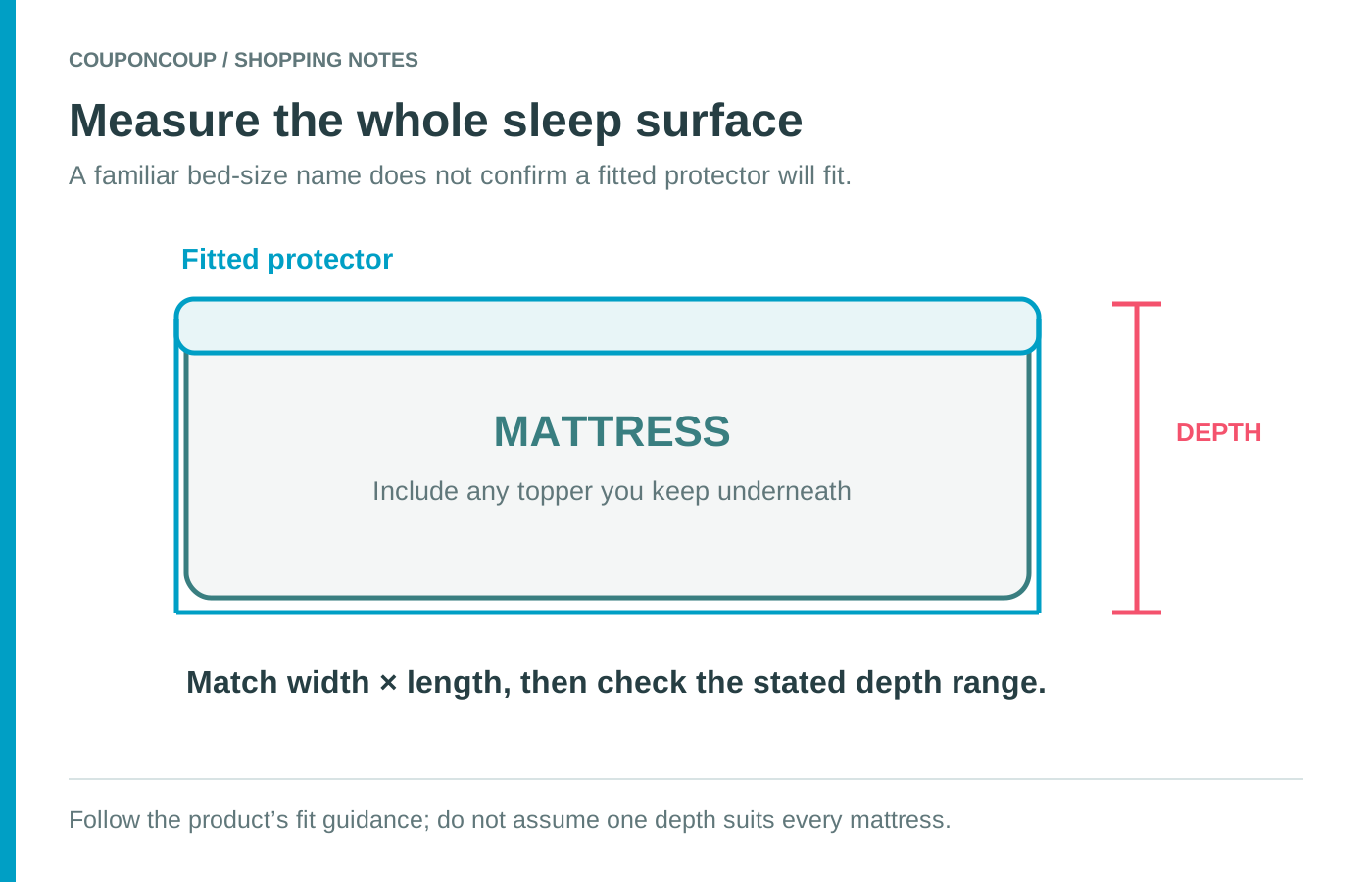
Measure the complete sleeping surface
Measure the mattress length and width, then its depth with the usual topper in place if the protector will cover both. Take the depth at the side without pressing the layers flat. Compare those measurements with the protector's stated dimensions and maximum mattress depth.
Read how it attaches. A fitted skirt, corner straps and a fully enclosing zip are different arrangements. The advertised depth should relate to the style you are buying; do not assume that an elastic edge will stretch indefinitely beyond the stated fit.
Count only the bundle pieces you can use
Read the itemised contents rather than the number printed on the pack. A bundle may combine one protector with pillow protectors, or it may contain two mattress protectors. Check the sizes of every component, especially when the photograph shows several different bed arrangements.
A spare mattress protector can be useful while the first is being washed. Two unsuitable ones are no better than one. If the spare would only fit a bed you do not own, compare the single protector price instead of dividing the bundle cost equally across all its pieces.
Look beyond the top fabric
Check whether the product is described as waterproof, absorbent or simply a protective fabric layer. Those are different claims. Read the listed construction and care instructions, including any restrictions on drying, bleaching or ironing. Avoid assuming that a cotton surface tells you what layers are underneath it.
Think through the laundering changeover. A protector that needs a drying method you cannot provide may leave the bed without it longer than expected. Check the dimensions and care label on arrival before washing, while the retailer's applicable return conditions are still clear.
Once fit and care are settled, compare the delivered cost of the useful pieces. That makes it easier to reject a seemingly generous bundle that adds the wrong sizes, unnecessary pillow protectors or a spare with no suitable bed.