Separate the essentials from the accessories
Look at the inventory, not just the photograph. A set's piece count can include a block, scissors or a sharpening accessory. List each knife by its purpose and size, then mark the ones that would replace an actual gap in your kitchen. Duplicate small knives are not necessarily useful simply because they lower the average cost per piece.
Think about ordinary preparation: chopping vegetables, trimming smaller ingredients and slicing bread may call for different blades. You do not need to buy a specialist knife for every possible task. If you are unsure about an unfamiliar shape, establish what it is intended to do before assigning it any value in the offer.
Check handling and storage
Where possible, assess the handle shape, grip and weight in a shop without attempting unsafe demonstrations. A knife that feels unwieldy is a poor purchase even if its specification looks impressive. Check whether the stated length refers to the blade or the complete knife when comparing sizes online.
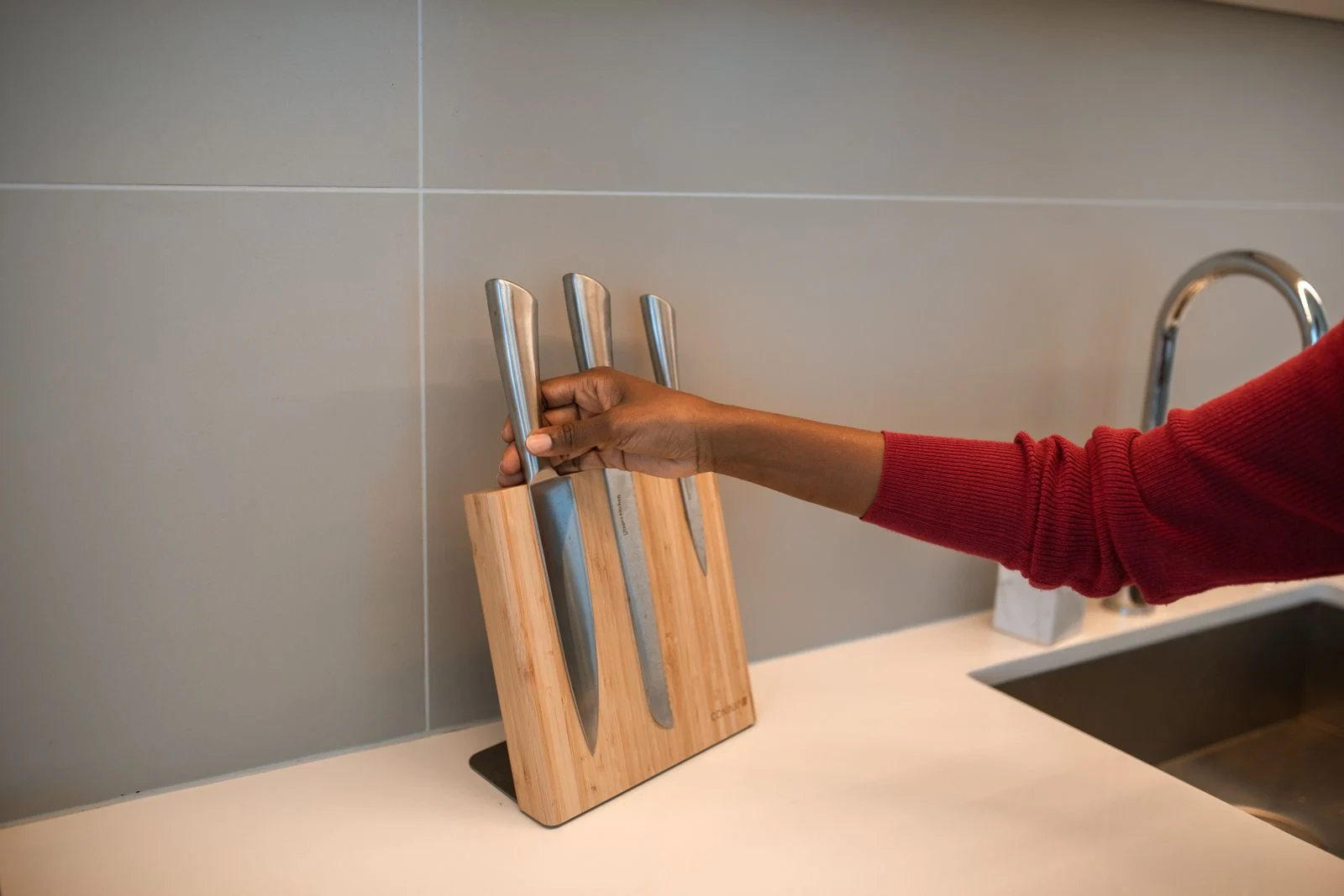
Measure the worktop space for a block and the clearance needed to remove the longest knife. Drawer storage may suit a smaller kitchen better, but it needs a suitable organiser that protects blades and prevents accidental contact. Include the cost of appropriate storage if you buy individual knives.
Budget for care
Read the washing and maintenance directions. A knife that needs hand washing may not suit someone expecting to put everything in a dishwasher. Check which sharpening method is suitable for the specific blade; a supplied accessory is not automatically appropriate for every other knife you own.
Compare the delivered cost of the two or three pieces you will use with the complete set. If the set wins, confirm all included parts and their condition. If separate purchases win, you can replace the most useful knife first and postpone the rest, keeping the decision tied to daily cooking rather than an attractive display block.