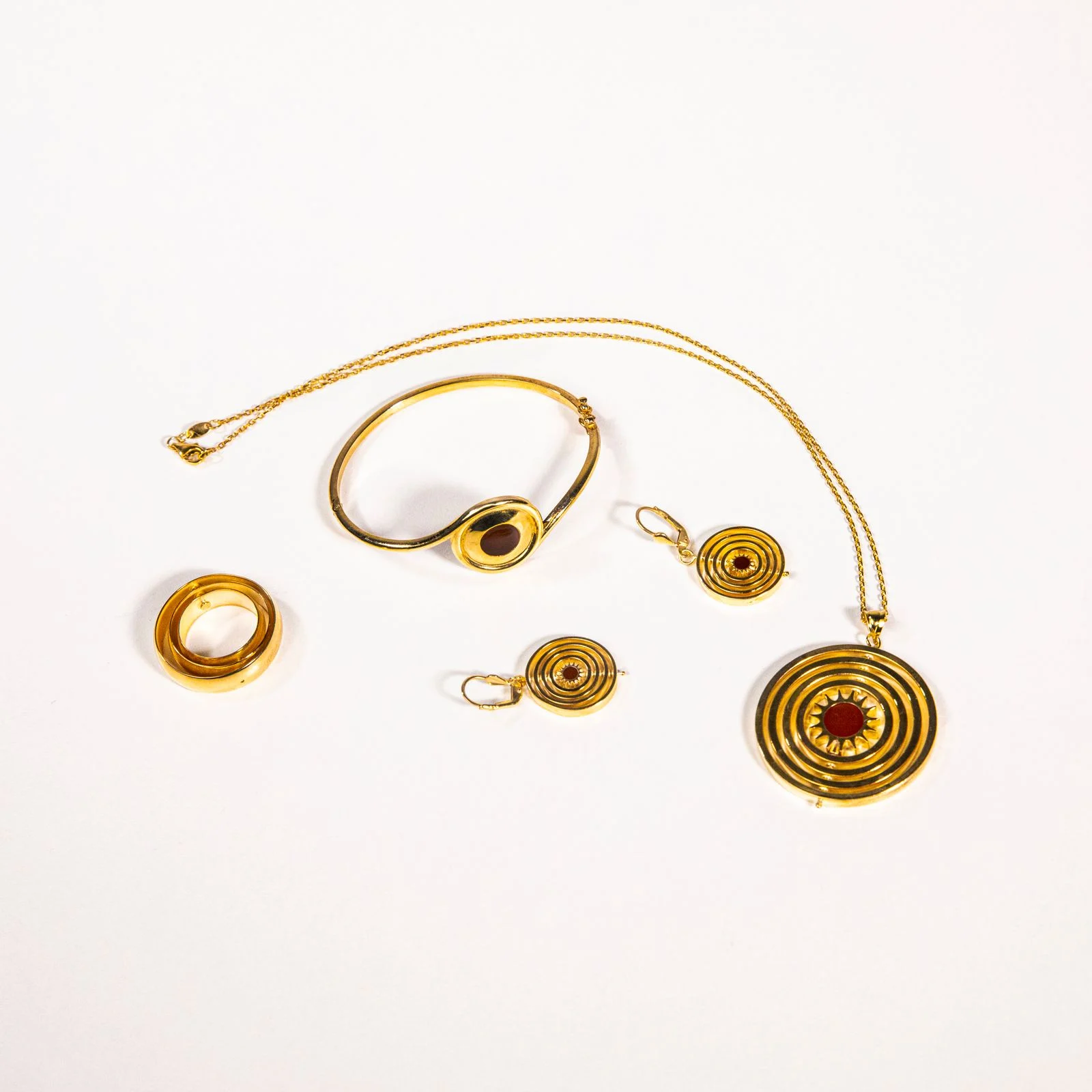
Separate metal, coating and stones
Look for a clear description of the main metal and any plating or coating. Gold-coloured, gold-plated and an item described by a gold fineness are different descriptions. Check what the seller says about stones or decorative inserts as well; a colour name alone does not identify a material.
For precious-metal items, look at the seller's hallmark information where applicable. UK hallmarking requirements include weight-based exemptions, so the absence of a mark is not something to judge without context. The government's hallmarking guidance explains recognised marks and exemptions. If the material remains unclear, ask the seller rather than using the discount as a reason to overlook it.
Translate the size into something visible
Read the pendant height, earring dimensions, chain length and thickness. Draw a simple outline at the stated size or compare with jewellery you already own. Check whether a chain is included and whether the length includes an extender. A close-up on a plain background is useful for detail but poor evidence of scale.
For rings or fitted bracelets, use the seller's measuring guidance and check the available size. Do not assume resizing is possible for every design or material. If alteration would be needed, obtain information and a cost estimate before ordering.
Count the care and missing pieces
Read the care instructions for the actual finish, especially if the item is intended for frequent use. If you have known sensitivities, seek clear material information rather than relying on a vague marketing label. Check the fastening, supplied backs or other components that make the piece wearable.
Compare the delivered cost with an equivalent item of the same size and material description. A presentation box may matter for a gift, but it should not obscure missing product information. Keep the listing details with the receipt so the item that arrives can be checked against what was offered.